

Engineering & Technology
News

18 Jun 2025
Mixing two or three alkyl-π liquids can achieve the right combination of functions for soft electronics.

18 Jun 2025
Researchers at the Nano Life Science Institute (WPI-NanoLSI), Kanazawa University observe and model how the enzyme ADAR1 interacts with double-stranded RNA, which may be useful for future cancer treatment strategies.

17 Jun 2025
Improved production of compounds from methanol and Komagataella phaffii yeast achieved through DNA alteration

17 Jun 2025
SPARK Taiwan has catalyzed innovation, commercialization, and talent development, solidifying Taiwan's position as a rising global leader in biotechnology.

06 Jun 2025
Researchers at the Institute of Industrial Science, The University of Tokyo, produce tiny transistors with high performance and reliability through the use of an innovative material and design

03 Jun 2025
In response to rising energy demand and urban heat island effects in Taipei, an energy raft foundation was constructed beneath a 13-story residential building to provide energy-efficient indoor heating and cooling for the residents while acting as a structural support for the superstructure. This study investigated the thermal response of the energy raft foundation using three-dimensional coupled thermo-hydraulic finite element analysis. The numerical model was validated against field measurements. Parametric studies were conducted to investigate the influences of ground heat exchanger (GHE) spacing and pattern on heat exchange efficiency. The study found that GHE pipe spacing and length were crucial in maximizing heat exchange efficiency while minimizing the thermal impact on nearby structures. This research enhances the understanding of the thermal responses of energy rafts and supports the development of sustainable building solutions in dense urban environments.

30 May 2025
- DGIST research team led by Professor Kyungjoon Park achieves 96% glass wall detection accuracy without using additional sensors, reducing hardware costs by 90%
- Smart algorithm negates the need for expensive sensors: PINMAP software replaces hardware!

29 May 2025
Singapore researchers uncover a low-power mechanism for upconverting light using geometry and kinetic electron motion
28 May 2025
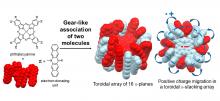
Self-assembling dye rings demonstrate photosynthetic energy and charge circulation

27 May 2025
Cosmic hide-and-seek, Controlling quantum light, Thinking face robot, Live DNA folding & Menopause-dementia link. Plus latest SciCom Coffee talk. Read all in the latest Editor's Choice.

26 May 2025
Researchers at The University of Osaka have developed a groundbreaking energy-efficient and high-precision measurement system leveraging the inherent similarity between waveforms generated by the same type of signal source. Unlike black-box approaches such as generative AI, the system is built on the explicit theoretical framework of compressed sensing. This innovative approach drastically reduces the amount of data required for accurate signal reproduction, leading to significant energy savings. Demonstrated with an electroencephalogram (EEG) measuring system, the technology achieved world-leading energy efficiency using only commercially available electronic components, consuming a mere 72μW. This breakthrough paves the way for long-term, battery-powered wearable devices and self-powered, battery-free IoT devices that can operate on minimal energy harvested from the environment, with broad applications in healthcare, disaster prevention, and environmental monitoring.

26 May 2025
Scientists unlock a new way to boost green energy materials—without rare elements.

23 May 2025
Discover how pineapple leaf fibers are transforming waste into stylish, durable “green leather” for sustainable bookbinding, fashion, and more—an eco-friendly revolution with real-world charm!

23 May 2025
Researchers at The University of Tokyo develop a filter that effectively captures small particles without restricting air flow

21 May 2025
Portable technology offers instant, power-free ethanol detection across concentrations

20 May 2025
Researchers at Tohoku University have achieved record-breaking energy efficiency for a high-speed memory storage device, called a SOT-MRAM cell.

19 May 2025
- Dr. Lim Sang-kyu Kim's team has developed 3D-structured smart fiber, enhancing performance and facilitating real-time Bluetooth transmission without external power
- Research results published in Advanced Functional Materials

16 May 2025
Multi-layered mBC/CS/WPU films, made via spraying, mercerization, and infiltration, offer synergistic protection comparable to petroleum-based

14 May 2025
YNU researchers have developed a method to fabricate complex oriented tissues with multiple directionality using fluidic devices and 3D-printing.

14 May 2025
Researchers develop energy-efficient spintronic devices with 11 memory states for next-generation neuromorphic computing.

13 May 2025
Simple BOCDR design maps strain and temperature along fibers without costly GHz equipment.

13 May 2025
Researchers unveil a bio-intelligent insect system using UV light to guide movement, reducing harm while improving control.

08 May 2025
A joint study by National Taiwan University’s Prof. Hsiao-Mei Wu and Academia Sinica’s Dr. Yi-Chung Tung reveals that oxygen tension elevation during week 4–6 promotes neurogenesis in brain organoids, regulated by Neuroglobin.

06 May 2025
Researchers from National Taiwan University reveal how electric scooter battery-swapping systems can enhance grid flexibility and support urban decarbonization.

02 May 2025
A massive new database of dielectric material properties could speed up the development of electronics like smartphones and energy storage systems.

29 Apr 2025
Smart neural electrode, "Rhinoceros beetle" robot, Halting the thief of sight, Together at last & Lighting hardy plants. Plus latest SciCom Coffee talk. Read all in the latest Editor's Choice.

28 Apr 2025
The power conversion efficiency of all-organic solar cells was doubled through the development of novel organic electrodes that can be fabricated using a moderate process.

24 Apr 2025
These dynamically adjustable water-based lenses have many potential future uses, from classrooms and research labs to cameras and wearable gadgets.

24 Apr 2025
A joint team from National Taiwan University and Karlsruhe Institute of Technology has developed a novel hydrogel actuator whose movement can be programmed using UV light, enabling precise spatial control of thermoresponsive deformation for presenting a potential application in soft robotics and in vitro muscle models.

21 Apr 2025
A new hybrid surface design improves condensation heat transfer even at high temperature differences.
Giants in history
Sorry, nothing coming up for this discipline