

ACS Sustainable Chemistry & Engineering
About ACS Sustainable Chemistry & Engineering
ACS Sustainable Chemistry & Engineering advances green chemistry and engineering to address grand challenges in sustainable energy, materials, and chemical manufacturing.
- Website: https://pubs.acs.org/journal/ascecg?ref=breadcrumb
- Current Issue: https://pubs.acs.org/toc/ascecg/current
News
03 Sep 2026
The University of Osaka
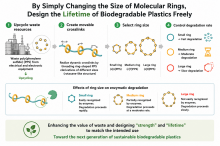
Researchers at the University of Osaka used cyclic PPS manufacturing by-products as movable molecular crosslinks in biodegradable PCL. Medium-sized c [7] PS rings approximately doubled toughness while slowing enzymatic degradation, whereas larger c [9] PS rings accelerated degradation to no residual film mass after 48 hours. The findings identify molecular ring size as a design parameter for tuning material lifetime while also offering a waste-to-value route toward more sustainable polymer systems with programmable properties.

19 Jun 2026
Kanazawa University
Kanazawa University-led researchers developed a one-step recycling method that recovers toxic lead (Pb) and valuable metals including gold (Au) and indium (In) from flexible perovskite solar cells, supporting sustainable solar energy technologies.
11 Nov 2025
The University of Osaka
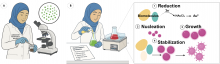
Researchers have developed an eco-friendly method to create gold nanoparticles (AuNPs) using microalgae. This "green synthesis" avoids harsh chemicals, resulting in nanoparticles that are more stable than conventional ones. When activated by a laser, these AuNPs effectively destroy cancer cells while showing lower toxicity to healthy cells. This breakthrough promises a more sustainable and safer approach to photothermal cancer therapy and other applications in nanomedicine.

03 Sep 2025
Tohoku University
Researchers at Tohoku University have applied explainable machine learning to identify key factors for nickel-based catalysts that improve CO₂ methanation. The findings show how data-driven methods can guide catalyst design and support progress toward carbon recycling and sustainable energy.

21 May 2025
The University of Osaka
Researchers at The University of Osaka have developed a non-precious metal catalyst for the efficient hydrogenation of biomass-derived furfural to valuable tetrahydrofuran-based compounds under mild conditions. The catalyst, consisting of nickel carbide nanoparticles supported on alumina, achieved 90% furfural conversion under ambient hydrogen pressure. This result will help advance the development of energy-efficient, cost-effective processes for the conversion of biomass to valuable materials.

02 Sep 2024
The University of Osaka
A research group including researchers from SANKEN (The Institute of Scientific and Industrial Research) at Osaka University has developed a safe, cost-effective, and environmentally-friendly method to synthesize sulfonyl fluorides. By reacting thiols and disulfides with SHC5® and potassium fluoride, they achieved a green synthesis process with non-toxic by-products. This method simplifies the production of sulfonyl fluorides, making it suitable for chemical and industrial applications, aligning with Sustainable Development Goals.

21 Apr 2022
Newcastle University in Singapore
An international team of researchers from India and Singapore has successfully developed a novel coating with enhanced water repellent properties using natural material from the waste crab shell.

12 Apr 2022
Hiroshima University
Milling rice to separate the grain from the husks, produces about 100 million tons of rice husk waste globally each year. Scientists searching for a scalable method to fabricate quantum dots have developed a way to recycle rice husks to create the first silicon quantum dot LED light. Their new method transforms agricultural waste into state-of-the-art light-emitting diodes in a low-cost, environmentally friendly way.
25 May 2021
Daegu Gyeongbuk Institute of Science and Technology (DGIST)
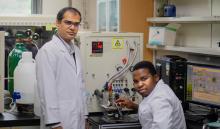
Scientists develop degradation-mitigating additives that vastly extend the lifespan of Nafion-based fuel cells
28 Feb 2020
Ulsan National Institute of Science and Technology (UNIST)
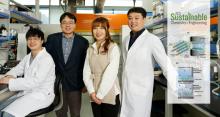
A recent study, affiliated with South Korea's Ulsan National Institute of Science and Technology (UNIST) has presenter in-depth study of the interaction mechanism between the lignin nanofilms.