

Anticancer Research
About Anticancer Research
AntiCancer Research is an independent international peer-reviewed journal devoted to the rapid publication of high quality original articles and reviews on all aspects of experimental and clinical oncology.
- Website: https://ar.iiarjournals.org/
- Current Issue: https://ar.iiarjournals.org/content/current
News

14 May 2025
The University of Osaka
A research team from The University of Osaka has made a significant breakthrough in cancer radiotherapy by identifying conditions under which carbon ion beams—delivered at ultra-high dose rates (uHDR)—can protect normal cells. This phenomenon, known as the “FLASH effect,” could revolutionize cancer treatment by reducing side effects and improving patients’ quality of life.

21 Oct 2024
The University of Osaka
Researchers from Osaka University have demonstrated that ultra-short, high-dose proton irradiation increases cell survival rates even in normoxic conditions, challenging prior assumptions that this effect only occurs in hypoxic environments. This world-first discovery utilizes a new superconducting AVF cyclotron, enabling the application of the "FLASH effect," which minimizes damage to healthy tissues while maintaining local control of the tumor. This breakthrough is expected to lead to a new cancer treatment, FLASH proton therapy, offering fewer side effects and higher tumor control.
28 Mar 2023
Osaka Metropolitan University
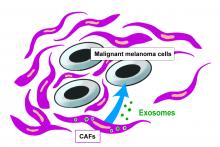
Cancer-associated fibroblasts (CAFs) are key factors in the tumor microenvironment, which have been implicated in cancer cell progression. It has also been reported that vesicles called exosomes produced by these CAFs play an important role in cancer progression. An Osaka Metropolitan University research group investigated the effect of CAF-derived exosomes on the growth of malignant melanoma cells. They found that CAF-derived exosomes express CD9 and CD63 transmembrane proteins, and that the CD9-positive exosomes may inhibit the growth of malignant melanoma cells.