

Nature Neuroscience
About Nature Neuroscience
Nature Neuroscience is a monthly journal publishing the best neuroscience research from all areas of the field.
- Website: https://www.nature.com/neuro/
- Current Issue: https://www.nature.com/neuro/current-issue
News

18 May 2026
Tohoku University
Millions of people across the world suffer from Alzheimer’s disease, where sufferers experience memory impairment. Researchers from Tohoku University and the University of California, Irvine have recently identified dopamine dysfunction as a previously unrecognized mechanism underlying memory impairment. The discovery potentially opens the door to new therapeutic means that could reverse cognitive decline in Alzheimer’s patients across the globe.

25 Jul 2024
Daegu Gyeongbuk Institute of Science and Technology (DGIST)
- DGIST Prof. Lee Kwang and team propose new neural law of dopamine that differs from existing theory
- Developed original technology that simultaneously monitors electrical and chemical brain signals, redefining the correlation between changes in dopamine signaling within physiological range and neural signal processing in the brain
- Findings are published in Nature Neuroscience
02 Nov 2022
Tohoku University
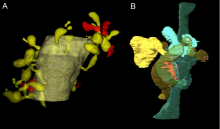
As our brains develop, cells within it ‘eat’ neuronal elements to clear out debris, pathogens and help improve efficiency. A recent study showed that motor learning in mice helped enhance the engulfing of synapses by Bergmann glial cells. The discovery could have possible implications for explaining why synaptic shrinkage and loss occur in depression, schizophrenia, and Alzheimer’s disease.
28 Nov 2019
Duke-NUS Medical School
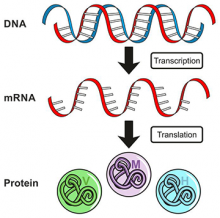
Despite great investments, an effective drug-based treatment for Alzheimer’s disease, the most common form of dementia among the elderly, remains elusive. Scientists led by Duke-NUS Medical School, in collaboration with Monash University, have published an online atlas of gene expressions at single-cell level in Alzheimer’s disease brains, aiming to boost to efforts to identify gene targets for drug development.
07 Nov 2018
Institute for Integrated Cell-Material Sciences (iCeMS) at Kyoto University
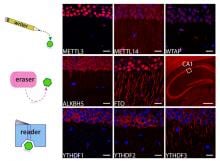
New research documents how modifications to RNA keep nerve junctions flexible.