

Nature Physics
About Nature Physics
Nature Physics publishes papers of the highest quality and significance in all areas of physics, pure and applied. The journal content reflects core physics disciplines, but is also open to a broad range of topics whose central theme falls within the bounds of physics.
- Website: https://www.nature.com/nphys/
- Current Issue: https://www.nature.com/nphys/current-issue
News

19 Jun 2026
Institute of Industrial Science, The University of Tokyo (UTokyo-IIS)
Researchers at the Institute of Industrial Science, The University of Tokyo, carry out computer experiments to track how water nanodroplets wet surfaces
26 May 2026
City University of Hong Kong (CityUHK)
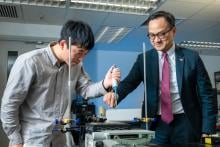
A research team led by Professor Steven Wang, Associate Vice-President (Resources Planning) and Associate Professor in the Department of Mechanical Engineering and School of Energy and Environment, has designed a revolutionary capillary structure that can trigger the Leidenfrost effect, offering a practical solution for the temperature-regulated Leidenfrost effect without requiring complex surface engineering.
15 Dec 2025
Hiroshima University
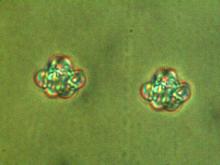
In a new Nature Physics study, researchers created particle-like so-called “vortex knots” inside chiral nematic liquid crystals, a twisted fluid similar to those used in LCD screens. For the first time, these knots are stable and could be reversibly switched between different knotted forms, using electric pulses to fuse and split them.

08 Aug 2025
Osaka Metropolitan University
First direct observation of quantum Kelvin–Helmholtz instability reveals eccentric fractional skyrmions

15 Apr 2025
Tohoku University
Quasicrystals are intriguing materials with long-range atomic order that lack periodicity. It has been a longstanding question whether antiferromagnetism, while commonly found in regular crystals, is even possible in quasicrystals. In a new study, researchers have finally answered this question, providing the first definitive neutron diffraction evidence of antiferromagnetism in a real icosahedral quasicrystal. This discovery opens a new research area of quasiperiodic antiferromagnets, with potential applications in spintronics.

28 Nov 2024
National Taiwan University
Cooling atomic gases to quantum regime often involves time-consuming steps. Electromagnetically induced transparency now achieves quantum degeneracy with high efficiency.
23 Apr 2024
Tohoku University
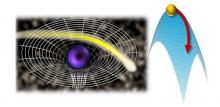
Researchers at Tohoku University and the Japan Atomic Energy Agency have discovered a unique property, the quantum metric, within magnetic materials, altering the 'electron universe' geometry. This distinct electric signal challenges traditional electrical conduction and could revolutionize spintronic devices.
23 Jan 2024
Tohoku University
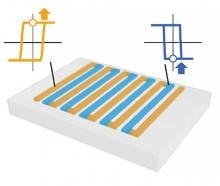
Scientists are eager to harness the unique electrical properties of topological magnets for advancing thermoelectric materials. A collaborative research group has successfully induced positive and negative polarities, unlocking the potential for generating thermoelectric energy from materials with topological magnet properties.

29 Sep 2023
Tohoku University
The behavior of electrons in liquids is crucial to understanding many chemical processes that occur in our world. Using advanced lasers that operate at the attosecond, a team of international researchers has revealed further insights into how electrons behave in liquids.

23 May 2023
Institute of Industrial Science, The University of Tokyo (UTokyo-IIS)
Researchers from the Institute of Industrial Science, The University of Tokyo, discover how certain colloids can form a solid-like gel and reveal how the mechanism differs from glasses.

20 Oct 2022
The University of Osaka
Osaka University researchers showed that the predictions of Einstein’s theory of special relativity in electromagnetism could be detected in the contraction of the electric field created by ultrafast electrons. By achieving femtosecond resolution, they were able to visualize the contracted electric field for the first time. This work can be applicable to particle accelerators and high-energy physics.

06 Jun 2022
Institute of Industrial Science, The University of Tokyo (UTokyo-IIS)
Researchers at the Institute of Industrial Science, The University of Tokyo studied the anomalous properties of amorphous solids, including glasses, using computer simulations, and found a common vibrational mechanism underlying them, which may help control the glass properties

27 Aug 2019
Ulsan National Institute of Science and Technology (UNIST)
A recent study, affiliated with South Korea's Ulsan National Institute of Science and Technology (UNIST) has successfully modeled network channels similar to our blood capillaries in the simplest way containing one or two loops.