

Marine Pollution Bulletin
About Marine Pollution Bulletin
Marine Pollution Bulletin is concerned with the rational use of maritime and marine resources in estuaries, the seas and oceans, as well as with documenting marine pollution and introducing new forms of measurement and analysis
News
29 Oct 2025
Ehime University
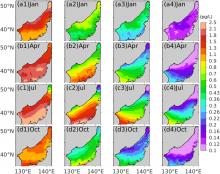
Three‑Layer Trap: Congener‑Specific PCBs Accumulation Driven by the Biological Pump in the Sea of Japan

03 Jul 2025
Institute of Industrial Science, The University of Tokyo (UTokyo-IIS)
Using a global ocean model, researchers from the Institute of Industrial Science, The University of Tokyo, and the Institute of Environmental Radioactivity, Fukushima University, found that short- and long-term contribution of treated water released from the Fukushima Daiichi Nuclear Power Plant on oceanic tritium concentration beyond the vicinity of the discharge site is negligible, even in climate change scenarios

07 Feb 2025
Hiroshima University
Because of climate change, harmful algal blooms are increasing in frequency and intensity. New science helps demystify the frequent harmful algal blooms in the Pacific off the coast of Chile by studying how algae species interact with each other and their environment.
22 Jun 2023
Newcastle University in Singapore
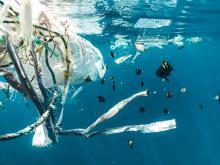
Researchers from Newcastle University, led by Dr Kheng Lim Goh, have developed a cost-effective Cellular Automata (CA) model for predicting marine plastic movement. Findings from model predictions align well with traditional particle-tracking models, suggesting its potential as a valuable tool for assessing marine plastic pollution and mitigation strategies.
06 Nov 2020
City University of Hong Kong (CityUHK)
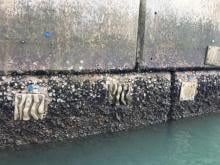
A joint-study led by a team of marine ecologists from City University of Hong Kong (CityU) has found that the eco-engineered tiles can increase habitat complexity on seawalls in Hong Kong, thereby effectively enhancing the marine biodiversity. The Hong Kong study is part of a global research project on the relationship between habitat complexity and marine biodiversity on human-built marine structures.