

Proceedings of the National Academy of Sciences of the United States of America
News
14 May 2026
Ehime University
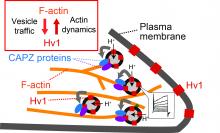
We revealed that the proton channel Hv1/VSOP, previously thought to function at the cell surface in microglia (brain immune cells), also functions on endosomes inside cells and precisely controls the actin cytoskeleton. Using advanced microscopy and electrophysiology (endosome patch-clamp), we found Hv1 acts as a brake on actin elongation. This discovery presents a novel cellular control mechanism where endosomal ion channels manipulate the cell skeleton itself, with implications for understanding neurodegenerative diseases.
01 Apr 2026
Osaka Metropolitan University
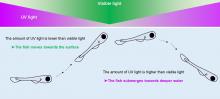
Researchers identified the tegmentum in the midbrain as an ‘integration center’ of fish. The area receives visual information from the eyes that is combined with color information detected by the pineal organ—the ‘third eye.’ These inputs are integrated to control how fish orient themselves in the water.
10 Dec 2025
The University of Osaka
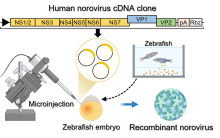
Researchers from The University of Osaka have developed a novel reverse genetics system to study norovirus, the leading cause of gastroenteritis. This efficient system can generate infectious viral particles by simply injecting viral genetic material into zebrafish embryos. They were able to alter the genetic material to create modified viruses, enabling the evaluation of antiviral drugs and novel vaccine development. The advances provided by this new system will have a significant effect on public health.

05 Sep 2025
Tohoku University
Did you know eels are one of the few vertebrates capable of swimming even when their spinal cords are completely severed? How they do this has long puzzled scientists. Thanks to a new neural circuitry model developed by an international research group, researchers have discovered that stretch and pressure feedback loops are pivotal to eels’ remarkable locomotive abilities. Their findings could inspire future robot designs.
18 Aug 2025
The University of Osaka
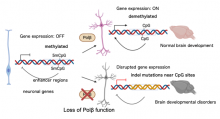
A research group led by The University of Osaka has discovered that the DNA repair enzyme Polβ plays a crucial role in protecting the developing brain from harmful mutations. The study found that a lack of Polβ leads to a significant increase in small insertions and deletions of DNA, known as indels near CpG sites, which are important regulatory regions in genes. This accumulation of mutations could contribute to neurodevelopmental disorders.

19 Jun 2025
The University of Osaka
Researchers from The University of Osaka found that Oxr1 and Ncoa7 regulate the vacuolar-type proton pump ATPase on the membrane of the Golgi apparatus and trans-Golgi network to maintain their luminal pH. Inhibition of Oxr1 and Ncoa7 function disrupts glycosylation, a key enzymatic process that takes place in these organelles, providing new insight into the mechanisms underlying congenital disorders of glycosylation.