

Communications Medicine
News
21 Apr 2026
Tohoku University
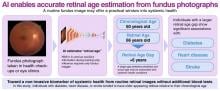
A picture (of the eye) is worth a thousand words to this AI system that predicts the risk for major diseases like diabetes, based on the gap between the patient’s real age and the estimated retinal age.

09 Jul 2025
The University of Osaka
Researchers from The University of Osaka found that a one-time genome editing treatment introducing a gene encoding the glucagon-like peptide-1 receptor agonist Exendin-4, marketed as the weight-loss drug Exenatide, results in sustained secretion of the drug, reduced food intake, and enhanced weight loss in mice. This in vivo genome editing approach provides a potential strategy for treating complex diseases without defined genetic causes, such as heart disease and autoimmune disorders, without the need for frequent medication.