

Peer Reviewed
News
17 Nov 2025
Tohoku University
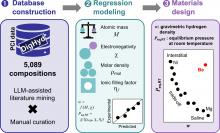
Researchers at Tohoku University used the Digital Hydrogen Platform - which combines data from over five thousand meticulously curated experimental records - as a tool to guide materials design for hydrogen storage.
14 Nov 2025
Tohoku University
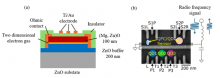
A discovery of electrically controlled triple quantum dots in zinc oxide by the Advanced Institute for Materials Research (WPI-AIMR), Tohoku University, moves us closer to energy-efficient quantum devices can be used practically.
13 Nov 2025
Duke-NUS Medical School
Artificial Intelligence (AI) has the potential to better train doctors via personalising learning experiences, simulating clinical scenarios and supporting research. Yet, there are human, financial and resource-based barriers to its adoption. Healthcare institutions, medical schools, industry partners and government bodies need to work together to develop responsible and effective solutions.

13 Nov 2025
Osaka Metropolitan University
Determining proper subsidies for walking rewards
12 Nov 2025
Tohoku University
Tohoku Medical Megabank Organization (ToMMo) has optimized how to run a large-scale genome analysis study over ten years – and they are now sharing their innovative techniques as a valuable resource to advance genome research.
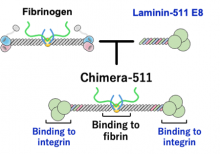
12 Nov 2025
The University of Osaka
Scientists at The University of Osaka developed a new 3D culture scaffold by integrating the strong cell-adhesive domain of laminin-511 into a clinically used fibrin gel, creating a chimeric protein called Chimera-511. This laminin-functionalized fibrin gel supports efficient 3D expansion of human iPS cells while maintaining pluripotency. As a chemically defined, xeno-free material, it offers a promising alternative to Matrigel and a potential platform for clinically applicable organoids and regenerative therapies.
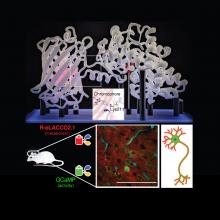
12 Nov 2025
National Taiwan University
Lactate, once thought to be just a waste product, is now recognized as an important fuel and signaling molecule in the brain. This study introduces a red fluorescent biosensor that allows scientists to visualize both brain metabolism and neuronal activity at the same time.
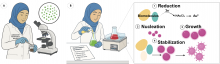
11 Nov 2025
The University of Osaka
Researchers have developed an eco-friendly method to create gold nanoparticles (AuNPs) using microalgae. This "green synthesis" avoids harsh chemicals, resulting in nanoparticles that are more stable than conventional ones. When activated by a laser, these AuNPs effectively destroy cancer cells while showing lower toxicity to healthy cells. This breakthrough promises a more sustainable and safer approach to photothermal cancer therapy and other applications in nanomedicine.
11 Nov 2025
Osaka Metropolitan University
After lecanemab treatment, MRI scans show no short-term change in waste clearance function in Alzheimer’s patients
11 Nov 2025
Tohoku University
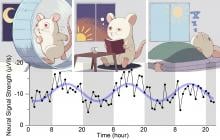
Did you know your brain might be more receptive to learning new things depending on the time of day? This study examined how a 24-hour cycle alters brain plasticity and neuronal excitability in rats.
10 Nov 2025
The University of Osaka
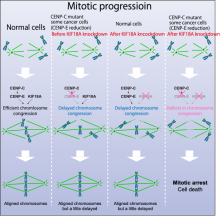
UOsaka and MIT scientists revealed that the motor proteins KIF18A and CENP-E work together to align chromosomes during mitosis. Cancer cells with reduced CENP-E levels are especially sensitive to KIF18A inhibition, and dual inhibition of both proteins leads to efficient cell death. The discovery offers new insights into chromosome mechanics and a potential strategy for targeted cancer therapy.
10 Nov 2025
Osaka Metropolitan University
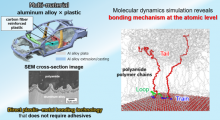
New molecular dynamics insights pave the way for stronger, lighter hybrid transportation materials
06 Nov 2025
Kanazawa University
Researchers at the Nano Life Science Institute (WPI-NanoLSI), Kanazawa University, report in the Journal of the American Chemical Society the use of three-dimensional atomic force microscopy (AFM) and molecular dynamics simulations to determine the structure of water in the hydration of different types of chitin nanocrystals, and how this affects their mechanical properties, reactivities, and interactions with enzymes and reactants.
06 Nov 2025
Ehime University
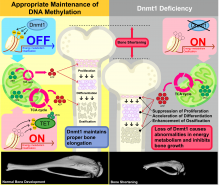
The balance of nutrition in early childhood affects height.
06 Nov 2025
Kanazawa University
Researchers at the Nano Life Science Institute (WPI-NanoLSI), Kanazawa University, report in ACS Applied Nano Materials a new method to precisely measure nuclear elasticity—the stiffness or softness of the cell nucleus—in living cells. By employing a technique called Nanoendoscopy-AFM (NE-AFM), which inserts a nanoneedle probe directly into cells, the team revealed how cancer cell nuclei stiffen or soften depending on chromatin structure and environmental conditions.
The findings provide fundamental insights into how the physical properties of cancer cell nuclei change during disease progression, highlighting their potential as biomarkers for diagnosis and treatment evaluation.
06 Nov 2025
Tohoku University
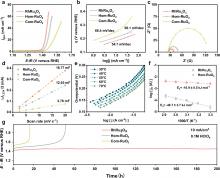
Researchers at Tohoku University found that a certain catalyst tends towards different reaction mechanisms at high versus low temperatures. This finding can be used to tailor catalysts with more stability, which ultimately could lead to upgrades for electrochemical devices such as batteries.
05 Nov 2025
The University of Osaka
Researchers from The University of Osaka have found that rituximab, a monoclonal antibody approved for the treatment of nephrotic syndrome in children in Japan, also improves disease management in adults. The drug kept adults with frequently relapsing nephrotic syndrome or steroid-dependent nephrotic syndrome relapse-free for longer, compared with placebo, with good safety. By reducing the frequency of relapses, rituximab may reduce the reliance on corticosteroids and help to improve quality of life among adult patients with these challenging conditions.

05 Nov 2025
Tohoku University
To protect the diverse marine ecosystems in the Asia-Pacific region, we need to understand the full picture via collaborative data integration efforts across institutes and different disciplines.
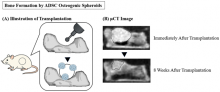
05 Nov 2025
Osaka Metropolitan University
Researchers successfully treat spinal compression fractures using stem cells from fatty tissue
05 Nov 2025
National Taiwan University
A novel study from scientists at National Taiwan University challenges the long-held view of ketone bodies as mere energy substrates, revealing instead that those produced during lactation act as epigenetic signals that promote beige adipocyte formation and protect against obesity.
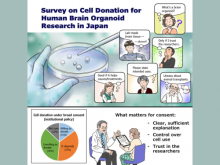
05 Nov 2025
Hiroshima University
New study argues standard forms of consent for cell donations would not be appropriate for this line of research

04 Nov 2025
Springer Nature
More than 40% of existing and planned offshore wind farm sites in Europe and Asia are exposed to wind speeds above the maximum capacity of some turbines, highlighting the need for these energy infrastructures to adapt to extreme wind events associated with climate change.
04 Nov 2025
National Taiwan University
Researchers at National Taiwan University have discovered how light, electricity, and tiny forces can work together to help wounds heal naturally and leave fewer scars, offering new hope for chronic wound care.

03 Nov 2025
Duke-NUS Medical School
Duke-NUS scientists have built one of the largest and most comprehensive maps of the developing human brain, marking a major step forward in testing new therapies for Parkinson’s disease and other neurological conditions
31 Oct 2025
National Taiwan University
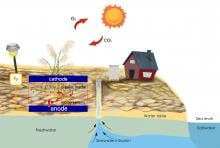
Recent discoveries have shown that MFC systems can be combined with soil to form soil microbial fuel cells (SMFCs), or further combined with plants to form plant microbial fuel cells (PMFCs). Researchers at National Taiwan University investigated the effects of SMFCs and PMFCs on reducing greenhouse gas emissions from soil.
31 Oct 2025
Tohoku University
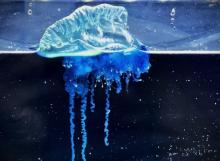
A new species of jellyfish has been discovered! Researchers at Tohoku University named this venomous creature Physalia mikazuki, after the crescent moon helmet worn by Sendai’s feudal lord Date Masamune.
30 Oct 2025
Springer Nature
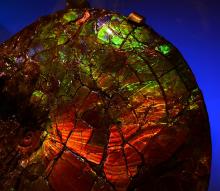
Scientists shine a light on the properties of the gemstone ammolite -- a rare type of brightly coloured fossilised ammonite shell.
30 Oct 2025
The University of Osaka
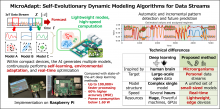
Researchers from SANKEN at The University of Osaka have successfully developed a groundbreaking “self-evolving” edge AI technology that enables real-time learning and forecasting capabilities directly within compact devices. This innovation, termed MicroAdapt, achieves unprecedented speed and accuracy. It processes data up to 100,000 times faster and achieves up to 60% higher accuracy compared to conventional state-of-the-art deep learning methods. This achievement represents a major advance toward next-generation real-time AI applications across manufacturing, automotive IoT, and medical wearables, addressing critical limitations of existing cloud-dependent AI.
29 Oct 2025
Ehime University
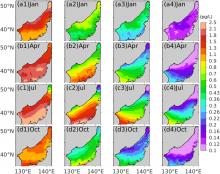
Three‑Layer Trap: Congener‑Specific PCBs Accumulation Driven by the Biological Pump in the Sea of Japan

29 Oct 2025
Tohoku University
When you think about it, baran, those little plastic grass dividers found in bentos, save space by allowing bento makers to combine foods without mixing their flavors into a single bento box. Much like baran, researchers from Tohoku University have come up with a way to combine two chemical reactions inside a single electrolytic cell, thereby reducing waste and energy consumption associated with traditional chemical reactions.
Events
Sorry, no events coming up for this topic.
Researchers
Sorry, no researchers coming up for this topic.
Giants in history
Sorry, no researchers coming up for this topic.