

Taiwan
News
10 Sep 2025
National Taiwan University
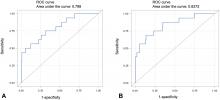
Standard blood tests can help physicians predict the risk of mortality in patients with Drug Reaction with Eosinophilia and Systemic Symptoms (DRESS). These findings may facilitate earlier interventions and enable more personalized treatment strategies for this severe cutaneous adverse reaction (SCAR).
09 Sep 2025
National Taiwan University
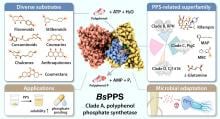
Researchers at National Taiwan University have discovered a versatile enzyme from Bacillus subtilis that efficiently attaches phosphate groups to natural compounds. This breakthrough offers a greener way to boost drug solubility and develop more effective nutraceuticals and prodrugs.
08 Sep 2025
National Taiwan University
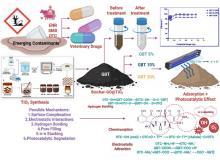
Researchers at National Taiwan University designed a graphene oxide biochar TiO₂ nanocomposite that combines adsorption capacity with superior photocatalytic activity. With strong material characterization and optoelectronic properties, it offers a novel and sustainable solution for antibiotic removal from livestock wastewater.
05 Sep 2025
National Taiwan University
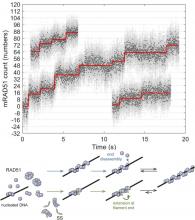
Using optical tweezers, researchers at National Taiwan University observed individual binding events in real time, offering new insights into the molecular regulation of homologous recombination.

04 Sep 2025
Asia Research News Partnerships
Taiwan Innotech Expo (TIE) 2025 will return from October 16–18 at Taipei World Trade Center, Hall 1, uniting government, academia, and industry under the theme “Cross-Domain AI Innovation: Driving the Future with Intelligence.” The event will feature 450 exhibitors presenting nearly 1,100 patented technologies, highlighting Taiwan’s role as a key driver of global innovation.
03 Sep 2025
National Taiwan University
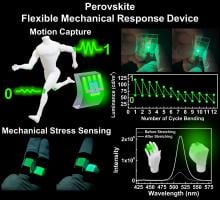
A flexible perovskite light-emitting device integrating ester polymer crystallization enables optical logic signals under bending and stretching, paving the way for motion capture and intelligent sensing applications.
27 Aug 2025
National Taiwan University
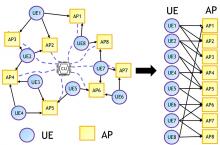
Cell-free (CF) MIMO network is emerging as a key B5G/6G technology for improved connectivity, spectral efficiency, and service quality. This work proposes a novel CF-MIMO signal detector that can reduce the energy consumption by up to 58%.

26 Aug 2025
National Taiwan University
Researchers at National Taiwan University developed a biodegradable, electroconductive self-healing hydrogel combined with acupuncture that restores motor function and protects brain neurons in Parkinson’s disease models.
22 Aug 2025
National Taiwan University
Scientists from National Taiwan University System developed a next-generation nanomaterial-enhanced mass spectrometry system that dramatically boosts sensitivity and accuracy for detecting multiple classes of psychoactive substances. This approach overcomes traditional matrix interference, allowing rapid, reproducible, and interference-free drug screening for real-time diagnostics.
21 Aug 2025
National Taiwan University
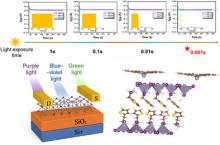
This study demonstrates that the addition of porphyrin-like additives (H₂Pc and SnPc) to 2D tin-based perovskite transistors significantly enhances charge transport and suppresses Sn²⁺ oxidation, achieving a high hole mobility of 4.40 cm² V⁻¹ s⁻¹. Moreover, the devices exhibit fast (0.001 s) and stable nonvolatile photomemory behavior under multi-wavelength optical stimuli, paving the way for neuromorphic computing applications.
20 Aug 2025
National Taiwan University
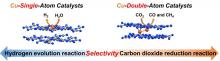
Researchers report a Cu-based catalyst on graphitic carbon nitride with tunable atomic configurations, revealing that intercalated Cu dual-atom selectively drives CO2 reduction to methane with 88% efficiency while single-atom and nanoparticle catalysts favor hydrogen evolution.
19 Aug 2025
National Taiwan University
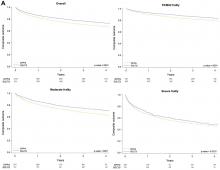
Taiwanese research team provides important new evidence on diabetes medications' respiratory outcomes, with implications for patients with dual chronic conditions.
18 Aug 2025
National Taiwan University
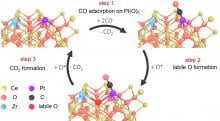
Paving the way for cleaner air and greener chemical processes.

07 Aug 2025
National Taiwan University
Prof. Fang-Jen S. Lee's team at National Taiwan University discovered that an intermediate cellular metabolism molecule, glycerol, regulates the localization and function of the Golgi protein Imh1, thus revealing a previously unappreciated connection between cellular metabolism and vesicular transport.

06 Aug 2025
National Taiwan University
Scientists found three language-model chatbots — even with advanced prompt‐engineering tricks — often give suboptimal guidance across stroke prevention, diagnosis, treatment and recovery, highlighting the need for human oversight to ensure appropriateness and safety.

05 Aug 2025
National Taiwan University
A research team at National Taiwan University has developed a new stem cell-based vaccine that could help prevent and treat colorectal cancer.

04 Aug 2025
National Taiwan University
Researchers from the Department of Chemistry, National Taiwan University, develop a new synthesis route for ultrathin photoanodes, which enables a 100 nm tantalum nitride layer to outperform much thicker films fabricated through conventional oxide precursors.

29 Jul 2025
National Taiwan University
Using AI to decode system diagrams and simulate nine policy scenarios for better material reuse and resource efficiency.

28 Jul 2025
National Taiwan University
A research team from National Taiwan University, Academia Sinica, and National Taiwan University Hospital has uncovered a critical connection between a unique RNA molecule and human aging, including early-stage Alzheimer’s disease.

21 Jul 2025
National Taiwan University
A 3D paper-based analytical device (3D-osPAD) with in situ gold signal amplification enables one-step, highly sensitive detection of anti-IFN-γ autoantibodies within 10 minutes, showing 10-fold improved sensitivity and high clinical accuracy for adult-onset immunodeficiency..

14 Jul 2025
National Taiwan University
Scientists introduced a second molecule to achieve a donor–acceptor (push–pull) effect, aiming to enhance both the efficiency and stability of perovskite and organic solar cells.

10 Jul 2025
National Taiwan University
A new real-time monitoring system captures minute-by-minute changes in toxic metals resulting from traffic pollution. Research indicates that non-exhaust sources, including brake wear, significantly contribute to urban health risks.

09 Jul 2025
National Taiwan University
This research introduces a soft, injectable material designed for use in the eye to help protect and support damaged retinal tissue. It offers a gentle, biocompatible way to stabilize the inner eye environment and may assist future treatments like cell therapy and drug release.

08 Jul 2025
National Taiwan University
A daily mismatch between temperature and humidity, observed in certain mountain and waterside regions, helps regulate atmospheric dryness. However, this protective effect may weaken under global warming.

02 Jul 2025
National Taiwan University
Operando X-ray spectroscopy is a powerful tool for probing electrocatalyst dynamics—but intense X-ray exposure can distort structural insights. This study reveals flux- and dose-dependent artifact thresholds and proposes practical protocols to ensure accurate, artifact-free measurements.

01 Jul 2025
National Taiwan University
A new self-powered water sensor uses wave energy to monitor pollutants like heavy metals, microplastics, and pesticides—no battery needed.

30 Jun 2025
National Taiwan University
The high recurrence rate of bladder cancer is often attributed to inadequate tumor visualization and localization. To address this limitation, the Hotliposome group at National Taiwan University has developed a mucoadhesive nanoplatform, HMSN(E)-SH, which selectively targets tumor tissue and enhances imaging precision, supporting the advancement of non-invasive diagnostic strategies.
26 Jun 2025
National Taiwan University
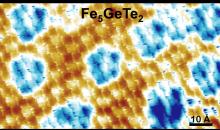
In the 2D ferromagnet Fe5GeTe2, researchers reveal atomic-scale coherence linking charge density waves, Kondo physics, and ferromagnetism—the first direct observation of synchronized electric and magnetic quantum states.

25 Jun 2025
National Taiwan University
Scientists at National Taiwan University have developed a new microfluidic system that can detect subtle chemical fingerprints from bacteria—helping identify even antibiotic-resistant strains. This technology could help physicians quickly and accurately diagnose infections in hospitals.

20 Jun 2025
National Taiwan University
The study reveals that uneven buildup of amyloid beta between the eyes may cause thinning differences in the retina, appearing early in cognitive decline. This eye-based asymmetry could offer a simple, non-invasive way to detect cognitive frailty at its earliest stages.
Events
Sorry, no events coming up for this topic.
Researchers
Sorry, no researchers coming up for this topic.
Giants in history
Sorry, no researchers coming up for this topic.