

Thailand
News

20 Aug 2007
UNDP Asia-Pacific Development Information Programme
The aim of the project is to facilitate electronic and written communication between people in East (Indian) and West (Pakistani) Punjab through the development of a Punjabi Language Transliteration Tool.
07 Aug 2007
UNDP Asia-Pacific Development Information Programme
Almost 95 percent of enterprises in the Asia-Pacific region are SMEs. While ICT can benefit them, they have been slow to adopt ICT due to many reasons. This e-Primer, with a foreword by Kim Hak-Su discusses benefits ICT brings to SMEs, explores uses, surveys past policies and programmes and recommends policy options for interested governments.
02 Aug 2007
UNDP Asia-Pacific Development Information Programme
This recently completed project aimed to develop a mobile telemedicine system in Indonesia using existing Internet communication technology. This system will allow remote patients to receive a routine check-up using a mobile phone and local hospitals to respond faster by being able to contact specialists in spite of geographic barriers.
24 Jul 2007
UNDP Asia-Pacific Development Information Programme
Many countries in the Asia-Pacific region are collecting and analysing large amounts of biological data but have their progress is impeded by low network bandwidths. This project addresses the problem of low bandwidth and reliability through the introduction of third generation P2P protocols.
18 Jul 2007
UNDP Asia-Pacific Development Information Programme
This APDIP e-Note highlights possible solutions for bridging the gap between ICT skill demand and supply.
22 Jun 2007
UNDP Asia-Pacific Development Information Programme
Telecentres are being promoted as an answer to the problems of the digital divide as there are still large sections of society that do not enjoy access to ICTs and are therefore at risk of being excluded from the socio-economic benefits that such access brings. Telecentres have been springing up across developing Asia.
13 Jun 2007
UNDP Asia-Pacific Development Information Programme
ICT is used in almost all phases of the disaster management process. In the disaster mitigation and preparedness process, ICT is widely used to create early warning systems. This APDIP publication gives examples of its use in disaster management.
13 Jun 2007
UNDP Asia-Pacific Development Information Programme
This publication, with a foreword by Executive Director of UNIFEM, Noeleen Heyzer, looks at information and communications technology (ICT) for development through a gender lens and discusses ICT within a gender equality framework.
19 Mar 2007
IPS Asia Pacific
Apart from an updated web logo, new sections have also been added to encourage a lively interaction among existing and potential members. We aim to provide a venue for journalists to expand their network and strengthen existing ties with their colleagues worldwide through a dynamic exchange of opinion.
19 Mar 2007
IPS Asia Pacific
The boom in large-scale interconnectivity of transport, power and market systems in the Greater Mekong Sub-region shrouds another kind of interconnectivity that is less visible, but whose impacts are no less profound: a rise in the exchanges of television and radio airwaves, leading to greater exchanges of information and ideas across borders.
16 Feb 2007
IPS Asia Pacific
A controversial cover of The Economist last year asked, with not much self-reflexive irony, “Who killed the newspaper?” The suggestion of death seems, in hindsight, grossly exaggerated. Asia Media Report: A crisis within explores a more specific and far-reaching concern: the death of news as we know it.
13 Feb 2007
IPS Asia Pacific
'Stories from the Asia Water Wire' is a compilation water and development articles written by journalists in 2005 and 2006 and featured in the Asia Water Wire (www.asiawaterwire.net).
12 Jan 2007
IPS Asia Pacific
'Asia Media Report: A Crisis Within', a report on media trends in Asia produced and coordinated by IPS Asia-Pacific, is now off the press.
21 Sep 2006
Institute for Dispute Resolution, Khon Kaen University
To people around the world, the coup de’tat in Thailand on September 20, 2006, was a big shock. In contrast, to many Thais, especially those who are over 25 years or older, the coup was not a big scare to them. Since, Thailand became a democracy country 73 years ago, Thailand experienced several bloodless coups.
20 Sep 2006
Institute for Dispute Resolution, Khon Kaen University
IDR aims to be the information center for major conflict in Thailand and internationally, to conduct research and management training in areas of natural resources, environment and public policy dispute cases.
18 Sep 2005
Mahidol University
The courses aim to train young researchers on the tropical diseases of TDR portfolio (Malaria, Tuberculosis, Dengue, Leishmaniasis, Chagas’ disease, African Sleeping Sickness, Leprosy, Filariasis, Onchocerciasis and Schistosomiasis)
- « first
- ‹ previous
- 1
- 2
- 3
- 4
Events
Sorry, no events coming up for this topic.
- « first
- ‹ previous
- 1
- 2
- 3
Researchers
Sorry, no researchers coming up for this topic.
Giants in history

The first Thai woman to receive a degree in medicine, Margaret Lin Xavier (29 May 1898 – 6 December 1932), is best remembered for her compassion towards her less privileged patients.
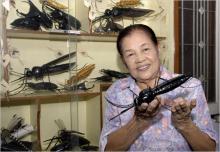
Rampa Rattanarithikul is a Thai entomologist who is a leading expert on mosquitoes. Rattanarithikul began her scientific career as a technician collecting mosquito specimens for the United States Operations Mission (USOM) malaria control program. Throughout her career, she discovered 23 species and officially described 13 others.
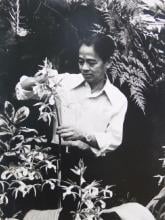
Rapee Sagarik (4 December 1922 – 17 February 2018) was Thailand’s renowned expert on orchids.
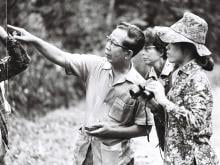
Thai physician and conservationist Boonsong Lekagul (1907 – 1992) made major contributions to the preservation of his country’s wildlife.