

Biology
News
21 Nov 2017
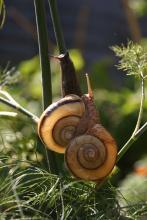
According to a recent study, differently-coiled types of Japanese land snails should in fact be considered a single species.
15 Nov 2017
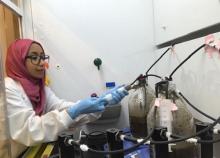
Treating wastewater with solar irradiation shows promise in reducing two E. coli strains but a resilient strain persists.
07 Nov 2017
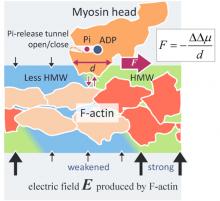
The actin and myosin complex (actomyosin) generates contraction force of a muscle utilizing the adenosine triphosphate (ATP) hydrolysis reaction. Many attempts have thus been made to explain the molecular origin of the actomyosin motility.
06 Nov 2017
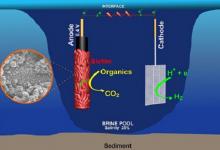
Promising electrochemical technologies for cleaning wastewater are boosted by discovery of extremophilic microbes in the Red Sea.
03 Nov 2017
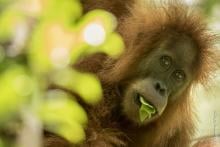
Acclaimed Primatologist Urges Indonesian Government to Protect First New Species of Great Ape Described in Nearly 90 Years.

31 Oct 2017
The world’s warmest sea is heating up faster than the global average, which could challenge the ability of the Red Sea’s organisms to cope.
30 Oct 2017
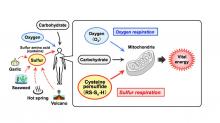
A common sulfur metabolite having antioxidant activity appears to be formed with the help of an enzyme found in mitochondria, highlighting a potential area of research for future treatments of various diseases.

25 Oct 2017
A student from South Korea's Ulsan National Institute of Science and Technology (UNIST) was given the 2017 AMOREPACIFIC Great Global Next Generation Research Award.
25 Oct 2017
A professor, affiliated with South Korea's Ulsan National Institute of Science and Technology (UNIST), has been recognized by Suh Kyungbae Foundation.
24 Oct 2017
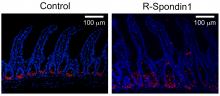
A physiological approach to restore the gut’s ecosystem in various diseases by using antimicrobial peptides has been developed by Hokkaido University scientists.
10 Oct 2017
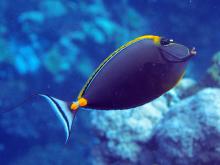
Symbiotic giant bacteria enable Red Sea surgeonfish to specialize their diets.
03 Oct 2017
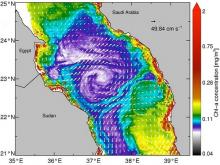
Satellite imagery shows how currents shape the Red Sea ecosystem.
20 Sep 2017
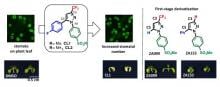
Discovery of small molecules that increases the number of stomata on plant leaves
14 Sep 2017
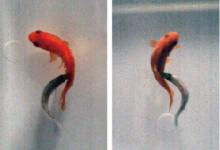
Two researchers from Nagoya University and the University of Toyama find scale-eating fish have a naturally stronger side for attacking prey fish, and learn to use the dominant side through experience.
14 Sep 2017
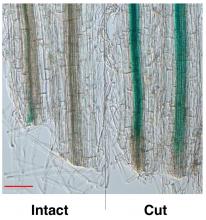
The molecular mechanism behind root regeneration after root cutting in plants has been discovered. A finding which could lead to the development of new methods for regulating plant growth in agriculture and horticulture.
05 Sep 2017
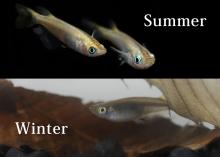
A research group from the National Institute for Basic Biology and Nagoya University in Japan found that color perception of Medaka, a small fish inhabiting rice fields and streams, varies greatly according to seasonal changes.
31 Aug 2017
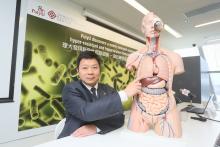
The Hong Kong Polytechnic University (PolyU) discovered a newly emerged superbug, hyper-resistant and hypervirulent Klebsiella pneumoniae, which may cause untreatable and fatal infections in relatively healthy individuals and will pose enormous threat to human health.
28 Aug 2017
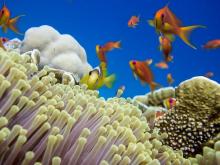
When faced with high salinity, the tiny plant cells within coral tissue alter their metabolites to better cope with stress.
18 Aug 2017
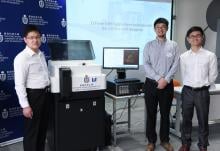
Researchers at The Hong Kong University of Science and Technology (HKUST) have developed a new generation of microscope, which not only could capture 3D live cell videos, but the resulted images are also of much higher quality, greatly enhancing the accuracy and the scope of research on cell biology.
18 Aug 2017
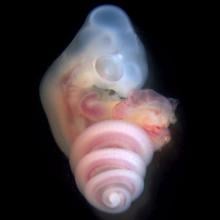
Researchers at Nagoya University uncover the gene and protein involved in the determination of the hind legs in tetrapods.
10 Aug 2017
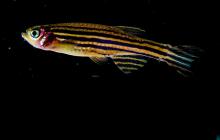
A research team in Korea succeeded in measuring multichannel EEG of zebrafish using non-invasive method. It is expected to be used in the development of new drugs to treat brain diseases such as epilepsy syndrome.
08 Aug 2017
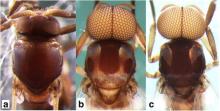
Researchers from the Zoological & Ecological Research Network (ZEN), and Tropical Infectious Diseases Research & Education Centre (TIDREC), University of Malaya have successfully discovered 111 new species of black flies belonging to five subgenera of the genus Simulium in the Oriental Region.
31 Jul 2017
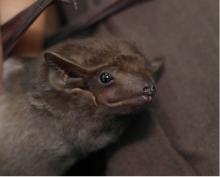
Researchers from University of Malaya and China Agricultural University painstakingly searched for all bats’ records in Peninsular Malaysia and found records for 110 species. This first comprehensive list of bat species found in Peninsular Malaysia has been published in the scientific journal PLOS ONE recently.
28 Jul 2017
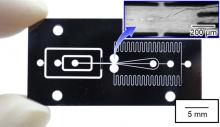
A research group in Nagoya University developed a high-speed cell sorting method of large cells with high-viability using dual on-chip pumps.
23 Jul 2017
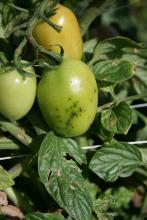
Plants can reprogram their genetic material to mount a defensive response against pathogens, which may have applications for agriculture.
21 Jul 2017
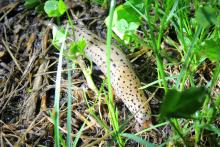
Citizen science has revealed the spread of the invasive giant slug Limax maximus and its potential native predator in Japan, providing new insights into predator-prey dynamics between introduced prey and native predators.
18 Jul 2017
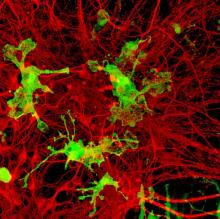
A new method that leads to the formation of specialized tissue cells could improve the understanding of neurodegenerative diseases, inflammatory diseases and cancer.
17 Jul 2017
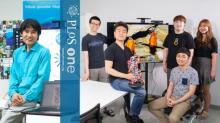
South Korea's Ulsan National Institute of Science and Technology has presented, for the first time, the whole genome sequence and analyses of the Myotis rufoniger.
12 Jul 2017
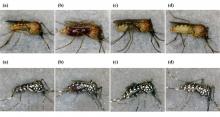
Nagoya University forensic scientists show that viable DNA samples can be taken from mosquito blood meal that has been digested for up to two days.
11 Jul 2017
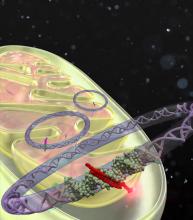
A new molecule that reads mitochondrial DNA could pave the way to treat some genetic nerve and muscle diseases.
Events
Sorry, nothing coming up for this discipline
Researchers
Sorry, nothing coming up for this discipline
- « first
- ‹ previous
- 1
- 2
- 3
- 4
Giants in history
Sorry, nothing coming up for this discipline
- « first
- ‹ previous
- 1
- 2
- 3