

Applied Physics Express
About Applied Physics Express
Applied Physics Express (APEX) is an open access letters journal devoted solely to rapid dissemination of up-to-date and concise reports on new findings in applied physics.
News

26 Aug 2025
The University of Osaka
Researchers at The University of Osaka have developed a novel technique to enhance the performance and reliability of silicon carbide (SiC) metal-oxide-semiconductor (MOS) devices, a key component in power electronics. This breakthrough utilizes a unique two-step annealing process involving diluted hydrogen, to eliminate unnecessary impurities and significantly improve device reliability.

18 Feb 2025
The University of Osaka
A multi-institutional research team led by Osaka University has engineered a way to preserve the electrical properties of materials as they are shrunk to the nanoscale. The use of the soft substrate hexagonal boron nitride reduces damage to the atomic structure caused by strain, allowing materials to keep their conductive properties as films as thin as 12 nm.

27 Jan 2025
Tohoku University
Researchers have discovered that the gemstone spinel is capable of storing quantum information, making it a viable material in the field of quantum technology.

10 Dec 2024
The University of Osaka
A research team at Osaka University developed a compact microresonator device that generates vacuum ultraviolet (VUV) light at 199 nm. This innovation addresses the growing demand for VUV light in fields like micromachining and wafer inspection. Unlike existing gas lasers, this device offers a compact, efficient solution, potentially revolutionizing light source technology and enabling advanced applications like high-resolution medical imaging.

18 Nov 2024
The University of Osaka
Researchers at Osaka University have developed the world’s first compact, tunable-wavelength blue semiconductor laser, a breakthrough in far-ultraviolet light technology. Utilizing a novel periodically slotted structure, tunable single-mode oscillation was successfully demonstrated. The laser is suitable for pumping compact second harmonic generation devices, and far-ultraviolet light emitted from the combination enables safe, continuous sterilization and disinfection. Its compact, long-lasting design makes it ideal for integration into household appliances, with wide-ranging potential to enhance indoor health and safety.
11 Sep 2023
The University of Osaka
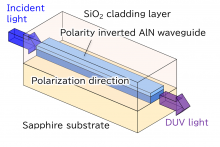
A research team led by researchers from Osaka University created an aluminum-nitride device that can convert visible light into deep-ultraviolet light through the process of second harmonic generation. This work can lead to the development of practical devices that can sterilize surfaces with ultraviolet radiation while using less energy.

19 Jul 2021
Institute of Industrial Science, The University of Tokyo (UTokyo-IIS)
Researchers from The University of Tokyo Institute of Industrial Science report a machine learning-based model for predicting the bonding properties of materials
07 Dec 2020
Tohoku University
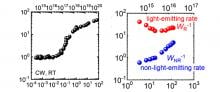
A recent study has measured the internal quantum efficiency (IQE) of Zinc-Oxide (ZnO) crystals in both the light-emitting process and non-light-emitting process.
06 Oct 2020
Tohoku University
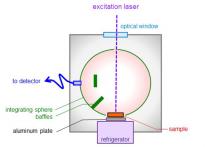
Tohoku University researchers have improved a method for probing semiconducting crystals with light to detect defects and impurities. The details of their 'omnidirectional photoluminescence (ODPL) spectroscopy' set-up were published in the journal Applied Physics Express, and could help improve the fabrication of materials for electric cars and solar cells.

31 Mar 2020
Tohoku University
A new X-ray imaging technique could identify lesions and tumors before ultrasound or MRI can.
09 Dec 2019
Tohoku University
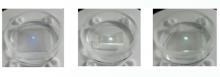
Researchers at Tohoku University have discovered a way to detect carbon impurity in nitride semiconductors using light.
07 Nov 2019
Nagoya University
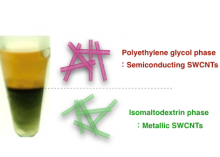
A dietary fibre can help separate out semiconducting carbon nanotubes used for making transistors for flexible electronics.
07 Jun 2019
Tohoku University
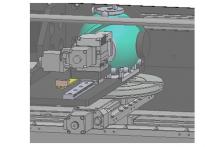
Tohoku University researchers have developed a technique using a hollow sphere to measure the electronic and optical properties of large semiconducting crystals. The approach improves on current photoluminescence spectroscopy techniques and could lead to energy savings for mass producers, and thus consumers, of power devices.
05 Apr 2018
Hokkaido University
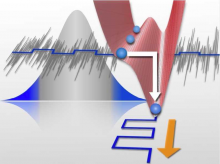
A team of Japanese researchers has discovered a new mechanism to explain stochastic resonance, in which sensitivity to weak signals is enhanced by noise. The finding is expected to help electronic devices become smaller and more energy-efficient.
19 Dec 2016
Tohoku University
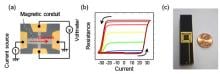
Researchers at Tohoku University have, for the first time, successfully demonstrated the basic operation of spintronics-based artificial intelligence.
03 Jun 2015
Tohoku University
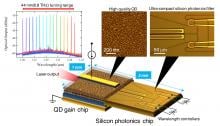
Researchers at Tohoku University and the National Institute of Information and Communications Technology (NICT) in Japan, have developed a novel ultra-compact heterogeneous wavelength tunable laser diode.

08 Oct 2014
IOP Publishing
IOP Publishing congratulates Japanese-born scientists Isamu Akasaki, Hiroshi Amano and Shuji Nakamura on becoming the latest Nobel prize laureates for their invention of “efficient blue light-emitting diodes which has enabled bright and energy-saving white light sources"

20 Jun 2014
National Institute for Materials Science (NIMS)
Using a soft X-ray microscope, a Japanese research team has examined the nanostructure of organic solar cells and discovered that different molecules are intermixed in each molecular domain.
24 Mar 2011
Toyohashi University of Technology
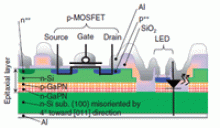
Silicon-based semiconductor devices dominate the microelectronics industry and are used for the fabrication of high density integrated circuits comprising of memory and processing devices. However, silicon has an indirect band gap, which severely limits its use for fabricating photonic devices such as light emitting diodes (LEDs) and lasers.
31 Jan 2011
National Institute for Materials Science (NIMS)
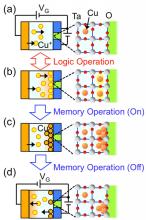
Development of novel transistor with combined logic and memory functions with power consumption reduced to one-millionth that of conventional devices.