
Blood
About Blood
Blood, the flagship journal of the American Society of Hematology, published online and in print, provides an international forum for the publication of original articles describing basic laboratory, translational, and clinical investigations in hematology.
- Website: https://ashpublications.org/blood
- Current Issue: https://ashpublications.org/blood/issue
News
25 Mar 2026
The University of Osaka
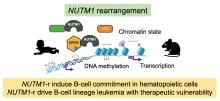
Researchers from The University of Osaka found that leukemia caused by NUTM1 rearrangements is distinguished from other forms of B-cell acute lymphoblastic leukemia (B-ALL) by a unique pattern of gene activity and gene regulation. Unlike the common form of B-ALL caused by KMT2A rearrangement, which is resistant to treatment, leukemic cells with NUTM1 rearrangements are highly sensitivity to chemotherapy.

03 Feb 2025
The University of Osaka
Researchers from Japan find that certain antioxidant enzymes, called selenoproteins, significantly contribute to fighting cell aging. The team used a gene knockout mouse model to help them study the effects of disrupting selenoprotein synthesis. This knockout negatively impacted hematopoietic stem cells and B cell-lineage immune cells, which was driven by the lack of selenoprotein-mediated fighting of lipid peroxides. These phenotypes mimic what is observed in age-related diseases, emphasizing the importance of selenoproteins in these disorders.
17 Nov 2023
Ehime University
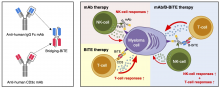
Rapid preparation and application of a panel of clinical antibodies armed with B-BiTE for refractory malignancies

01 Jun 2023
Duke-NUS Medical School
Tests could soon identify patients who will respond well to the available treatment for chronic myeloid leukaemia and those who will be resistant to it—which could improve their chances of survival.
31 Mar 2022
Hokkaido University
Gene editing technology has been used to pinpoint new molecular targets for treating an aggressive form of leukemia in adults.

18 Mar 2020
Duke-NUS Medical School
Scientists and clinicians from Duke-NUS Medical School, the Agency for Science, Technology and Research’s (A*STAR’s) Genome Institute of Singapore (GIS), and the Singapore General Hospital (SGH), have devised a novel drug combination that could treat a particularly deadly form of leukaemia, known as blast crisis (BC) chronic myeloid leukaemia (CML). The team has also developed strategies that may identify patients with early stage or chronic phase (CP) CML who are at increased risk of developing BC, and potentially preventing disease progression.