

Journal of Applied Microbiology
About Journal of Applied Microbiology
Journal of Applied Microbiology aims to publish studies which represent a significant advance in the field. The journal serves as a platform to promote all aspects of applied microbiology.
- Website: https://academic.oup.com/jambio
- Current Issue: https://academic.oup.com/jambio/issue
News

18 May 2026
Professor Liang Wang has just been appointed new Lead Editor in Microbiology in Health and Disease at the Journal of Applied Microbiology. In a fascinating new Q&A, he discusses antimicrobial resistance, emerging fields in microbiology and Helicobacter pylori.
06 Sep 2023
Osaka Metropolitan University
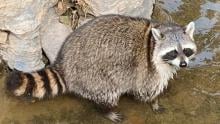
In recent years, an emerging zoonotic pathogen called E. albertii, transmitted by wild animals such as raccoons, has garnered attention due to its remarkable similarities to several strains of Escherichia coli (E. coli), including O157, and its potential to cause severe illness, particularly in children. A research group at Osaka Metropolitan University has developed a novel culture medium that allows for the selective cultivation of E. albertii from raccoon fecal samples. This enabled the successful isolation of E. albertii even from samples with very low quantities of this bacterium. Their findings are expected to further elucidate the bacteriological characteristics of E. albertii and to contribute to the control of foodborne illnesses.
19 Jul 2023
Scientists have combined two light wavelengths to deactivate a bacterium that is invulnerable to some of the world’s most widely used antibiotics, giving hope that the regime could be adapted as a potential disinfectant treatment.
26 May 2023
Osaka Metropolitan University
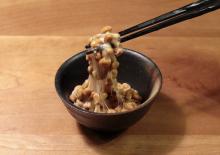
Eating fermented foods might be the secret to a healthy and long-lived society
23 Jun 2021
Osaka City University
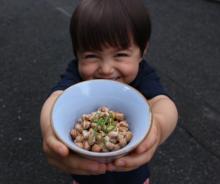
Researchers from Osaka City University find that when the larva nematode C. elegans is fed a diet of Bacillus subtilis var. natto, a bacteria used to ferment soy beans into the traditional Japanese food natto, upon reaching adulthood these worms are able to survive infections from the gram-positive bacteria Staphylococcus aureus and Enterococcus faecalis longer than when fed a standard diet of non-pathogenic E. coli.