

Journal of Clinical Investigation
About Journal of Clinical Investigation
The Journal of Clinical Investigation is a premier venue for discoveries in basic and clinical biomedical science that will advance the practice of medicine.
- Website: https://www.jci.org/
- Current Issue: https://www.jci.org/current
News
30 Jun 2026
National Taiwan University
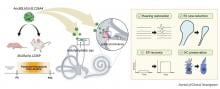
Research led by National Yang Ming Chiao Tung University and National Taiwan University uncovers a successful postnatal gene therapy strategy that restores hearing and preserves inner ear structures in a hereditary deafness model. This breakthrough identifies vital therapeutic windows after birth, paving a clear path toward clinical translation for genetic hearing loss.
17 Mar 2026
Kanazawa University
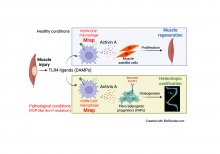
We identified Mrep macrophages that repair muscle but trigger heterotopic ossification in FOP, advancing muscle and FOP therapy development.
02 Mar 2026
Duke-NUS Medical School
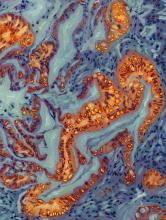
Discovery reveals how drug-resistant tumours can shift into a state that responds better to chemotherapy.
29 Aug 2025
Duke-NUS Medical School
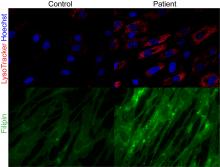
• International researchers led by Duke-NUS identify rare mutations in the SPNS1 gene as the cause of a previously undiagnosed multi-organ disorder
• Faulty fat recycling in cells triggers damaging build-up in muscles and liver
• Findings lay the groundwork for new therapies for affected families

03 Jun 2025
The University of Osaka
Researchers from The University of Osaka found that PM2.5 air pollutants negatively affect mucociliary clearance, a protective mechanism of the respiratory tract. Air pollution led to the formation of lipid peroxide-derived aldehydes, known to damage protective cells in the airway and increase the risk of infections. ALDH1A1 was found to play an important role in protection against aldehydes, making it a potential therapeutic target to diminish the negative effects of air pollution.

20 Sep 2024
Duke-NUS Medical School
A Duke-NUS Medical School-led study highlights the role of natural killer T cells in influencing the immune response to dengue virus, potentially reducing the severity of subsequent infections.
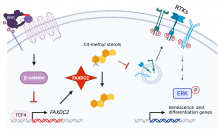
02 Feb 2024
Duke-NUS Medical School
A study led by Duke-NUS Medical School has found an important connection between cancer, stem cells and the building blocks of cholesterol. Specifically, the research reveals how the enzyme FAXDC2 influences cancer cell growth and differentiation through its role in cholesterol synthesis, suggesting possible new approaches to cancer treatment.
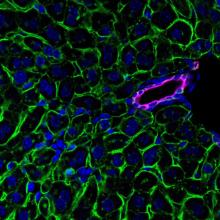
19 Jul 2023
Duke-NUS Medical School
Omega-3 lysolipids are important for protecting the liver from dietary fat, according to Duke-NUS researchers and collaborators from SGH.
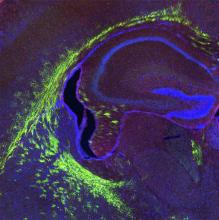
05 May 2023
Duke-NUS Medical School
Scientists have found a lipid transporter crucial to regulating the cells that make myelin, the nerve-protecting sheath.
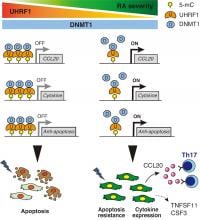
07 Jun 2022
Ehime University
Potential of a novel therapeutic strategy for rheumatoid arthritis by UHRF1 stabilization
We identified an epigenetic regulator UHRF1 that suppresses various pathogeneses in rheumatoid arthritis. The UHRF1 expression level in synovium showed a negative correlation with the severity of pathogenesis in patients with rheumatoid arthritis and mouse arthritis models. In addition, stabilization of the UHRF1 expression achieved improvement of the arthritis pathology. Our results indicate that the stabilization of the UHRF1 protein is a potential therapeutic strategy for rheumatoid arthritis patients.

02 Sep 2021
Duke-NUS Medical School
A rapid way to track an elusive part of the immune system will bring better vaccine strategies
27 Aug 2019
Duke-NUS Medical School
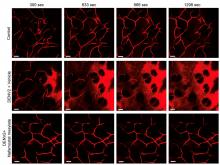
New study reveals enzyme plays key role in potentially fatal dengue haemorrhagic fever and shock; suggests clinically approved tryptase inhibitor could be key in future targeted treatment.

14 Jun 2018
Hokkaido University
A metabolic process that provides heart muscle with energy fails to mature in newborns with thickened heart walls, according to a Japan–Canada research team.

23 Apr 2010
RIKEN
Therapeutic strategies that block inflammatory response to islet cell transplantation may accelerate treatment of diabetic patients