

The Journal of Immunology
About The Journal of Immunology
The Journal of Immunology publishes peer-reviewed manuscripts describing novel findings in all areas of experimental immunology, including both basic and clinical studies.
- Website: https://journals.aai.org/jimmunol
- Current Issue: https://journals.aai.org/jimmunol/issue
News
11 Sep 2025
The University of Osaka
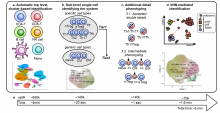
An international research group led by The University of Osaka has developed scODIN, a novel computational tool to classify cell types from single-cell RNA sequencing (scRNA-seq) data. Existing methods struggle to balance speed and accuracy, often misclassifying rare or transitional cells. scODIN overcomes this limitation by combining a hierarchical classification system (Tier system) with k-nearest neighbor inference. This approach allows for the rapid and accurate classification of large datasets, processing 650,000 cells in just six minutes. The tool's improved accuracy stems from its ability to identify cells at varying levels of detail, recognize intermediate phenotypes through double labeling, and recover cells affected by dropout events. scODIN promises to accelerate biomedical discoveries by enabling more precise and efficient analysis of complex biological processes and disease mechanisms.
12 Mar 2024
Hokkaido University
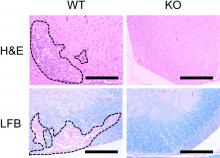
A new study highlights a potential therapeutic target for immune-related disorders, such as multiple sclerosis and asthma.
17 Mar 2023
Tohoku University
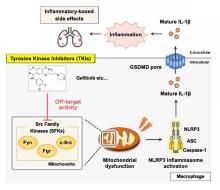
Tyrosine kinase inhibitors (TKI) are employed to attack specific types of cancer cells. The downside to using TKs is that they can cause serious inflammation. A team of researchers has discovered the underlying mechanism that causes this inflammation.
02 Aug 2019
Hokkaido University
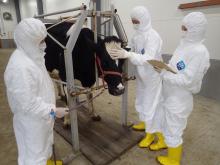
Scientists have succeeded in reducing levels of the bovine leukemia virus (BLV) in cows with severe infections by combining an immune checkpoint inhibitor and an enzyme inhibitor. The finding could be utilized to control other diseases in cattle, and perhaps in humans someday.