

Physical Review Applied
About Physical Review Applied
Physical Review Applied (PRApplied) is an online-only journal dedicated to publishing the highest quality research across all aspects of experimental and theoretical applications of physics, including their interactions with other sciences, engineering, and industry.
- Website: https://journals.aps.org/prapplied/
- Current Issue: https://journals.aps.org/prapplied/issues/current
News
30 Sep 2026
Tohoku University
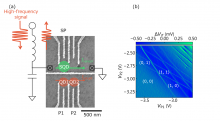
Researchers at Tohoku University and collaborators have demonstrated key technologies for controlling and measuring electrons in zinc oxide quantum dots, an important step toward developing spin-based quantum devices. Their results provide a new platform for exploring how electron spins behave in this promising material.
28 May 2026
Tohoku University
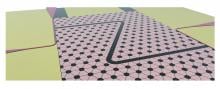
Spin waves are a promising way to reduce the energy-consumption of computing. New research shows that sending spin waves along a zig-zag path boosts the signal over 5,000 times compared to previous methods.
23 Oct 2025
Hiroshima University
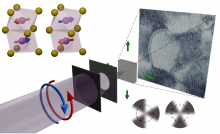
An international team has provided experimental evidence of bulk altermagnetism in MnTe. Using resonant X-ray nanoimaging, they resolved magnetic domains and confirmed their altermagnetic nature, establishing a powerful tool for future 3D and real-time studies of magnetic textures.

04 Aug 2025
Singapore University of Technology and Design
A research team led by SUTD proposes a quantum-enhanced framework for processing complex topological signals that could one day outperform classical methods in recommendation systems, network science, and more.

01 May 2025
Tohoku University
A research team at Tohoku University’s Advanced Institute for Materials Research (WPI-AIMR) has developed a new technique to rapidly and accurately determine the charge state of electrons confined in semiconductor quantum dots—fundamental components of quantum computing systems. The method is based on Bayesian inference, a statistical framework that estimates the most likely state of a system using observed data.
01 Feb 2024
Tohoku University
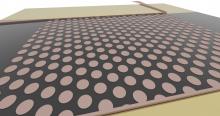
A collaborative group of researchers has potentially developed a means of controlling spin waves by creating a hexagonal pattern of copper disks on a magnetic insulator. The breakthrough is expected to lead to greater efficiency and miniaturization of communication devices in fields such as artificial intelligence and automation technology.
20 Oct 2023
Tohoku University
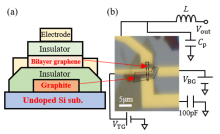
Graphene is often referred to as a wonder material for its advantageous qualities. But its application in quantum computers, while promising, is stymied by the challenge of getting accurate measurements of quantum bit states with existing techniques. Now, Tohoku University researchers have developed design guidelines that enable radio-frequency reflectometry to achieve high-speed electrical readouts of graphene nanodevices.

30 Jan 2023
Tohoku University
Everyday electronics, such as our phones, employ surface acoustic wave devices for frequency filtering and sensing. But this consumes a lot of energy, serving as a drain on battery life. Now, a team of researchers has developed a new acoustic waveguide based on the mathematical concept of topology, which will help alleviate this problem.