

Scientific Reports
About Scientific Reports
Scientific Reports is an open access journal publishing original research from across all areas of the natural sciences, psychology, medicine and engineering
- Website: https://www.nature.com/srep/
News
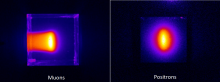
03 Feb 2021
Nagoya University
The quality of muon beams can now be assessed thanks to a new technique that has produced the first known images of these high-energy particles.
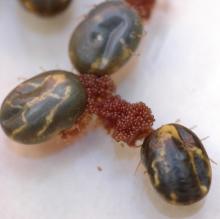
28 Jan 2021
Hokkaido University
A tick saliva study reveals immune responses that could lead to better protection for cattle.
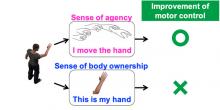
20 Jan 2021
Tohoku University
Patients with motor dysfunctions are on the rise across Japan as its population continues to age. A Tohoku University researcher has developed a new method of rehabilitation using virtual reality to increase the sense of agency over our body and aid motor skills.
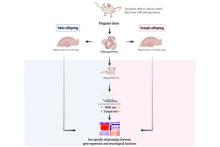
19 Jan 2021
Tohoku University
Autism has a higher prevalence in males than females. Bisphenol A (BPA) is a common chemical found in plastics, our food, and even the human placenta. Higher prenatal exposure to BPA is thought to increase the risk of autism. Researchers have, for the first time, identified autism candidate genes that may be responsible for the sex-specific effects of BPA.
15 Jan 2021
Tohoku University
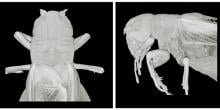
A research group compared how crickets adapt to limb removal, revealing more about adoptive locomotion and the mechanisms underpinning it.

24 Dec 2020
International Institute for Integrative Sleep Medicine (WPI-IIIS), University of Tsukuba
Researchers at WPI-IIIS find that normal sleep in mice depends on bacteria that help make neurotransmitters such as serotonin in the gut. The article, “Gut microbiota depletion by chronic antibiotic treatment alters the sleep/wake architecture and sleep EEG power spectra in mice,” was published in Scientific Reports.

15 Dec 2020
Hiroshima University
An AI might soon help stroke survivors get the right treatment by detecting a patient’s post-stroke depression type, a frequently seen neuropsychiatric manifestation after a stroke that could impair functional recovery.
10 Dec 2020
Hokkaido University
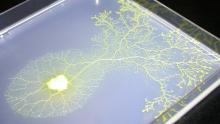
Researchers at Hokkaido University and Amoeba Energy in Japan have, inspired by the efficient foraging behavior of a single-celled amoeba, developed an analog computer for finding a reliable and swift solution to the traveling salesman problem — a representative combinatorial optimization problem.
11 Nov 2020
Tohoku University
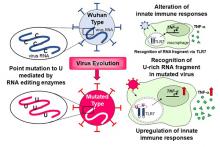
Our bodies could be inducing mutations in the COVID-19 virus that activate immune cells to increase the production of pro-inflammatory molecules.

05 Nov 2020
Institute of Industrial Science, The University of Tokyo (UTokyo-IIS)
Research shows that Japan’s noncompulsory state of emergency generally succeeded in reducing human movement. A study from The University of Tokyo Institute of Industrial Science used mobile phone location data for January–April 2020 to record and plot movement of people in metro Tokyo during the emergence and first wave of COVID-19. They found a movement reduction of over 50%, which in turn limited social contact and slowed infection spread.
30 Oct 2020
Hiroshima University
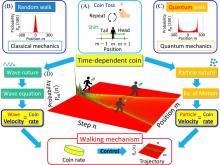
A research team based in Japan may be moving toward a more controlled walk by unveiling the mechanism underlying the directional decision of each quantum step and introducing a way to potentially control the direction of movement.
12 Oct 2020
Hokkaido University
Scientists have estimated that the age of an individual does not indicate how likely they are to be infected by SARS-CoV-2. However, development of symptoms, progression of the disease, and mortality are age-dependent.
14 Sep 2020
Daegu Gyeongbuk Institute of Science and Technology (DGIST)
Scientists at Daegu Gyeongbuk Institute of Science and Technology, Korea, show that it is possible to distinguish between left-handed and right-handed people by noninvasively monitoring just their brain activity during passive tactile stimulation. These results are key in haptic research (the study of sensory systems) and have various important implications for brain–computer interfaces, augmented reality, and even artificial intelligence.
11 Aug 2020
Daegu Gyeongbuk Institute of Science and Technology (DGIST)
Scientists from the Daegu Gyeongbuk Institute of Science and Technology, Republic of Korea, discover a new way to diagnose Alzheimer’s disease by analyzing the levels of specific proteins in nasal discharge. This simple and inexpensive method could help in timely diagnosis of Alzheimer’s disease, in order to start treatment as soon as possible, thus delaying disease progression.
05 Aug 2020
Kanazawa University
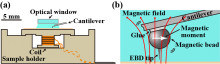
Research at Kanazawa University as reported in Scientific Reports demonstrates atomic force microscopy imaging that gets around the challenges of exciting very small cantilevers at their high megahertz resonance frequencies. The approach accomadates wide frequency bandwiths, and is applicable for photosensitive materials in a wide range of liquids.

17 Jul 2020
Hokkaido University
Scientists have found the interstellar organic matter could produce an abundant supply of water by heating, suggesting that organic matter could be the source of terrestrial water.
11 Jun 2020
Tohoku University
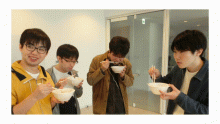
We move our eyes several times per second. These fast eye movements, called saccades, create large image shifts on the retina - making our visual system work hard to maintain a stable perceptual world. Remapping the retinal image compensates for this; however, errors in actual eye movements cause image shifts, even with remapping.

09 Jun 2020
Tohoku University
A new study reveals that asteroid impact sites in the ocean may possess a crucial link in explaining the formation of the essential molecules for life. The study discovered the emergence of amino acids that serve as the building blocks for proteins - demonstrating the role of meteorites in bringing life's molecules to Earth, and potentially Mars.
14 Apr 2020
Ehime University
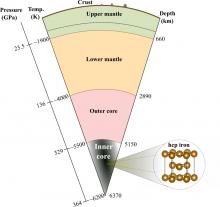
A theoretical mineral physics approach based on the ab initio methods was adopted to determine the viscosity of hexagonal, close-packed iron at the extreme pressures and temperatures corresponding to the Earth’s inner core. The results are found to deny geophysical observations of large fluctuations in the inner core rotation rate. The obtained viscosity also rules out inner core translation and provides support that the dynamics of the inner core may be governed by solid-state convection.

25 Mar 2020
Tohoku University
Some trans fats enhance a pathway inside the cell that leads to cell death. Drugs targeting this mechanism could help address diseases associated with these fats.
24 Mar 2020
Tohoku University
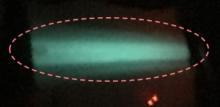
A cheap, biocompatible white powder that luminesces when heated could be used for non-invasively monitoring the temperature of specific organs within the body. Tohoku University scientists conducted preliminary tests to demonstrate the applicability of this concept and published their findings in the journal Scientific Reports.
07 Feb 2020
Hokkaido University
Scientists suggest a new strategy that uses induced pluripotent stem cells (iPSCs) to regulate immune reaction to transplanted tissues.
21 Jan 2020
Qatar University
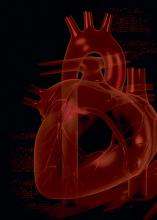
Using tissue engineering techniques, researchers are developing living heart valves that can grow after implantation in the human heart.
09 Dec 2019
Tohoku University
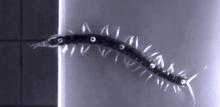
Centipedes not only walk on land but also swim in water.
27 Nov 2019
Tohoku University
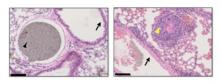
Why some existing cancer treatments are ineffective in tackling the early-stage of lung cancer? Researchers investigated the ability of anti-cancer agents to affect early-stage lung metastatic tumors.
11 Nov 2019
Daegu Gyeongbuk Institute of Science and Technology (DGIST)
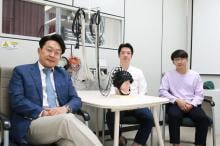
Dr. Jinung An explores the human brain to discover the origin of ‘human hand motor skill.’
29 Oct 2019
Tohoku University
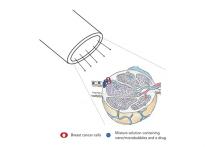
Drugs can be safely delivered to cancerous lymph nodes via the lymphatic system and then released inside the nodes using sound waves. Tohoku University researchers tested the treatment on mice with metastatic breast cancer and published their findings in the journal Scientific Reports.
30 Sep 2019
Institute for Integrated Cell-Material Sciences (iCeMS) at Kyoto University
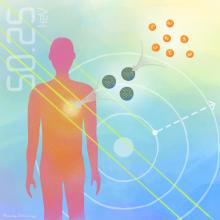
X-rays could be tuned to deliver a more effective punch that destroys cancer cells and not harm the body.

05 Sep 2019
Springer Nature
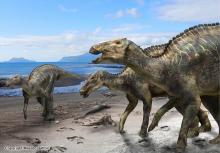
The fossil, found in Japan, furthers our understanding of hadrosaur diversity in the Far East and hadrosaurid evolution during the Late Cretaceous period (100.5–66 million years ago). The research is reported in Scientific Reports this week
05 Sep 2019
Hokkaido University
The dinosaur, whose nearly complete skeleton was unearthed from 72 million year old marine deposits in Mukawa Town in northern Japan, belongs to a new genus and species of a herbivorous hadrosaurid dinosaur, according to the study published in Scientific Reports. The scientists named the dinosaur Kamuysaurus japonicus.