

Energy
News
10 Apr 2026
National Taiwan University
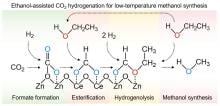
Researchers from National Taiwan University and Chulalongkorn University developed a copper-based catalyst system that improves low-temperature methanol synthesis from carbon dioxide hydrogenation by balancing two key steps in the reaction.
06 Apr 2026
Tohoku University
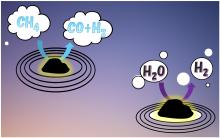
What’s the point of methane reforming to make environmentally friendly fuels if the process itself is environmentally unfriendly? To make the process greener, researchers at Tohoku University used oxygen carriers to improve efficiency.
06 Apr 2026
Osaka Metropolitan University
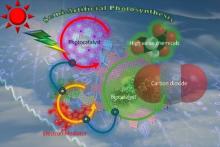
Professor Yutaka Amao’s review gives a comprehensive overview of natural photosynthesis, the principles and history of artificial photosynthesis research, and carbon dioxide capture, utilization, and storage technologies.
01 Apr 2026
The University of Osaka
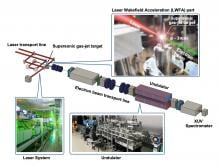
Free-electron lasers can be tuned to operate over a wide range of wavelengths, but they conventionally require large-scale facilities. Researchers from The University of Osaka show that laser wakefield acceleration can dramatically miniaturize this technology by improving plasma stability and electron beam quality. Their study demonstrates such lasers in the extreme ultraviolet, with the ultimate goal of further refining the technology to operate at x-ray wavelengths.
30 Mar 2026
National Taiwan University
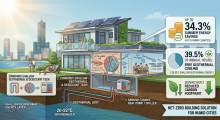
A research team from Taiwan has developed a novel hybrid air-conditioning system integrating shallow geothermal energy and a desiccant wheel. Field tests confirm it significantly reduces energy consumption by up to 34.3% in hot and humid climates, offering a promising solution for net-zero buildings.
30 Mar 2026
Daegu Gyeongbuk Institute of Science and Technology (DGIST)
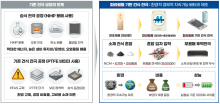
- DGIST Professor Kim Jinsoo’s team has developed dry-electrode technology for batteries using paraffin material
- Achieving a primer-free, solvent-free process… Stable charge-discharge performance for over 1,000 cycles
- 95% reduction in costs compared to conventional fluorine-based binders, with a global warming potential of 0.05%

25 Mar 2026
Lingnan University
Lingnan University has achieved outstanding results in the international higher education organisation Quacquarelli Symonds (QS) World University Rankings by Subject 2026. Nine broad and individual subjects were designated, and more than half moved up. Philosophy came in the top three in Hong Kong, and Computer Science and Information Systems is included in the list for the first time, showing Lingnan’s considerable recent progress in developing interdisciplinary research in artificial intelligence and data science, which has gained widespread recognition from the international academic community. QS stated that only three Hong Kong universities have achieved a net improvement, with Lingnan University among the most improved.
25 Mar 2026
National Taiwan University
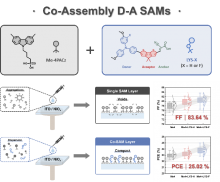
This study introduces a co-assembly strategy using two newly designed donor–acceptor self-assembled materials, LYS-H and fluorinated LYS-F, to overcome aggregation, wettability, interfacial contact, and crystallinity limitations of Me-4PACz in inverted perovskite solar cells. The fluorinated LYS-F delivers a power conversion efficiency of 25.02%, a fill factor of 83.64%, and improved ambient stability, highlighting its strong potential for the future commercialization of high-efficiency perovskite photovoltaic technologies.
24 Mar 2026
Tohoku University
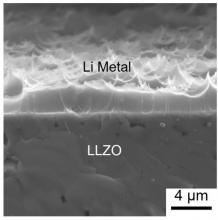
Move over lithium-ion batteries – researchers found a creative way to combine materials (lithium metal and a ceramic surface) that may prove to be better for energy storage used in electric vehicles and portable electronics.

20 Mar 2026
Springer Nature
A newly developed spray-on fabric coating could allow clothes to be cleaned using only water, reducing water and detergent needs.
12 Mar 2026
Tohoku University
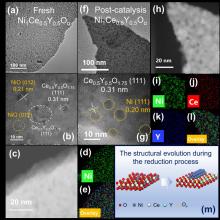
Researchers found that Y-doping (adding yttrium) to an inexpensive nickel catalyst was the key to speeding up an otherwise sluggish reaction that results in hydrogen – which can be used as a sustainable fuel.
04 Mar 2026
Daegu Gyeongbuk Institute of Science and Technology (DGIST)
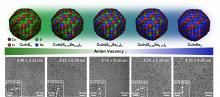
- Breakthrough in solar hydrogen production efficiency of heavy-metal-free eco-friendly quantum dots through anion defect control
- Demonstrates commercialization potential of sustainable energy transition materials; published in the international journal eScience

03 Mar 2026
Tohoku University
A team led by researchers at Tohoku University have taken the first step toward developing antiferromagnetic technology. They detected a liquid-crystal phase that may change the game for spintronic devices.
26 Feb 2026
Tohoku University
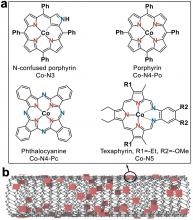
A single atom can make all the difference. Researchers at Tohoku University have shown that subtle changes in the nitrogen coordination around cobalt dramatically reshape oxygen reduction reaction performance, a cornerstone process for fuel cells and clean chemical production. These insights provide a powerful blueprint for designing next-generation single-atom catalysts to accelerate the transition to sustainable energy.
26 Feb 2026
Tohoku University
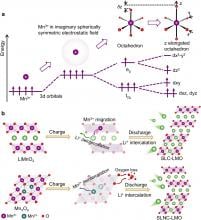
We all want cheap, long-lasting, green, and efficient energy. Researchers are helping to make this dream a reality with a new distortion-resistant material that greatly improves these aspects of a battery’s cathode.
24 Feb 2026
Osaka Metropolitan University
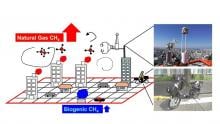
More thorough testing of methane and ethane emissions in Osaka, Japan, identified numerous natural gas-related large methane sources that were mostly overlooked in current predictions. These sources may be useful future targets for mitigating emissions.
19 Feb 2026
Daegu Gyeongbuk Institute of Science and Technology (DGIST)
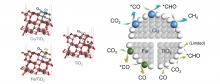
- Selective production of CO and CH₄ achieved by tuning Fe·Cu single-atom–TiO₂ interactions
- CO₂ reduction activity enhanced by 55 times (CO) and 44 times (CH₄) compared to conventional TiO₂
- Findings published in Advanced Science
10 Feb 2026
National Taiwan University
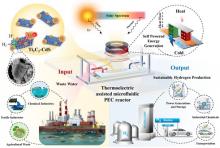
Researchers developed a compact device that converts sunlight and waste heat into clean hydrogen fuel while simultaneously purifying water. This innovative system improves energy efficiency and offers a promising solution for sustainable energy and environmental remediation.

06 Feb 2026
Tohoku University
Carbon-based π-electron compounds are usually a first pick for their catalyst potential, but researchers have developed a stable silicon version – a feat that has been a major challenge until now.

05 Feb 2026
Tohoku University
Critical to hydrogen’s widespread adoption as a clean energy source is its storage. Solid-state storage, where hydrogen is absorbed into metals, offers an alternative to high-pressure tanks. Yet hydrogen storage alloys face a trade-off between storage capacity and material stability. Tohoku University researchers discovered that magnetism governs this trade-off, and that by controlling the magnetic properties of alloys, it is possible to workaround this trade-off.
05 Feb 2026
National Taiwan University
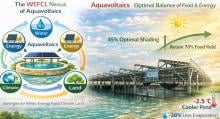
Researchers in Taiwan demonstrate that installing solar panels above clam ponds can simultaneously support aquaculture and renewable energy under increasing climate stress. Using real-world farm data, the study shows that moderate shading lowers pond temperatures, reduces water demand, and generates clean electricity. This reveals novel, practical synergies across the Water–Energy–Food–Climate–Land nexus.
05 Feb 2026
Tohoku University
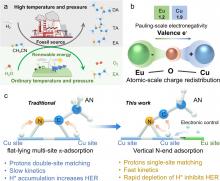
Researchers at Tohoku University have developed a much more efficient way to produce ethylamine - a crucial component for dyes, pharmaceuticals, and more. It all starts with a catalyst.
30 Jan 2026
Tohoku University
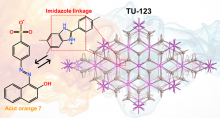
Researchers at Tohoku University developed a wastewater treatment method to help clear pollution caused by toxic, non-biodegradable dyes. The method uses a 3D, sponge-like covalent organic network to purify wastewater in a sustainable manner.

27 Jan 2026
Osaka Metropolitan University
Region-specific residential buildings solution optimizes energy-efficiency and thermal comfort
25 Jan 2026
City University of Hong Kong (CityUHK)
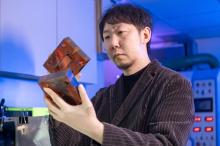
As global demand for EVs and renewable energy surges, establishing sustainable practices in lithium-ion battery production, recycling, and disposal has become critical. A collaborative study co-led by a young professor in the School of Energy and Environment at City University of Hong Kong (CityUHK) presents a promising roadmap for this transition. The study was published in Nature Communications.

21 Jan 2026
City University of Hong Kong (CityUHK)
Scientists from City University of Hong Kong and collaborators from more than 20 countries are taking FIRST steps towards safeguarding communities most affected by climate change.

21 Jan 2026
City University of Hong Kong (CityUHK)
Scientists from CityUHK have recently achieved a major breakthrough in the field of photovoltaic technology, successfully developing highly efficient and durable perovskite solar cells (PSCs) suitable for outdoor environments. It is expected to contribute to the wider adoption of solar power and advance global carbon neutrality goals.

21 Jan 2026
Xi'an Jiaotong-Liverpool University
Innovative approaches in cancer screening, drug development, and radioactive hazard protection are accelerating healthcare solutions.

20 Jan 2026
National Institute for Materials Science (NIMS)
A new material provides high-performance conversion of heat into electricity, offering a way to make electronic devices more efficient.
19 Jan 2026
National Taiwan University
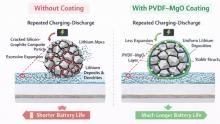
1. Simple, scalable protection for silicon-based Li-ion batteries: A low-cost polymer–ceramic coating dramatically reduces electrode damage caused by silicon expansion. 2. Much longer battery life and improved safety: The coated electrodes last hundreds more charge cycles while maintaining high efficiency and stable operation.
Events
Sorry, no events coming up for this topic.
Researchers
Sorry, no researchers coming up for this topic.
Giants in history

Anna Mani (23 August 1918 – 16 August 2001) was an Indian meteorologist who contributed significantly to the understanding of solar radiation, ozone and wind energy by developing a wide range of measurement tools. One of India’s pioneering female scientists, Mani excelled in the male-dominated area of meteorology and became the Deputy Director-General of the India Meteorological Department.

Julian Arca Banzon (13 March 1908 – 13 September 1988) was a biochemist from the Philippines who was a pioneer in alternative fuel research. Banzon investigated the use of indigenous crops as sources of renewable fuels and chemicals.