

Applied Catalysis B: Environmental
About Applied Catalysis B: Environmental
Applied Catalysis B: Environment and Energy warmly welcomes original, innovative, and high-impact contributions within the realm encompassing thermo-, electro-, and photocatalysis to advance clean energy and provide sustainable environmental solutions.
News

02 Jun 2024
Daegu Gyeongbuk Institute of Science and Technology (DGIST)
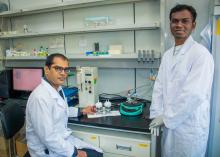
- An amorphous TiO2/CdSe photocatalyst improves CO2 conversion performance and catalyst lifetime, with quadrupled regeneration efficiency over conventional photocatalysts
- The results are published in the International Journal of Applied Catalysis B: Environment and Energy
13 Apr 2021
Daegu Gyeongbuk Institute of Science and Technology (DGIST)
Scientists develop high performing electrocatalyst to synthesize ammonia in an effort to replace conventional eco-unfriendly methods

05 Jan 2021
Osaka City University
For the first time, researchers have used a novel catalyst process to recycle a type of plastic found in everything from grocery bags and food packaging to toys and electronics into liquid fuels and wax.

09 Sep 2020
Daegu Gyeongbuk Institute of Science and Technology (DGIST)
Scientists at Daegu Gyeongbuk Institute of Science and Technology, Korea, develop a novel “heterostructured” photocatalyst using titanium and copper, two abundant and relatively inexpensive metals. Their cost-effective synthesis procedure, coupled with the high stability of the photocatalyst, provides an economically feasible way to convert waste carbon dioxide and water into useful hydrocarbon fuels using endless sunlight.
09 Jan 2020
Daegu Gyeongbuk Institute of Science and Technology (DGIST)
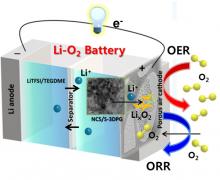
A low-cost catalyst on a sulphur-doped, porous, carbon nanostructure improves the performance of lithium batteries that run on air.

09 Jan 2019
Daegu Gyeongbuk Institute of Science and Technology (DGIST)
Researchers in Korea have fabricated nano-sized catalysts that could improve the performance and production of clean energy fuel cells.
12 Oct 2018
Daegu Gyeongbuk Institute of Science and Technology (DGIST)
Korean researchers have developed new photocatalyst synthesis method using Magnesium hydride (MgH2) and Titanium dioxide (TiO2). The result is expected to contribute to hydrogen mass production through the development of photocatalyst that reacts to solar light.
26 May 2017
Daegu Gyeongbuk Institute of Science and Technology (DGIST)
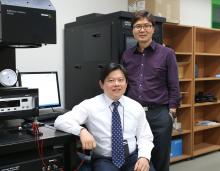
A new oxygen-deficient titanium dioxide prepared with Mg reduction method drastically improves the carbon dioxide conversion efficiency up to three times the efficiency of existing photocatalyst. It is expected to be applied for carbon dioxide resources and reduction technology.
18 Nov 2016
Ulsan National Institute of Science and Technology (UNIST)
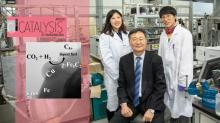
A new study, affiliated with Ulsan National Institute of Science and Technology (UNIST), South Korea, has presented new ways to produce road-ready diesel fuel from carbon dioxide (CO2).