

Current Biology
About Current Biology
Current Biology is a general journal that publishes original research across all areas of biology together with an extensive and varied set of editorial sections. A primary aim of the journal is to foster communication across fields of biology, both by publishing important findings of general interest from diverse fields and through highly accessible editorial articles that explicitly aim to inform non-specialists.
- Website: https://www.cell.com/current-biology/home
- Current Issue: https://www.cell.com/current-biology/current
News
04 May 2026
Hiroshima University
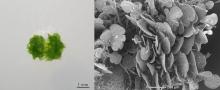
A Hiroshima-University-led research team has discovered a key gene responsible for the initiation of gemma development, acting as a "master switch" to start asexual reproduction (cloning) in the model plant Marchantia polymorpha (common liverwort).
10 Aug 2023
Hokkaido University
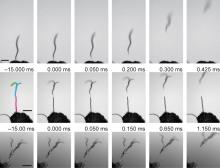
Hokkaido University researchers found that tiny nematode worm larvae surf electric fields to hitch rides on passing insects.
05 Apr 2023
Tohoku University
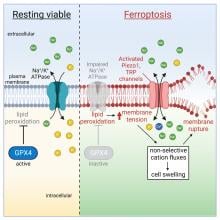
Ferroptosis is a recently discovered type of cell death associated with certain neurodegenerative, cardiovascular and kidney diseases. Whilst scientists have understood that accumulated iron and degenerated lipids trigger ferroptosis, the actual mechanisms at play have remained a mystery. A team of researchers from Tohoku University has identified where in the cells these accumulations take place, and what gets targeted as ferroptosis occurs.
31 Mar 2023
Tohoku University
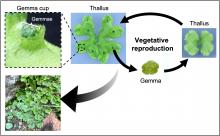
Asexual, or vegetative, reproduction in plants is controlled by environmental conditions, but the molecular signaling pathways that control this process are poorly understood. Recent research suggests that the KAI2-ligand (KL) hormone is responsible for initiating and terminating the production of gemmae, or genetically identical plantlets, on liverwort plants based on the presence or absence of specific environmental factors.
09 Aug 2022
Ehime University
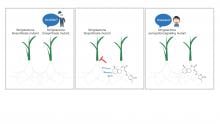
Strigolactones (SLs) trigger parasitism and symbiosis in the rhizosphere and function as a hormone in plants.
Yoneyama et al. demonstrate that rice plants sense SLs in the rhizosphere and regulate their SL biosynthesis and exudation, suggesting that SLs act as a cue for a plant-plant communication in rice plants.
11 Jul 2022
The University of Osaka
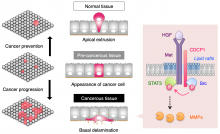
Researchers from Osaka University have shown that the oncogene-encoded molecule Src is responsible for epithelial cells developing invasive potential and overcoming the normal cellular defense of apical extrusion, but only when Src is located in lipid rafts in the cell membrane. Src is recruited and activated into lipid rafts by a molecule called CDCP1, which forms a molecular scaffold within the lipid rafts. CDCP1 could therefore be a promising new drug target for early-stage cancers.
20 Apr 2022
Kanazawa University
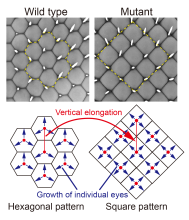
Tile patterns in which the same shape is laid out without gaps are found in the compound eyes of insects. Hexagonal tile patterns are common while shrimp eyes have a square pattern. We investigated tile pattern formation using Drosophila and revealed that the compound eye tile pattern is controlled by a geometrical division mechanism, Voronoi tessellation, in addition to physical constraints determined by the combination of the regular distribution and growth of the individual eyes.
21 Jul 2021
RIKEN
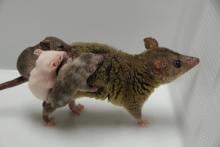
Researchers at the RIKEN Center for Biosystems Dynamics Research (BDR) have succeeded in creating the first genetically engineered marsupial. This study, published in the scientific journal Current Biology, will contribute to deciphering the genetic background of unique characteristics observed only in marsupials.

25 Feb 2020
National University of Singapore
An international team of researchers has found that there is cause for optimism for now as the global loss rate of mangrove forests is now less alarming than previously suggested.
17 Dec 2019
National University of Singapore
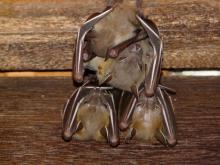
A team of researchers from the National University of Singapore has found that the effective population size and genetic diversity of Singapore’s Cynopterus brachyotis, believed to remain widely unaffected by urbanisation, has shrunk significantly over the last 90 years – revealing that the current biodiversity crisis may be much broader than widely assumed, affecting even species thought to be common and tolerant of fragmentation and habitat loss.