

Redox Biology
About Redox Biology
Redox Biology is a forum for novel research, methods and review articles in redox biology in the areas of both health and disease.
News
23 Mar 2026
National Taiwan University
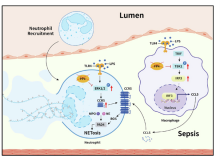
Scientists discovered a natural “brake” protein in immune cells that stops harmful overreactions during serious infections. When this brake is missing, the body’s defense cells go out of control and damage organs, but restoring it could open the door to better treatments for life-threatening sepsis.
24 Oct 2023
Osaka Metropolitan University
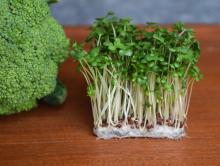
A research team from Osaka Metropolitan University has found that polysulfides are abundant in broccoli sprouts. They found that the amount of polysulfides increased dramatically during growth, by an approximately 20-fold in seeds by the fifth day of germination. Furthermore, a comprehensive analysis of the polysulfides detected a number of polysulfide candidates whose structures have not yet been determined. The identification of these unknown polysulfides and detailed analysis of their pharmacological activities are expected to enable the development of new preventive and therapeutic strategies and medicines for cancer, neurodegenerative diseases, stroke, inflammation, and other diseases.
24 Aug 2022
Hong Kong Baptist University (HKBU)
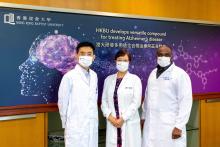
A study led by researchers from Hong Kong Baptist University (HKBU) has demonstrated that a multifunctional organic compound named F-SLOH has the potential to treat Alzheimer’s disease (AD) at an early stage. The team found that it can inhibit the aggregation of amyloid-beta (Aβ), and reduce the hyperphosphorylation of tau proteins and neuroinflammation in the brain to improve the pathological features of AD. The findings have been published in the international academic journal Redox Biology.
23 Mar 2022
Osaka City University
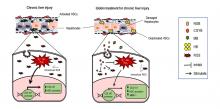
Researchers have discovered in mice an additional use of globins as an intravenous drug that can delay liver fibrosis progression. Last year, the application of recombinant human cytoglobin (CYGB) as a protein therapeutic agent against liver damage and cirrhosis was published in Hepatology (Hepatology 2021,73:2527-2545) by Professor Norifumi Kawada’s research group. Here, they studied the antifibrotic properties of the globin family members hemoglobin (HB), myoglobin (MB), and neuroglobin (NGB) in comparison with CYGB. All globins demonstrated greater antioxidant capacity than glutathione in cell-free systems. Interestingly, all globins, except HB, could enter the cells and inhibit the collagen synthesis leading to a suppression of fibrosis development both in vitro and in vivo. The study was published in the journal Redox Biology.