

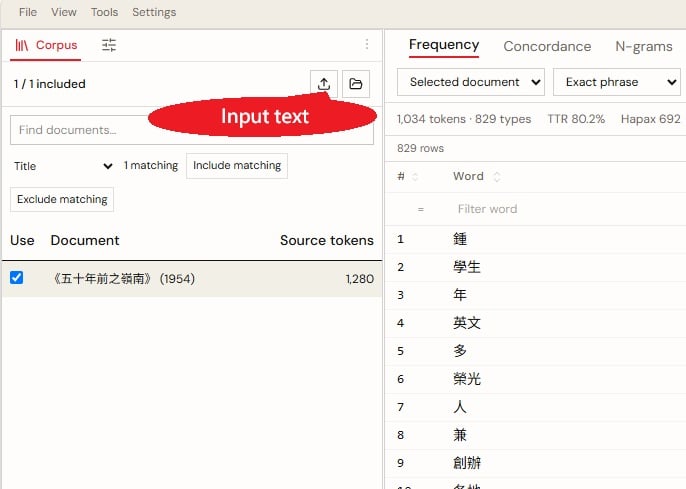
The Lingnan Guide to Digital and AI Humanities shows how to convert historical texts into analysable data. Users can also input texts to experience for themselves the text analysis functions of digital humanities tools.
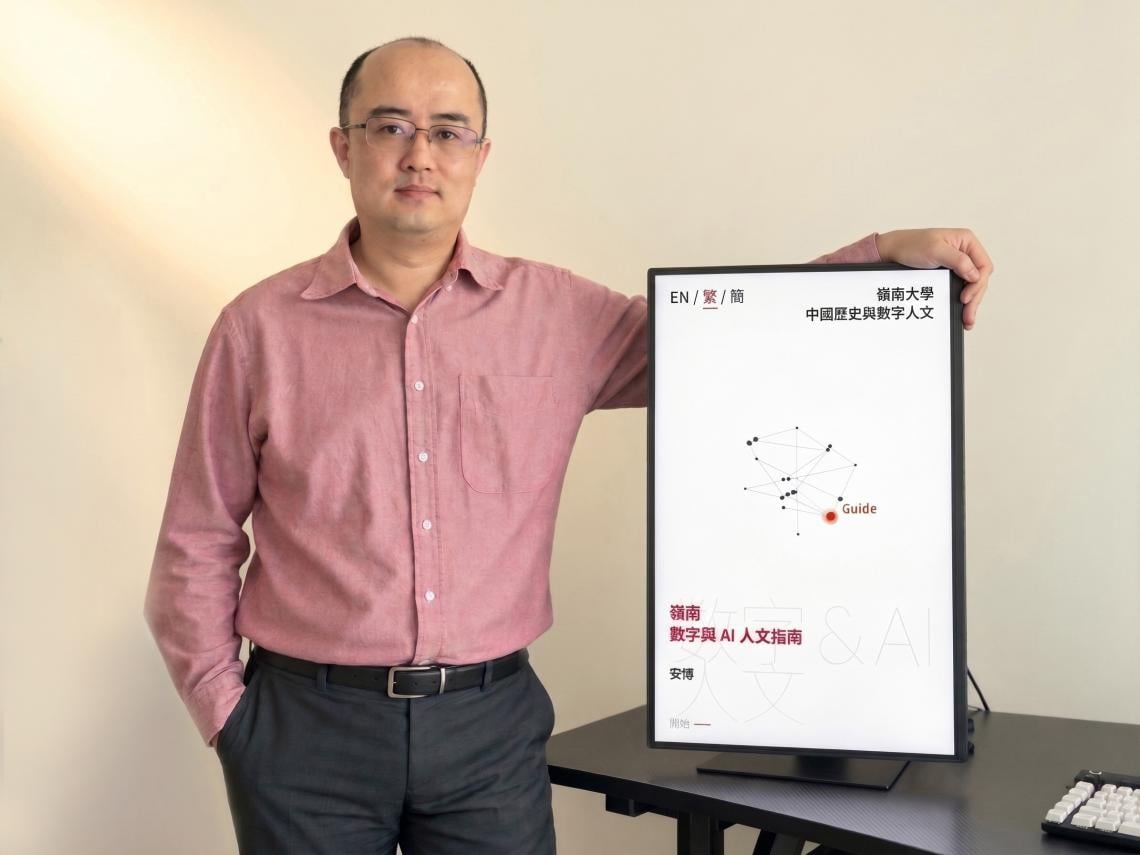
Prof An Bo, Research Assistant Professor in the Department of History at Lingnan University, led the development of the free interactive self-learning platform, the Lingnan Guide to Digital and AI Humanities, to demonstrate to the public how to utilise modern tools such as AI and digital technology to explore and learn history in a brand-new way.
Available in Traditional Chinese, Simplified Chinese, and English, the Lingnan Guide to Digital and AI Humanities is an online self-learning platform developed under the leadership of Prof An Bo, Research Assistant Professor in the Department of History at Lingnan University. Its content is structured progressively, enabling users to learn practical skills for studying history with AI from beginning to end through demonstrations on the website.
The platform also shows how historical materials can be transformed into data and knowledge to be processed, analysed, and presented. For example, users can see how three-dimensional reconstruction technology guided by historical evidence recreates the original structure and appearance of buildings that no longer exist, reproduces the sounds of the former campus, and overlays historical maps dating back nearly a century onto present-day maps to observe changes in the landscape over time and compare the differences between past and present. They can also extract people, places, and events from texts to build relationship networks, or use a text quantification analysis tool developed independently by the team to analyse their own documentary materials directly on the platform. At a time when it is difficult to distinguish AI-generated images from authentic ones, the platform also uses real examples and analysis to demonstrate how to identify and use AI-generated images with a sense of history.
Prof An said the interactive platform was originally developed as a teaching resource for the Master of Arts in Chinese History and Digital Humanities, the first master's programme of its kind in the Hong Kong SAR and the Asia-Pacific region. Recognising that the public has limited access to systematic tools for learning digital history, the team decided to revise and adapt their internal teaching materials for wider use. Following a year of development and refinement, the platform is now accessible to the public free of charge. The initiative aims to encourage people to make good use of innovative technologies while strengthening the humanistic literacy and critical thinking skills essential in the age of AI.
Prof An said, “One of the key values of history education in the digital era lies in developing critical thinking skills. This interactive platform equips the public with essential skills for organising large volumes of historical materials, verifying facts, and carrying out analysis. Particularly in an era of information overload, digital learning tools help people organise and verify sources independently, develop an objective and analytical approach to distinguishing reliable information from falsehoods, and strengthen their ethical awareness so that they can understand and use AI tools responsibly.”
Prof An added that the team plans to launch an interactive platform to complement the guide, incorporating easy-to-use AI agents that follow users’ prompts to help organise materials, analyse content, and support research workflows, enabling researchers to continue exploring the potential of human-machine collaboration in historical and documentary research.
In recent years, Lingnan has actively promoted its distinctive “Liberal Arts + Technology” development model and, through an interdisciplinary approach that brings together the arts and sciences, has been advancing “AI+” and emerging fields such as data science, while encouraging the practical application of these fields in society and industry.
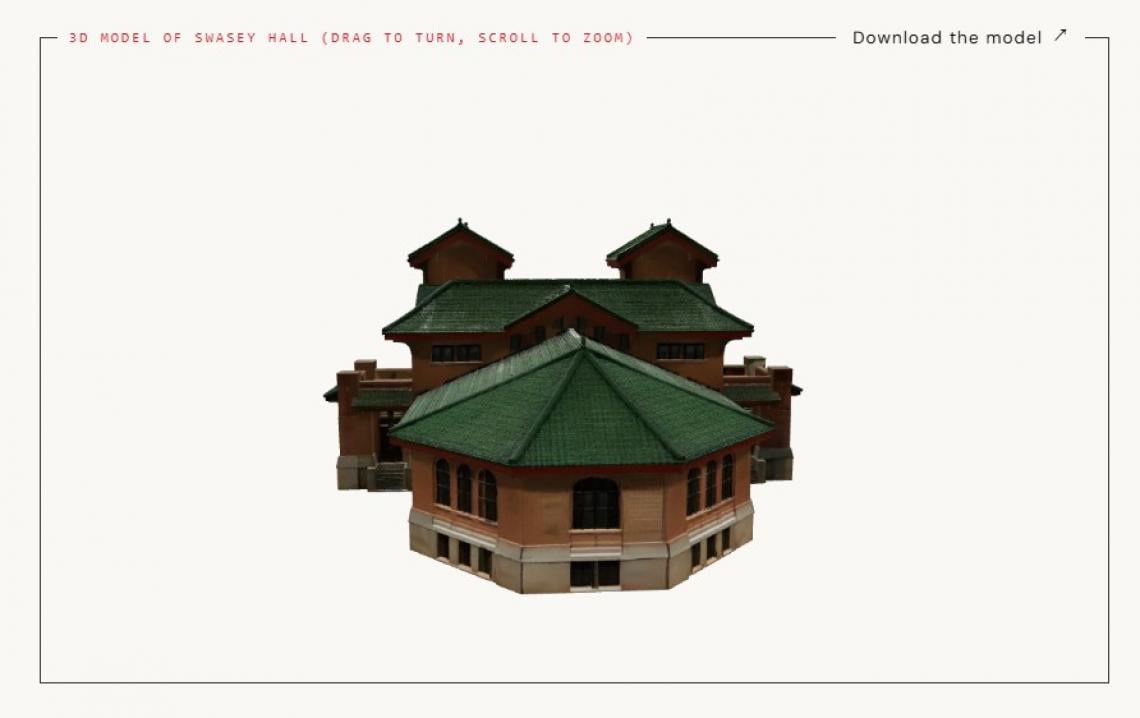
Using Swasey Hall on Lingnan University’s former Guangzhou campus as an example, the Lingnan Guide to Digital and AI Humanities demonstrates how AI-powered three-dimensional reconstruction can be used to infer the original architecture and appearance of historical buildings.
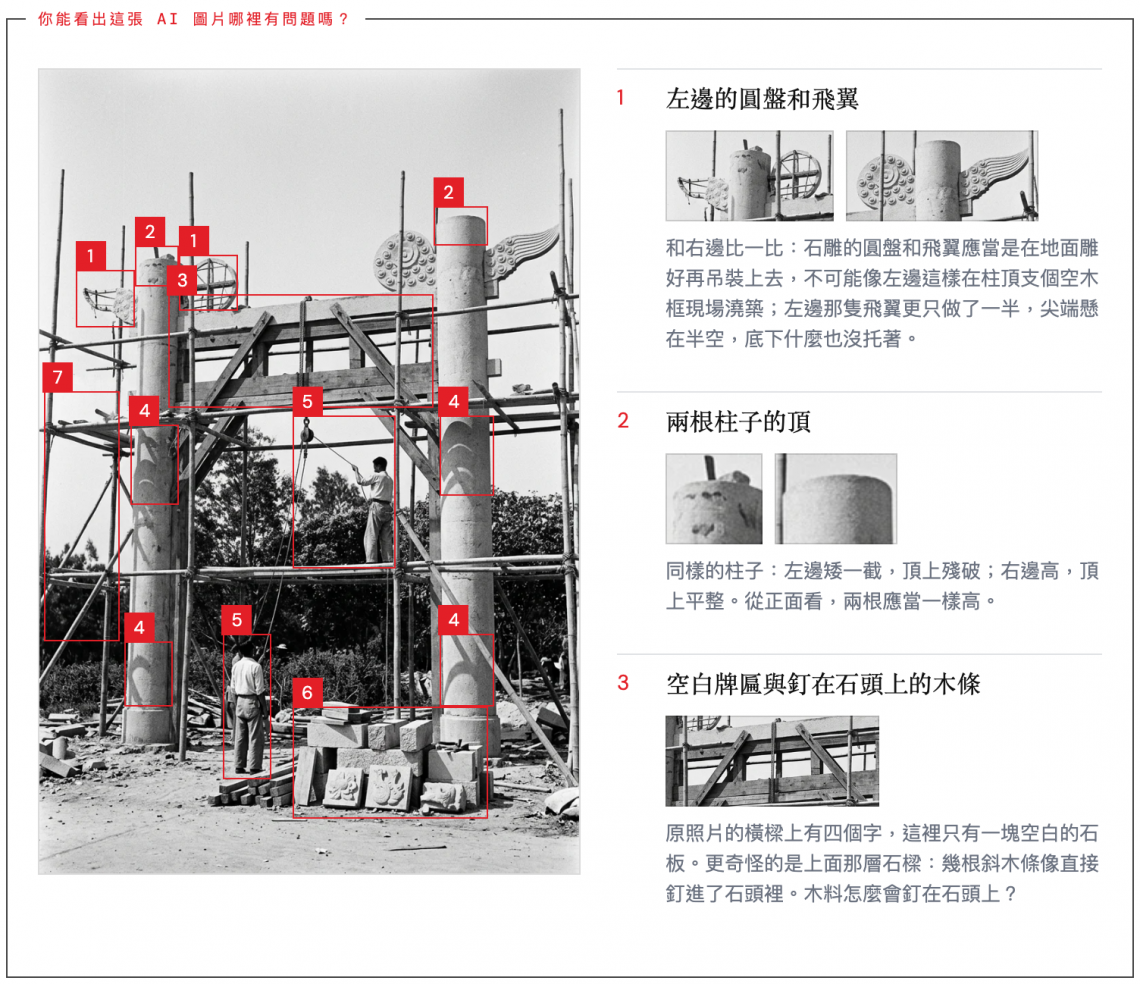
At a time when it is difficult to distinguish AI-generated images from authentic ones, the Lingnan Guide to Digital and AI Humanities uses real examples and analysis to demonstrate how to identify and use AI-generated images with historical insight.
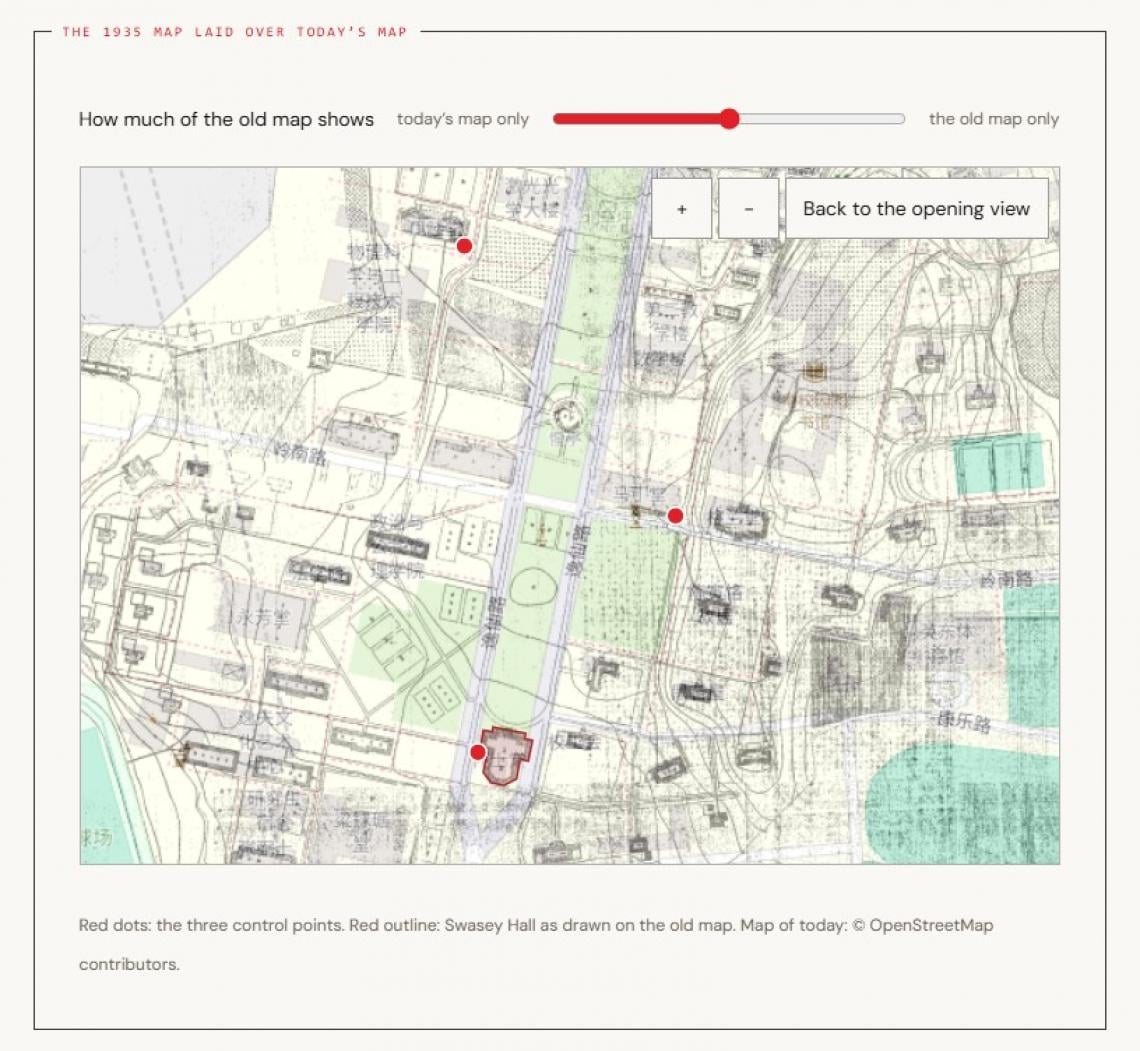
The platform overlays a nearly century-old map of Lingnan's former campus onto a modern-day map, allowing users to see past and present changes at a glance.