

New research reveals unexpected intruders in a classic tropical tree–ant relationship, raising concerns for forest recovery in human‑altered landscapes.
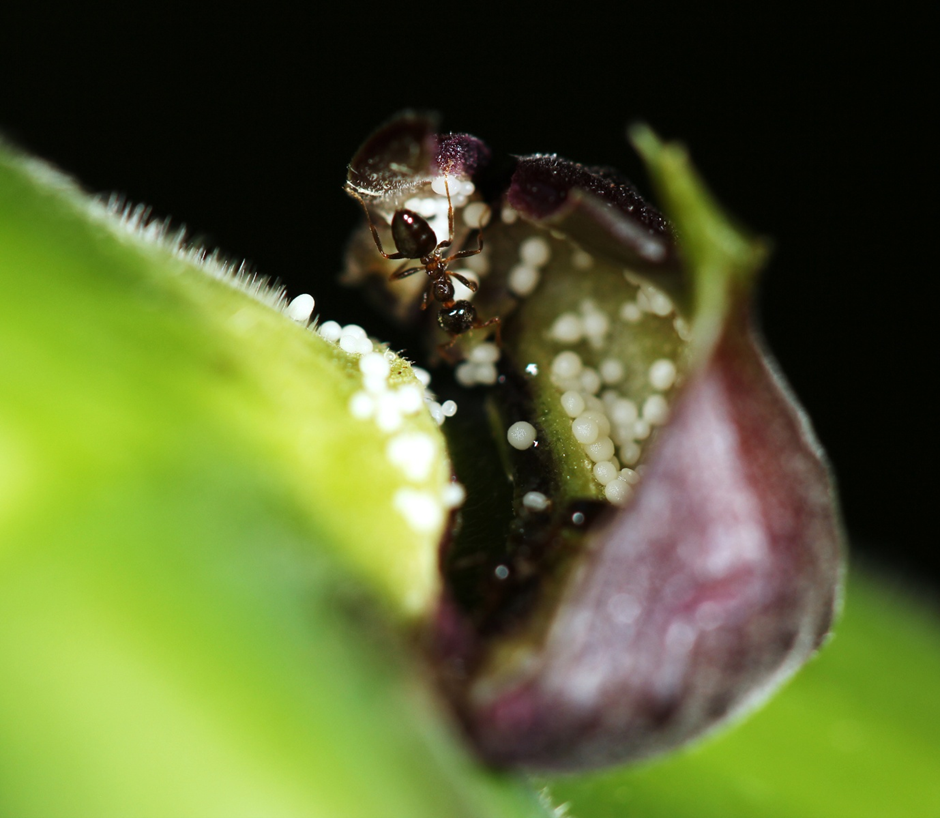
Crematogaster ant
Tom M. Fayle
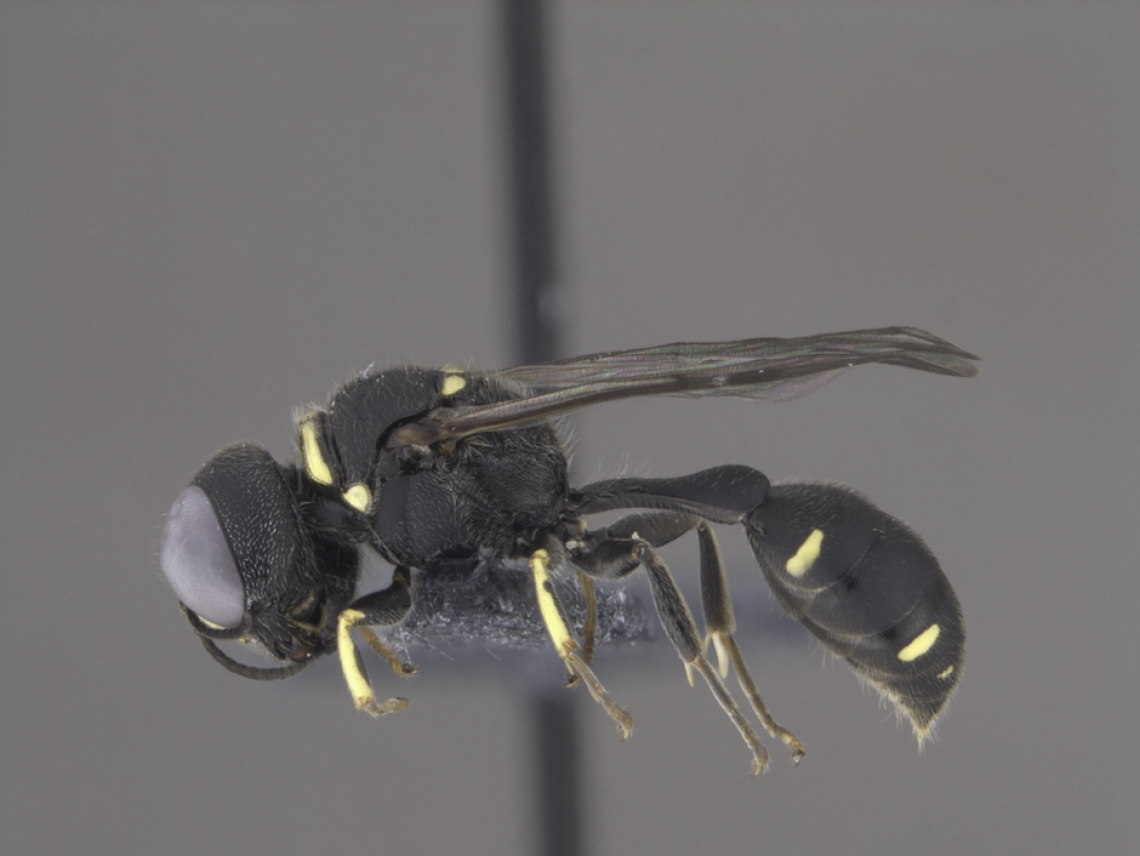
An international team of scientists from Queen Mary University of London, the Royal Botanic Gardens, Kew, the Biology Centre of the Czech Academy of Sciences and other institutions has uncovered surprising new behaviour in the tropical forests of Malaysian Borneo. In a study published in PeerJ, the researchers report that predatory wasps are increasingly taking over the hollow stems of the tropical plant Macaranga pearsonii — structures the tree has evolved specifically to house protective ant colonies.
For millions of years, these “ant‑plants” have relied on a tightly knit partnership with ants. The plants construct specialised hollow chambers and even provide nutritious food bodies, and in return, the ants aggressively defend their host from leaf‑eating insects such as caterpillars. This mutually beneficial system has helped both species thrive for at least 10 million years.
But now, this ancient alliance is being disrupted.
Predatory wasps take advantage of plant-made shelters
By dissecting young Macaranga pearsonii trees across logged forests and oil palm plantations, the researchers discovered that a species of wasp is co‑opting these hollow chambers for its own use — with significant consequences.
Lead author Mr. Lestina explains:
“While surveying these ant‑plants, I noticed that many stems had been hollowed out in an unusual way. When we opened them, they were full of flies being eaten alive by wasp larvae. Adult wasps hunt and paralyse the flies, then store them inside the plant’s cavities as food for their young.”
The study found that plants in oil palm plantations were far more likely to house these wasps than plants in logged forest. Crucially, trees occupied by wasps consistently supported much smaller ant colonies, suggesting the wasps may be displacing the ants entirely, although experiments would be needed to test this.
Human‑driven habitat change may be helping the wasps spread
Co‑author Dr Kalsum M. Yusah explains:
“Human activities are transforming habitats worldwide, and this kind of shift in species interactions is exactly what we expect to see. We don’t yet know whether this wasp is native or introduced, but its spread is clearly linked to disturbed landscapes.”
Because Macaranga species are among the first to colonise cleared or damaged areas, weakened plants could impair wider forest regeneration.
“If the plants lose their ant defenders and become less healthy, it could hinder forest recovery following disturbance,” Dr Yusah added.
Long-term evolutionary impacts could follow
Senior author Dr Fayle from Queen Mary University of London emphasised the broader evolutionary implications:
“When mutualistic benefits break down, it can drive long-term evolutionary change. If these structures become less valuable to the plants because wasps exploit them, the plants may stop investing in them. These subtle, long-term consequences of human activity are far less understood than straightforward biodiversity loss.”
The ant-plant relationship is one of thousands of tightly linked relationships in tropical ecosystems. If human disturbance allows new “invaders” - even native ones – we may see more mutualisms destabilised which could result in weaker natural defences in plants and shifts in which species dominate forests. This study serves as an early sign of how subtle ecological interactions can unravel long before species are driven to extinction.
Paper details: https://peerj.com/articles/20984/
DOI: 10.7717/peerj.20984.
About Queen Mary University of London
At Queen Mary University of London, we believe that a diversity of ideas helps us achieve the previously unthinkable.
Throughout our history, we’ve fostered social justice and improved lives through academic excellence. And we continue to live and breathe this spirit today, not because it’s simply ‘the right thing to do’ but for what it helps us achieve and the intellectual brilliance it delivers.
Our reformer heritage informs our conviction that great ideas can and should come from anywhere. It’s an approach that has brought results across the globe, from the communities of east London to the favelas of Rio de Janeiro.
We continue to embrace diversity of thought and opinion in everything we do, in the belief that when views collide, disciplines interact, and perspectives intersect, truly original thought takes form.
Advertisement