

ACS Omega
About ACS Omega
ACS Omega is an open access, broad-scope journal focused on original chemical insight, sound scientific principles, and robust experimentation rather than immediate significance.
- Website: https://pubs.acs.org/journal/acsodf
- Current Issue: https://pubs.acs.org/toc/acsodf/current
News

17 Jul 2026
Newcastle University in Singapore
Silk-reinforced bicycle tyres outperformed nylon controls and showed lower impacts in a gate-to-gate life cycle assessment.

09 Jul 2026
Newcastle University in Singapore
A study shows palm oil can replace aromatic oil in natural rubber composites while supporting greener rubber products.

08 Jul 2026
Newcastle University in Singapore
Pineapple leaf fibres gain strength through alkali treatment, supporting stronger and more sustainable biobased composites.

26 Jun 2026
Osaka Metropolitan University
Study suggests PM2.5 source apportionment may be significantly biased
17 Jun 2026
The University of Osaka
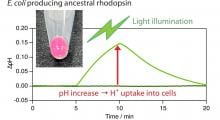
Researchers from The University of Osaka found that using a sequence analysis approach that incorporates awareness of insertions and deletions in extramembrane domains enabled accurate reconstruction of ancestral rhodopsins that folded correctly and functioned as predicted when expressed in E. coli. The researchers’ ConsistASR analytical pipeline could be used to engineer other ancestral proteins in the future.

21 May 2026
YOKOHAMA National University
A photocurable resin that can be recycled at least 10 times
16 Mar 2026
Osaka Metropolitan University
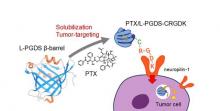
Through protein binding, molecular heavy drugs are effectively transported to cancerous tissues

10 Mar 2026
Tohoku University
Wearable medical devices, like exoskeletons, often rely on soft actuators, materials that convert electrical energy into motion. But traditional actuators often use stiff metallic materials that limit mobility. Now, an international research group has developed soft yarn actuator fibers that can bend, contract, and produce complex movements when electricity is applied.

07 Apr 2022
Hokkaido University
The molecule trimethylamine N-oxide (TMAO) can be used to reversibly modulate the rigidity of microtubules, a key component of molecular machines and molecular robots.