

Environment
News
03 Jun 2020
Ehime University
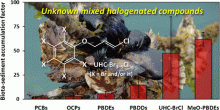
The present study screened known and unknown organohalogen compounds present in mussel and sediment samples from Hiroshima Bay. The results provided scientific evidence that unknown mixed halogenated compounds are ubiquitous in the coastal environment and possess bioaccumulative potential as high as persistent organic pollutants.

27 May 2020
Nagoya University
Scientists could gain insight into atypical sex development in vertebrates, including humans, by studying how nutrition affects sex changes in fish larvae.
25 May 2020
Hokkaido University
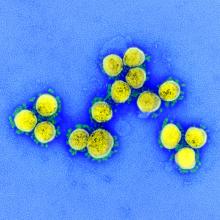
Wastewater could be used as a surveillance tool to monitor the invasion, spread and eradication of COVID-19 in communities.
06 May 2020
International Islamic University Malaysia (IIUM)
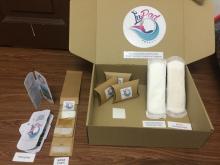
A biodegradable sanitary pad made from sago starch could add to efforts aimed at protecting the environment from plastic waste.

21 Apr 2020
Springer Nature
Springer Nature Group commits to be net carbon neutral this year, as part of an ongoing reduction in emissions and broader responsible business programme.
21 Apr 2020
Springer Nature
Communications Materials and Communications Earth & Environment join Springer Nature’s comprehensive portfolio of around 600 open access journals
05 Mar 2020
Institute for Integrated Cell-Material Sciences (iCeMS) at Kyoto University
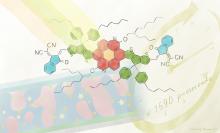
Molecular changes could improve the efficiency of next-generation photovoltaics.
28 Feb 2020
Ulsan National Institute of Science and Technology (UNIST)
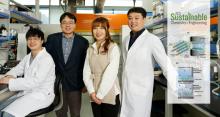
A recent study, affiliated with South Korea's Ulsan National Institute of Science and Technology (UNIST) has presenter in-depth study of the interaction mechanism between the lignin nanofilms.
26 Feb 2020
Hokkaido University
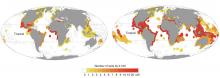
Policymakers will need to step up to the challenges caused by significant shifts in fish species distributions caused by climate change.
25 Feb 2020
National Institute for Materials Science (NIMS)
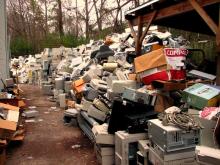
From biomemory to implants, researchers are looking for ways to make more eco-friendly electronic components.
25 Feb 2020
National University of Singapore
An international team of researchers has found that there is cause for optimism for now as the global loss rate of mangrove forests is now less alarming than previously suggested.
22 Feb 2020
Ulsan National Institute of Science and Technology (UNIST)
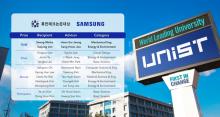
2 Gold, 3 Silver, 5 Bronze, and 2 Participation Awards have been bestowed upon South Korea's Ulsan National Institute of Science and Technology (UNIST) at this year's Samsung Humantech Paper Awards.
20 Feb 2020
Ulsan National Institute of Science and Technology (UNIST)
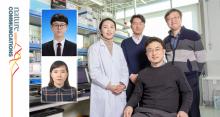
A recent study, affiliated with South Korea's Ulsan National Institute of Science and Technology (UNIST) has unveiled a novel biomass conversion technology that can turn forestry biomass residues (i.e., sawdust from timber logging) into higher value fuels and chemicals.
30 Jan 2020
Tohoku University
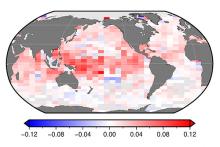
Water layering is intensifying significantly in about 40% of the world's oceans, which could have an impact on the marine food chain. The finding, published in the Journal of Geophysical Research: Oceans, could be linked to global warming.
29 Jan 2020
Electronics and Telecommunications Research Institute(ETRI)
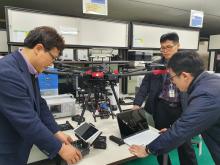
The technology analyzes water quality with drones and artificial intelligence to predict the level of algal bloom.
27 Jan 2020
International Islamic University Malaysia (IIUM)
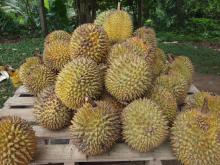
Researchers at the International Islamic University Malaysia have developed biodegradable food packaging container featuring the skin of the durian fruit that can also be used as 3D printing filament.

24 Jan 2020
Universiti Teknologi MARA (UiTM)
A biodegradable biopolymer containing turmeric oil could help extend food shelf life.
21 Jan 2020
Universiti Malaysia Sarawak
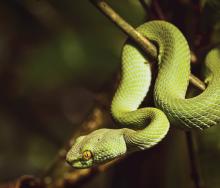
The relationship between body size and climate in lizards and snakes is more complex than originally thought.
10 Jan 2020
Daegu Gyeongbuk Institute of Science and Technology (DGIST)
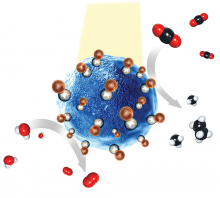
A material aims to deliver a one-two punch: recycling atmospheric carbon dioxide for the production of more sustainable hydrocarbon fuels.
17 Dec 2019
National University of Singapore
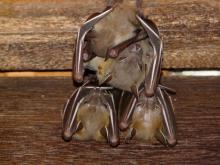
A team of researchers from the National University of Singapore has found that the effective population size and genetic diversity of Singapore’s Cynopterus brachyotis, believed to remain widely unaffected by urbanisation, has shrunk significantly over the last 90 years – revealing that the current biodiversity crisis may be much broader than widely assumed, affecting even species thought to be common and tolerant of fragmentation and habitat loss.
11 Dec 2019
IOP Publishing
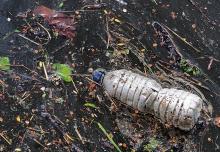
Rivers in southeast Asia transport more plastic to the ocean than some rivers in Europe, evidence from a new study in Environmental Research Letters suggests.
10 Dec 2019
The World Academy of Sciences (TWAS)
IAP outlines a set of measures to protect forests and fight climate change in response to the ongoing global crisis surrounding deforestation and forest burning
29 Nov 2019
Hokkaido University
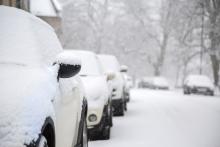
Cold waves triggered by sea ice loss in the Arctic are memorized in the Eurasian Continent, amplifying cooling in the winters to follow, according to a joint research team between Hokkaido University and Niigata University in Japan.
06 Nov 2019
National University of Singapore
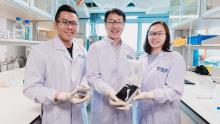
A team of engineers from the National University of Singapore has developed a highly sensitive system that uses a smartphone to rapidly detect the presence of toxin-producing algae in water within 15 minutes. This technological breakthrough could play a big role in preventing the spread of harmful microorganisms in aquatic environments, which could threaten global public health and cause environmental problems.
05 Nov 2019
Asia Research News Partnerships
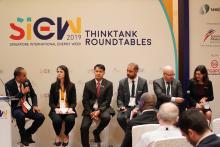
Report on Thinktank Roundtable at the Singapore International Energy Week (SIEW) 2019 - by Wei Chian, with additional reporting by ASEAN Centre for Energy (ACE)
08 Oct 2019
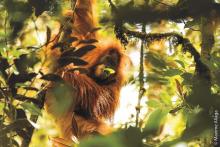
Biennial ‘Primates in Peril’ Report Spurs Critical Support for Conserving Most Imperiled Species Globally.

03 Oct 2019
Asia Research News Partnerships
Ministry of Energy joins forces with six other ministries, GAT International and Deutsche Messe to organize SETA 2019, now in its 4th year, under the concept of “Integrated Sustainable Energy Solutions For Asia”

02 Oct 2019
Asia Research News Partnerships
1st October 2019 - MITEC Kuala Lumpur, malaysia

27 Sep 2019
Asia Research News Partnerships
Call for Proposals - deadline 10 November 2019
17 Sep 2019
IOP Publishing
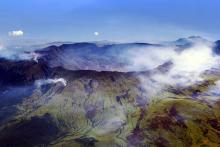
A new study has estimated for the first time how the eruption of Mount Tambora changed the probability of the cold and wet European ‘year without a summer’ of 1816.
Events
Sorry, no events coming up for this topic.
Researchers
Sorry, no researchers coming up for this topic.
- « first
- ‹ previous
- 1
- 2
- 3
- 4
Giants in history

Tetsuya Theodore Fujita (23 October 1920 – 19 November 1998) was a Japanese-American meteorologist who created the Fujita scale that classifies the strength of tornadoes based on damage to structures and vegetation.

Archana Sharma (16 February 1932 - 14 January 2008) conducted research into plant and human genetics that expanded the understanding of both botany and human health. In relation to botany, she uncovered the means by which asexually-reproducing plants evolve into new species.
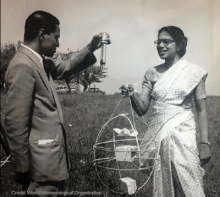
Anna Mani (23 August 1918 – 16 August 2001) was an Indian meteorologist who contributed significantly to the understanding of solar radiation, ozone and wind energy by developing a wide range of measurement tools. One of India’s pioneering female scientists, Mani excelled in the male-dominated area of meteorology and became the Deputy Director-General of the India Meteorological Department.
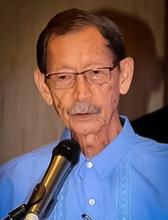
Edgardo Dizon Gomez (7 November 1938 – 1 December 2019) was a Filipino marine biologist who recognized the need to protect marine resources, especially coral reefs, in the Philippines.
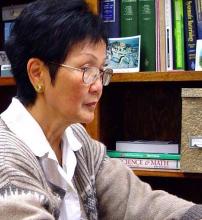
Roseli Ocampo-Friedmann (23 November 1937 – 4 September 2005) was a Filipino-American scientist whose research focused on cyanobacteria and microorganisms that inhabit extreme environments.
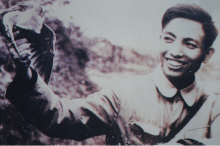
Võ Quý (1929 – 2017) was a Vietnamese ornithologist who studied the destruction of tropical forests and agricultural lands in Vietnam by Agent Orange, a herbicide used by the U.S. military during the Vietnam War. In addition to planning forest restoration projects, Quý rediscovered the rare eastern sarus crane, an endangered species that had vanished during the war.
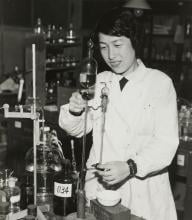
Japanese geochemist Katsuko Saruhashi developed the first method and tools for measuring carbon dioxide in seawater