

Environment
News

18 Mar 2022
Asia Research News
Asia Research News monitors the latest research news in Asia. Some highlights that caught our attention this week are bug survival tactics, melting permafrost, and a new type of dinosaur.
15 Mar 2022
Earth-Life Science Institute (ELSI), Tokyo Institute of Technology
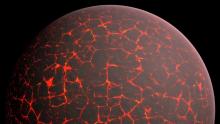
Unlike most traditional Japanese universities, the Earth-Life Science Institute (ELSI) at Tokyo Institute of Technology has created a ‘flat’ and diverse research environment. On its ten-year anniversary, Outgoing Director Kei Hirose shares what is special about the institute and the secret behind its successful management.

15 Mar 2022
Earth-Life Science Institute (ELSI), Tokyo Institute of Technology
The Earth-Life Science Institute (ELSI) based at Tokyo Institute of Technology will reach a turning point this year. For the first time in its 10-year history, it will extend the scope of its initial research theme, "The Origins and Evolution of the Earth and Life", to include searching for evidence of extra-terrestrial life. ELSI’s new director, Yasuhito Sekine, told Asia Research News what they hope to achieve in the next phase and how.
12 Mar 2022
Hokkaido University
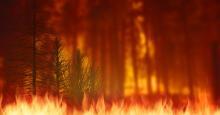
A recent summertime climate pattern could be driving co-occurring European heatwaves and large-scale wildfires over Siberia, Canada and Alaska.
11 Mar 2022
Universiti Malaysia Sarawak
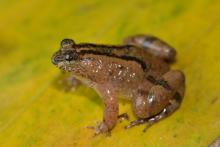
A study on puddle frogs suggests underestimated biodiversity in Southeast Asia.

10 Mar 2022
Hokkaido University
Scientists have developed a model that predicts six tropical fish species will expand into northern parts of Japan as sea temperatures rise.
10 Mar 2022
Tohoku University
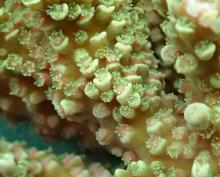
Researchers discovered the gene expression regulation mechanisms that drive coral transition from a floating larvae to one that sits sedentary in reefs.
10 Mar 2022
Asia Research News
Giants in History: Roseli Ocampo-Friedmann (23 November 1937 – 4 September 2005) was a Filipino-American scientist whose research focused on cyanobacteria and microorganisms that inhabit extreme environments.
08 Mar 2022
Institute of Industrial Science, The University of Tokyo (UTokyo-IIS)
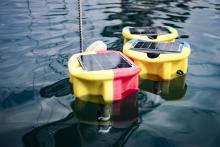
Device designers at the University of Tokyo are developing cheap and accessible ways to monitor and explore the sea.

08 Mar 2022
National Institute for Materials Science (NIMS)
A magnetic hybrid system generates electricity day and night with radiative cooling and solar heating.
08 Mar 2022
City University of Hong Kong (CityUHK)
Whale and dolphin post-mortem imaging could breathe new life into marine conservation.
25 Feb 2022
Institute of Policy Studies of Sri Lanka
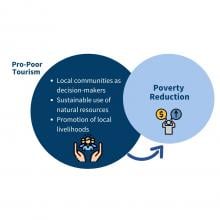
The tourism industry’s performance was hampered first by the Easter Sunday bomb explosions in 2019 and then the COVID-19 pandemic. Sri Lanka saw a decline in tourist arrivals from 1,913,702 in 2019 to 194,495 in 2021. It is estimated that revenue declined from USD 3600 million to USD 261 million during 2019-2021, reflecting a staggering 92.75% reduction due to a fall in arrivals.

18 Feb 2022
Asia Research News monitors the latest research news in Asia. Some highlights that caught our attention this week are an android child, "unhackable" internet, a cancer-fighting nanoparticle from corn, and less-than-green practices by some oil companies.
11 Feb 2022
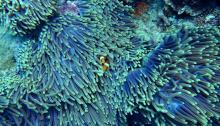
On the occasion of the One Ocean Summit taking place in the French city of Brest, UNESCO has announced that at least 80% of the seabed will be mapped by 2030, compared to 20% currently, with the support of its Member States and the private sector.
10 Feb 2022
Asia Research News
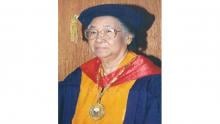
Giants in History: Eminent Filipina scientist and educator Clara Lim-Sylianco (18 August 1925 – 23 July 2013) is remembered for her extensive research on mutagens – often-carcinogenic agents that permanently alter genetic materials such as DNA – antimutagens and bioorganic mechanisms.
02 Feb 2022
Institute of Industrial Science, The University of Tokyo (UTokyo-IIS)
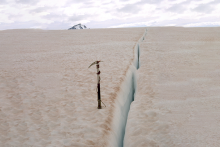
Researchers from Institute of Industrial Science, The University of Tokyo find that the occurrence of red snow is closely tied to the length of the snow melt season and new snowfall events

16 Dec 2021
Asia Research News
Susan Lim (14 February 1952 – 2 August 2014) was a Malaysian parasitologist who specialized in studying a class of flatworms, the Monogeans, which are parasites of fishes.
13 Dec 2021
Institute of Policy Studies of Sri Lanka
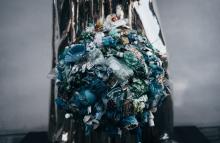
The lockdowns introduced in 2020 to curb the spread of COVID-19 saw the narrative “nature is healing” gain prominence. However, the notion that nature, in the absence of people, was healing fizzled out fairly quickly with the emergence of fresh environmental challenges, most notably, the resurgence of single-use plastics. This blog examines the ecological fallout of the pandemic and suggests policy options for Sri Lanka to avert the looming environmental disaster.
10 Dec 2021
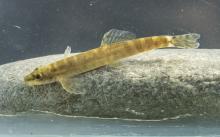
The critically endangered Batman River loach is the first of Shoal and Re:wild's Top 10 Most Wanted Lost Fishes to be rediscovered

08 Dec 2021
Tohoku University
Tohoku University researchers have dubbed a newly discovered phenomenon, where microbe-generated gas bubbles create granular fluctuations on the wet sandy floors of waterbodies, the microbial Brazil nut effect.
23 Nov 2021
Daegu Gyeongbuk Institute of Science and Technology (DGIST)
A joint research team at the Division of Biotechnology, DGIST, confirmed that microplastics(MPs) ingested orally accumulate in the brain and act as neurotoxic substances.
18 Nov 2021
Hokkaido University
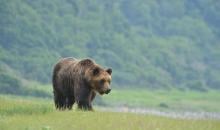
Surveys have revealed an upward trend in the number of brown bears over the past three decades in Hokkaido, Japan's northernmost island. Researchers at Hokkaido University have been investigating the causes and implications of the increase.

05 Nov 2021
Asia Research News
Quick seawater test may reveal health of corals, Infectious disease caused by a new nairovirus, Converting CO2 into useful compounds and Automated COVID-19 diagnosis from chest scans all in the November Editor's Choice. Plus our latest podcast: Gender and Conflict in Myanmar.
04 Nov 2021
Hokkaido University
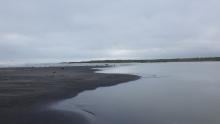
The diversity of threatened fish in estuaries increases when surrounded by forest cover, whereas estuaries surrounded by farmland show the opposite effect.
25 Oct 2021
The Education University of Hong Kong (EdUHK)
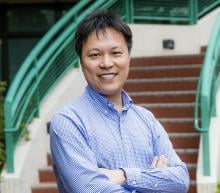
The UNESCO-listed Wolong National Nature Reserve, a prime habitat for the endangered panda, was badly damaged by the 2008 Sichuan earthquake. To rebuild the reserve into an ecologically sustainable area, Dr Lewis Cheung Ting-on, Associate Professor at the Department of Social Sciences, The Education University of Hong Kong (EdUHK), and his research team devised two unique accreditation systems for the ecotourism industry, one for tourism businesses and one for ecotour guides, as part of the regulations for the tourism development in the ecologically sensitive reserve. The guidelines included holistic recommendations for ecotourism planning, activities, infrastructure and marketing. In 2016, the local administration in Wolong implemented the recommendations in full. This was the first regional ecotourism certification programme in a protected area in China and it has had a positive influence on the ecotourism development in other protected areas in the mainland and in Taiwan.
22 Oct 2021
Asia Research News Partnerships
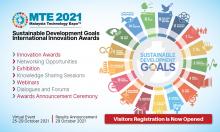
Set the stage for a path to recovery through innovations
19 Oct 2021
An ambitious project using cutting edge environmental DNA, known as eDNA, to understand the richness of biodiversity of UNESCO’s marine World Heritage sites launches today.
13 Oct 2021
Osaka Prefecture University
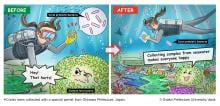
Coral reefs, comprising some of the most diverse and delicate ecosystems under water, are under immense stress. From global warming to pollution to pathogens, many of the reef-building coral species are listed as threatened or endangered. But, according to researchers in Japan, the corals may have an unlikely ally: bacteria.

13 Oct 2021
Springer Nature
The El Niño Southern Oscillation (ENSO) could impact child nutrition in many countries in the tropics, a new study in Nature Communications suggests.
Events
Sorry, no events coming up for this topic.
Researchers
Sorry, no researchers coming up for this topic.
- « first
- ‹ previous
- 1
- 2
- 3
- 4
Giants in history

Tetsuya Theodore Fujita (23 October 1920 – 19 November 1998) was a Japanese-American meteorologist who created the Fujita scale that classifies the strength of tornadoes based on damage to structures and vegetation.

Archana Sharma (16 February 1932 - 14 January 2008) conducted research into plant and human genetics that expanded the understanding of both botany and human health. In relation to botany, she uncovered the means by which asexually-reproducing plants evolve into new species.
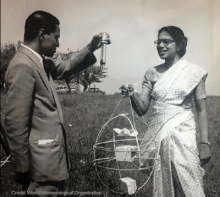
Anna Mani (23 August 1918 – 16 August 2001) was an Indian meteorologist who contributed significantly to the understanding of solar radiation, ozone and wind energy by developing a wide range of measurement tools. One of India’s pioneering female scientists, Mani excelled in the male-dominated area of meteorology and became the Deputy Director-General of the India Meteorological Department.

Edgardo Dizon Gomez (7 November 1938 – 1 December 2019) was a Filipino marine biologist who recognized the need to protect marine resources, especially coral reefs, in the Philippines.
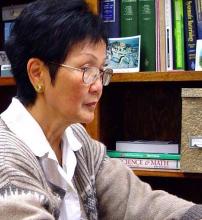
Roseli Ocampo-Friedmann (23 November 1937 – 4 September 2005) was a Filipino-American scientist whose research focused on cyanobacteria and microorganisms that inhabit extreme environments.
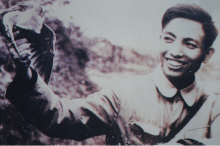
Võ Quý (1929 – 2017) was a Vietnamese ornithologist who studied the destruction of tropical forests and agricultural lands in Vietnam by Agent Orange, a herbicide used by the U.S. military during the Vietnam War. In addition to planning forest restoration projects, Quý rediscovered the rare eastern sarus crane, an endangered species that had vanished during the war.
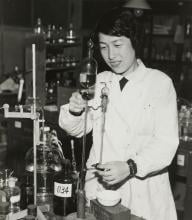
Japanese geochemist Katsuko Saruhashi developed the first method and tools for measuring carbon dioxide in seawater