
Environment
News
28 Mar 2023
Lingnan University
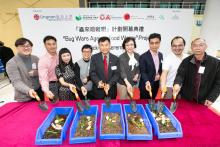
Lingnan University (LU) kickstarted their Bug Wars against Food Waste Project on 27 March in order to both reduce food waste and turn it into a useful asset. The campaign aims to inspire students, faculty members and the whole community to adopt a low-carbon lifestyle, using black soldier flies to convert food waste collected from student hostels and canteens into organic fertiliser for the Lingnan Gardeners Project and plants on the campus, as well as quality feed for campus animals. Staff, students and the elderly are signing up as low-carbon ambassadors to develop and apply innovative ideas to resolve community issues and promote a more sustainable lifestyle.
24 Mar 2023
Nanyang Technological University
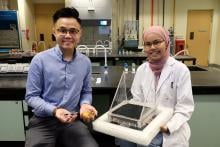
Scientists in Singapore converted fruit waste into a solar absorber called Mxene to develop an efficient and sustainable water desalination process.
20 Mar 2023
Newcastle University in Singapore
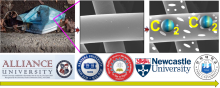
Scientists from Alliance University, Bangalore, Birla Institute of Technology Mesra, Inha University, Hanyang University, South Korea, and Newcastle University in Singapore have developed a new and straightforward approach to turn used COVID-19 facemasks into potential absorbent materials that can be employed for carbon capture from atmosphere.
20 Mar 2023
Hokkaido University
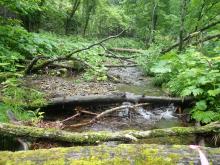
Parasitic infections in salmonid fish can increase or decrease their vulnerability to angling, depending on their body condition.

18 Mar 2023
Asia Research News
Scientists restore impaired kidney for the first time, How fibre composite fails when wet, Cleaner fish recognize themselves in pictures 🖼️🐟& The source of black carbon in the sea. Read all in the latest Editor's Choice. Plus our magazine Asia Research News 2023 is out now 🎉!
17 Mar 2023
International Islamic University Malaysia (IIUM)
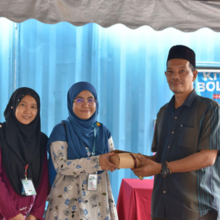
Students at IIUM are leaving the confines of their university campus to transfer the knowledge they gain to communities all over Malaysia.

16 Mar 2023
Asia Research News Partnerships
Annual innovation event brings together global innovators, entrepreneurs, researchers and scientists, and experts from various fields and industries to showcase their latest innovations, share ideas, and collaborate with industries to develop better technologies and solutions to shape our future. This is also a platform for innovators to meet potential investors and partners.

10 Mar 2023
Asia Research News
Asia Research News monitors the latest research news in Asia. Some highlights that caught our attention this week are how hanging out with friends can keep you healthy, eggs made from male mice, and taking one step closer to a machine that can read our minds.
10 Mar 2023
Xi'an Jiaotong-Liverpool University
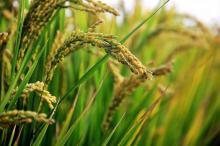
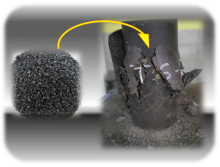
Naturally formed iron oxides on the surface of plastic tubes offer an inexpensive and sustainable method to reduce arsenic contamination in crops.
10 Mar 2023
Universiti Malaysia Sarawak
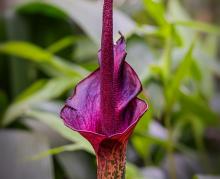
Insights into their diversity will help to understand and protect them and their natural environment.

23 Feb 2023
Newcastle University in Singapore
Scientists from Oil Crops Research Institute (OCRI) of Chinese Academy of Agricultural Sciences (CAAS), Anhui Agricultural University (Anhui, China), Newcastle University in Singapore, and Huizhou Comvikin Biotechnology Co., Ltd (Guangdong, China) have developed a green and efficient approach to synthesize highly liposoluble and antioxidant L-ascorbyl esters by immobilized lipases.

17 Feb 2023
Asia Research News
Tree rings forecast extreme weather in central Asia, Squid 🦑and chemistry make versatile hydrogels, James Webb telescope reveals the earliest galaxies & Reducing negative effects of screen time. Read all in the latest Editor's Choice. Plus our latest journalist resource "Experts for Media: Antimicrobial Resistance "🦠.
10 Feb 2023
Hokkaido University
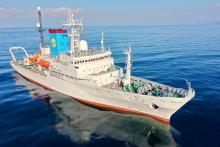
Hydrothermal vents have been identified as a previously undiscovered source of dissolved black carbon in the oceans, furthering the understanding of the role of oceans as a carbon sink.
05 Feb 2023
Newcastle University in Singapore
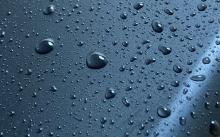
Scientists from two Asian universities, namely Universiti Teknologi Malaysia (UTM) and Newcastle University in Singapore, have completed a study to understand how the mechanical behaviour of carbon fibre reinforced epoxy composite laminates could be compromised by moisture seepage.

31 Jan 2023
City University of Hong Kong (CityUHK)
Metal oxides are a promising catalyst for photoelectrochemical (PEC) water splitting to produce hydrogen as alternative energy. However, their effectiveness is restricted at low voltage. A research team led by scholars from City University of Hong Kong (CityU), Australia and Germany successfully mediated the poor charge carrier transport at low voltage by adding phosphorus to a metal oxide catalyst, which reduced energy losses during water splitting. The findings offer a potential option for achieving carbon neutrality.

31 Jan 2023
Singapore University of Technology and Design
The study is an important step towards the understanding of long-term changes in the water cycle and will aid in more informed decisions when assessing and managing regional water systems.
31 Jan 2023
Hokkaido University
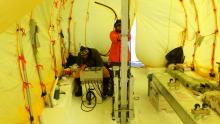
Data stored in ice cores dating back 55 years bring new insight into atmospheric levels of a molecule that can significantly affect weather and climate.

27 Jan 2023
Asia Research News
Asia Research News monitors the latest research news in Asia. Some highlights that caught our attention this week are a robot that can melt and reform, artificial skin that can sense objects before touching them, and the pause and reversal of the planet’s inner core’s spin.
27 Jan 2023
Hokkaido University
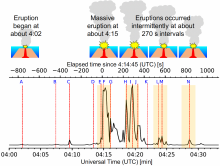
A “back-projection” technique reveals new details of the volcanic eruption in Tonga that literally shook the world.
25 Jan 2023
Osaka Metropolitan University
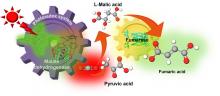
Osaka Metropolitan University scientists have succeeded in synthesizing fumaric acid, a raw material for plastics, from CO2 powered by solar energy—for the first time. Typically, fumaric acid is synthesized from petroleum as a raw material to make polybutylene succinate, a biodegradable plastic, but this research shows that it can be synthesized from CO2 and biomass-derived compounds using renewable energy.

20 Jan 2023
Asia Research News
Asia Research News monitors the latest research news in Asia. Some highlights that caught our attention this week are a stem-cell based therapy for pets with cancer, how meditation could affect our gut microbiome, and an edible mushroom that contains a deadly nerve gas.

20 Jan 2023
Asia Research News
Overeating mechanism: why "eating just one chip"🍟 is impossible, Measuring hidden energy of gamma-ray bursts, Marine species that can adapt to ocean acidification & A rough start can lead to a strong bond, Read all in our first Editor's Choice of 2023. Plus our interview on what dengue vaccine approval in EU💉means for global dengue protection.
13 Jan 2023
Tohoku University
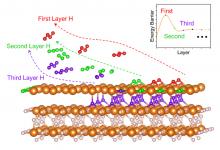
Magnesium hydride has long been touted for its potential to store large amounts of hydrogen, something essential if hydrogen is to play a role in powering a sustainable future. Yet, sluggish dehydrogenation kinetics and the high temperature required to decompose and produce hydrogen from the material have stymied its use. Now, researchers have identified why this is so, paving the way for future design guidelines and widespread commercial use.

13 Jan 2023
The Education University of Hong Kong (EdUHK)
Professor Keith Ho Wing-Kei at the Department of Science and Environmental Studies, The Education University of Hong Kong, has been recognised as a 2022 Highly Cited Researcher by Clarivate Analytics. This is the fifth consecutive year he has been named in the list.

05 Jan 2023
Hokkaido University
Researchers at Hokkaido University have revealed the effects of high pathogenicity avian influenza virus infection on an Ezo red fox and a Japanese raccoon dog, linking their infection to a recorded die-off of crows.
29 Dec 2022
Daegu Gyeongbuk Institute of Science and Technology (DGIST)
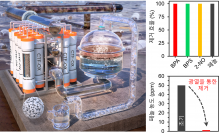
- DGIST Professor Park Chi-Young's team developed photothermal porous polymer capable of ultra-fast adsorption and removal of phenolic microplastics and VOC contaminants in water
- Showing the potential as a next-generation water purification material made of inexpensive raw materials, and ultra-high removal efficiency through solar-based purification process
- Selected as the cover paper for the 50th edition of ‘Advanced Materials,’ the most prestigious academic journal in the field of materials in 2022
19 Dec 2022
Ehime University
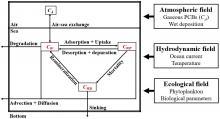
The Kuroshio regulates the air-sea exchange of PCBs
16 Dec 2022
Newcastle University in Singapore
Scientists from Universiti Teknologi Malaysia have reported a novel way to produce reinforced concrete materials using tin slag aggregates, which is a by-product of the smelting process. This way of producing concrete enables tin slag to become a useful material, as well as reducing the amount of natural resources used, which in turn contribute to reducing carbon footprint in the construction industry.

15 Dec 2022
The Education University of Hong Kong (EdUHK)
International research co-authored by The Education University of Hong Kong (EdUHK) found that a major type of marine species can adapt to ocean acidification. Considered a major breakthrough in marine biology research, the findings were recently published in the prestigious academic journal Nature Climate Change.

15 Dec 2022
Asia Research News
Understanding how bats tolerate viral infections, Material separates water from...water, The virtual sense of touch polished to next level and COVID-19 negatively impacted early-careers and female researchers. Read all in the December's Editor's Choice.
Events
Sorry, no events coming up for this topic.
Researchers
Sorry, no researchers coming up for this topic.
- « first
- ‹ previous
- 1
- 2
- 3
- 4
Giants in history

Tetsuya Theodore Fujita (23 October 1920 – 19 November 1998) was a Japanese-American meteorologist who created the Fujita scale that classifies the strength of tornadoes based on damage to structures and vegetation.

Archana Sharma (16 February 1932 - 14 January 2008) conducted research into plant and human genetics that expanded the understanding of both botany and human health. In relation to botany, she uncovered the means by which asexually-reproducing plants evolve into new species.
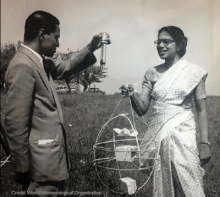
Anna Mani (23 August 1918 – 16 August 2001) was an Indian meteorologist who contributed significantly to the understanding of solar radiation, ozone and wind energy by developing a wide range of measurement tools. One of India’s pioneering female scientists, Mani excelled in the male-dominated area of meteorology and became the Deputy Director-General of the India Meteorological Department.
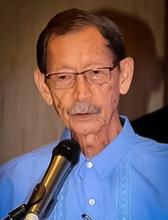
Edgardo Dizon Gomez (7 November 1938 – 1 December 2019) was a Filipino marine biologist who recognized the need to protect marine resources, especially coral reefs, in the Philippines.
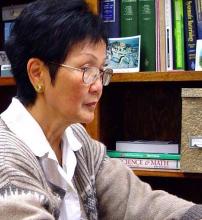
Roseli Ocampo-Friedmann (23 November 1937 – 4 September 2005) was a Filipino-American scientist whose research focused on cyanobacteria and microorganisms that inhabit extreme environments.

Võ Quý (1929 – 2017) was a Vietnamese ornithologist who studied the destruction of tropical forests and agricultural lands in Vietnam by Agent Orange, a herbicide used by the U.S. military during the Vietnam War. In addition to planning forest restoration projects, Quý rediscovered the rare eastern sarus crane, an endangered species that had vanished during the war.
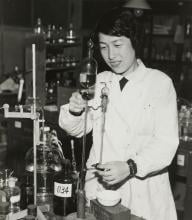
Japanese geochemist Katsuko Saruhashi developed the first method and tools for measuring carbon dioxide in seawater