
Environment
News
05 May 2026
Springer Nature
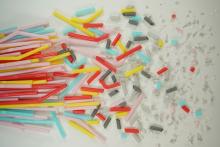
Coloured micro- and nanoplastics suspended in the atmosphere may contribute to global warming at a level equivalent to 16.2% of that caused by black carbon.
05 May 2026
National Taiwan University
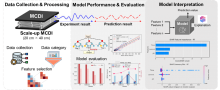
Data-driven models provide precise prediction on charging-phase of desalination technology building a bridge between data-driven insights and physicochemical principle to lay a strong foundation for system parameter optimization.
04 May 2026
National Taiwan University
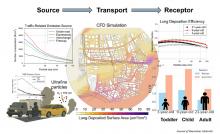
A National Taiwan University study shows that traffic particles can create sharply localized exposure hotspots near busy roads, intersections and elevated corridors. The findings suggest that targeted street-level planning may better protect children and other vulnerable groups than citywide averages alone.
03 May 2026
Lingnan University
The evolution of higher education in the digital era has attracted global attention, and Prof S. Joe Qin, President and Wai Kee Kau Chair Professor of Data Science at Lingnan University, recently published a paper titled “AI for education: The digital transformation of a liberal arts institution – implementation at Lingnan University” in a leading international journal Computers and Education: Artificial Intelligence. The paper’s in-depth analysis of the role artificial intelligence (AI) plays in education uses Lingnan as a case study to examine the success of its pilot initiatives.
29 Apr 2026
Ateneo de Manila University
Counterintuitively, despite the ongoing fuel crisis and the over two decades since the global phaseout of leaded gasoline, toxic lead still lingers in Metro Manila’s air.
27 Apr 2026
City University of Hong Kong (CityUHK)
An international research team led by a scholar from City University of Hong Kong (CityUHK) has broken through the overlooked role of sewers as a source of methane, developing the first-ever globally applicable estimation tool and offering a new perspective on mitigating climate change.
24 Apr 2026
National Taiwan University
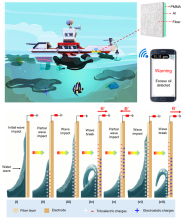
Researchers have created a self-powered fiber sensor that can detect oil in water and respond quickly to dangerous heat. The system works without an external power source and could support real-time safety monitoring in marine and industrial environments.
23 Apr 2026
Lingnan University
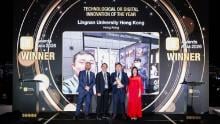
Transforming film education through interactive game – CineSim, developed by the Department of Digital Arts and Creative Industries at Lingnan University, received the Technological or Digital Innovation of the Year award at the Times Higher Education Awards Asia 2026 on the evening of 22 April. Widely regarded as the Oscars of higher education, the Awards are highly competitive, and Lingnan University stood out from more than 500 entries worldwide to become the only institution to receive the Technological or Digital Innovation of the Year award. This achievement clearly demonstrates the University’s lead in educational innovation and the application of digital technologies, which have earned full recognition from the international higher education community.
22 Apr 2026
Tohoku University
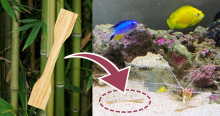
Biodegradable plastics are great. They provide the ductility of plastics whilst reducing the materials environmental downsides. However, in the quest for greater degradability, improving durability has received scant attention. A research group recently rectified this with the development of a new bamboo composite that emphasised both biodegradability and strength. The group also developed a means to predict how the material breaks down in water.
21 Apr 2026
Lingnan University
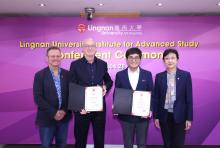
The Lingnan University Institute for Advanced Study (LUIAS) held a conferment ceremony today, 21 April, to honour two internationally famous scholars. Prof Arnold B. Bakker, a leading authority in work and organisational psychology at Erasmus University Rotterdam, was appointed a Lingnan Fellow. Prof M. Jae Moon, an eminent scholar in public management and digital governance from Yonsei University, Korea, received the title of Senior Lingnan Scholar. Both scholars are ranked on the Stanford University World’s Top 2% Scientists list, and this will drive Lingnan University’s endeavours in international research and collaborative exchange.

21 Apr 2026
Hiroshima University
Floatable beads made from chitosan and cellulose acetate and enhanced with bentonite were engineered to effectively clean oil from water. The beads showed good oil adsorption capacity while remaining easy to collect from the water surface.
21 Apr 2026
City University of Hong Kong (CityUHK)
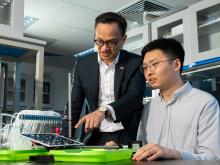
An international research team led by the Department of Mechanical Engineering at CityUHK has successfully developed a breakthrough technology, called “Liquid Droplet Mops”, which only uses a minimal amount of water to effectively remove dust and pollutants from solar panel surfaces, significantly enhancing cleaning efficiency while conserving water.
20 Apr 2026
Lingnan University
Lingnan University and Yuanpei College of Peking University (PKU) organised the Lingnan-Yuanpei STEM Summer Academy (LYSSA) jointly for the third consecutive year. Coordinated by the Lingnan’s Office of Student Affairs, the LYSSA 2026 opening ceremony took place virtually on 20 April 2026, and attracted more than 40 experts, instructors, and students from both universities, providing a platform for Beijing-Hong Kong SAR youth to discuss innovation and entrepreneurship, improve their future competitiveness at work, and promote cultural exchanges and cooperation. The winning team will receive a cash prize of HK$50,000, as well as an incubation fund of up to HK$500,000 from the Lingnan Foundation, to support students in transforming their innovative ideas into entrepreneurial projects, products, or services with market potential.
16 Apr 2026
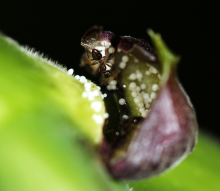
New research reveals unexpected intruders in a classic tropical tree–ant relationship, raising concerns for forest recovery in human‑altered landscapes.

14 Apr 2026
Asia Research News
Matcha surprise, Smart sea urchin spines, Breaking biomass bonds, Hybrid air-conditioning, Alga in gloom & A touch of tech. Read all in the latest Editor's Choice. Plus Early Bird submissions for Asia Research News 2027
14 Apr 2026
Lingnan University
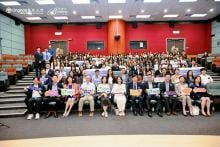
To enhance the business acumen and practical experience of students from Hong Kong and Greater Bay Area (GBA) tertiary institutions, the Hong Kong Institute of Business Studies (HKIBS) at Lingnan University organised the third Business Case Competition (LUBCC) 2026. The Final Presentation Day and Award Presentation Ceremony were successfully held yesterday (12 April). This year’s competition expanded for the first time to include five GBA universities: Shenzhen University, Jinan University, Foshan University, Guangdong University of Finance and Economics, and Guangdong University of Technology. The first-prize teams were Lingnan University and Foshan University.
10 Apr 2026
National Taiwan University
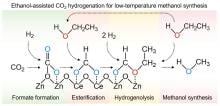
Researchers from National Taiwan University and Chulalongkorn University developed a copper-based catalyst system that improves low-temperature methanol synthesis from carbon dioxide hydrogenation by balancing two key steps in the reaction.
10 Apr 2026
Hiroshima University
Major international recognition for research exploring largely unknown microbial life in groundwater

09 Apr 2026
Hiroshima University
As climate change intensifies harmful algal blooms worldwide, an international team led by Hiroshima University has developed a hybrid modeling approach that combines algal movement simulations, AI, and long-term monitoring data to sharpen forecasts of these bloom events—linked to environmental damage, mass fish die-offs, economic losses, and risks to human health.

07 Apr 2026
Hiroshima University
Skepticism about claims regarding sustainability reduces consumers’ intentions to purchase sustainable products by weakening two important drivers of green consumption: people’s willingness to look for trustworthy environmental information and their anticipated guilt about making less sustainable choices.
06 Apr 2026
Institute of Industrial Science, The University of Tokyo (UTokyo-IIS)
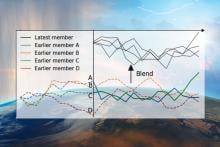
International research collaboration develops smarter reuse of past forecasts to improve subseasonal heat predictions—without extra computation

03 Apr 2026
Osaka Metropolitan University
Single monomer containing thiolactone and pyridyl disulfide molecules allows for variable polymer functionalities
30 Mar 2026
National Taiwan University
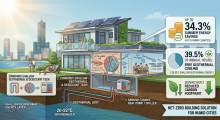
A research team from Taiwan has developed a novel hybrid air-conditioning system integrating shallow geothermal energy and a desiccant wheel. Field tests confirm it significantly reduces energy consumption by up to 34.3% in hot and humid climates, offering a promising solution for net-zero buildings.
27 Mar 2026
Lingnan University
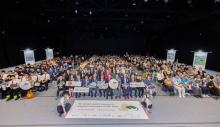
Asian turtles face a severe conservation crisis caused by illegal poaching and the wildlife trade. Supported by Ocean Park and the Ocean Park Conservation Foundation Hong Kong, Lingnan University is hosting the inaugural International Conference on Integrated Conservation of Asian Turtles (ICAT) from today, 27 March, through 30 March 2026. The conference, attended by 180 leading scholars, scientists, zookeepers, veterinarians, policymakers, educators, and other experts from 19 countries and regions will examine the latest research findings and practical conservation, as well as strategies to combat the illegal poaching of Asian turtles, and enhance protection for endangered species.
25 Mar 2026
Lingnan University
Lingnan University has achieved outstanding results in the international higher education organisation Quacquarelli Symonds (QS) World University Rankings by Subject 2026. Nine broad and individual subjects were designated, and more than half moved up. Philosophy came in the top three in Hong Kong, and Computer Science and Information Systems is included in the list for the first time, showing Lingnan’s considerable recent progress in developing interdisciplinary research in artificial intelligence and data science, which has gained widespread recognition from the international academic community. QS stated that only three Hong Kong universities have achieved a net improvement, with Lingnan University among the most improved.

20 Mar 2026
Springer Nature
A newly developed spray-on fabric coating could allow clothes to be cleaned using only water, reducing water and detergent needs.
18 Mar 2026
City University of Hong Kong (CityUHK)
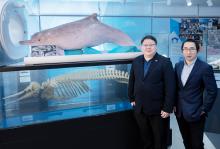
A research team from CityUHK, in collaboration with researchers from the Chinese Mainland, has found that LCMs from household electronics and e-waste can bioaccumulate in marine life, including the endangered Indo-Pacific humpback dolphins and finless porpoises. These compounds can penetrate the blood–brain barrier and accumulate in brain tissue, raising concerns about potential risks to the nervous system and other organs.
16 Mar 2026
More than 850 policymakers, researchers, development institutions, and civil society representatives from over 50 countries gathered in Bangkok to highlight the urgent need to accelerate action on air pollution across Asia and the Pacific.

06 Mar 2026
Asia Research News
Kelli canines, Healthy fats in rice, Mercury and Earth in chorus, AI lights up materials discovery, Radiation detection with phones and Down to one. Read all in the latest Editor's Choice. Plus Women's Month 2026.
04 Mar 2026
Springer Nature
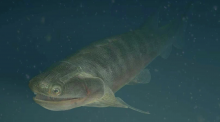
The oldest-known articulated bony fish and an early example of teeth from a bony fish have been detected in a collection of fossils from China. Two Nature papers offer new insights into the origins of bony fish.
Events
Sorry, no events coming up for this topic.
Researchers

I'm Senior Lecturer at the School of East Asian Studies, University of Sheffiield. I research and teach about post-developmental Japan in the Asia-Pacific region.
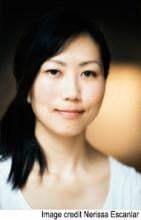
Earth-Life Science Institute (ELSI), Tokyo Institute of Technology
Mayuko Nakagawa is a biochemist at Earth-Life Science Institute (ELSI) based at the Tokyo Institute of Technology, Japan.
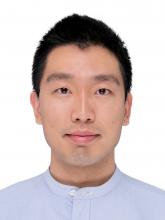
Dr Ye Zhou is an electronic engineer at the Institute for Advanced Study, Shenzhen University, China.
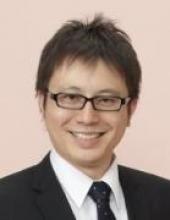
Hokkaido University
Daisuke Hirano is an assistant professor at the Ocean and Sea Ice Dynamics Group, the Institute of Low Temperature Science of Hokkaido University, Japan.
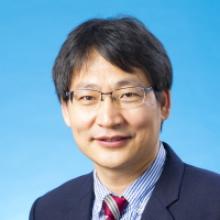
City University of Hong Kong (CityUHK)
Zuankai Wang is currently a Professor in the Department of Mechanical Engineering and Associate Dean (Internationalization & Industry Engagement) of College of Engineering at City University of Hong Kong.
Dr. KeweiGao is the Professor of Materials Physics, and the Associate Chair of the Department of Materials Physics and Chemistry at University of Science and Technology Beijing (USTB).
Hokkaido University
Jorge García Molinos is an aquatic ecologist broadly interested in global change ecology and macroecology.


A Tenured Professor at the Institute of Space Technology (Pakistan), Dr. Shabbir is working on Polymer based Nanomaterials for food safety, nano-drug delivery systems, water treatment, solar cells and carbon dioxide capture.

National University of Singapore
I work at the intersection of Business, Medicine and Environment. Many of the world’s current problems are best addressed from multiple perspectives. I examine issues ranging from sustainable development, pandemics, diversity, environment, social innovation and philanthropy, and suggest how we can do better.
Nanyang Technological University
Dr. Sravya Tekumalla is currently a Principal Investigator in Nanyang Technological University, Singapore, where she works as a Presidential Postdoctoral Fellow. In addition, she also leads a small team of staff and students working in the domain of metal additive manufacturing (commonly known as 3D printing).

Assoc Prof Tuncer is the Capstone program director at Singapore University of Technology and Design (SUTD) and Director of the Informed Design Lab, which works on using data for informed architectural and urban spaces. Using computation, the lab looks at how they can strengthen and automate some things in urban design by building models and testing them better for human use, human perception, human comfort before actual constructions.
Associate Professor Lynette Cheah leads the Sustainable Urban Mobility research group at SUTD, which develops data-driven models and tools to reduce the environmental impacts of passenger and urban freight transport. Her expertise is in transport modelling and simulation, life-cycle energy and environmental assessments (LCA) of products and systems, and urban metabolism. She is a Fellow with the Martin Family Society for Sustainability, winner of the Singapore Challenge Prize in the Global Young Scientists Summit 2013, and is currently serving as a Review Editor for the UN IPCC’s Sixth Assessment Report.
De La Salle University
Michael Angelo B. Promentilla is a Professor of Chemical Engineering and the head of the Waste and Resource Management Unit of the Center for Engineering and Sustainable Development Research (CESDR) at De La Salle University (DLSU).

Honey Gupta is a PhD student of the Department of Mechanical Engineering, University f Canterbury, New Zealand.
Dr NK Prasanna is currently working as Principal Scientist & Editor, Indian Journal of Biochemistry & Biophysics, Research Journals Division at CSIR-National Institute of Science Communication and Policy Research, New Delhi. Before joining CSIR (NIScPR), she was at IIT Guwahati. Dr Prasanna completed her Ph.D from Institute of Medical Sciences, Banaras Hindu University, Varanasi.
In CSIR-NIScPR, She served one important flagship journals viz. Indian journal of Biochemistry and Biophysics (IJBB; ISSN: 0301-1208). IJBB is a premier Scopus-indexed monthly peer-reviewed research journal that publishes original research articles in the subject area of biochemistry and biophysics

Aparna B. Gunjal is a microbiologist at Dr. D.Y. Patil, Arts, Commerce & Science College, India.
Universiti Malaysia Sabah
Associate Professor Sitti Raehanah Muhamad Shaleh is the director of Borneo Marine Research Institute at Universiti Malaysia Sabah.
Dr. Hemu Kharel Kafle is the Founder and Director of Research at Kathmandu Institute of Applied Sciences (KIAS), Nepal, and a scientist at the Centre for Water and Atmospheric Research (CENWAR) within it.
Dr. Mashura Shammi is an associate professor at the Department of Environmental Sciences, Jahangirnagar University, Bangladesh.
Universiti Malaysia Sarawak
Professor Dr. Indraneil Das is a conservation biologist at Universiti Malaysia Sarawak.
Universiti Teknologi MARA (UiTM)
Dr Heo is currently a senior lecturer at the Department of Microbiology and Parasitology, Faculty of Medicine, Universiti Teknologi MARA, Malaysia.
Korea Advanced Institute of Science and Technology (KAIST)
Ordered Functional Materials, like, COFs, COPs, CTFs for membrane applications (soft actuators and energy storage & conversion)
Hokkaido University
Assistant Professor Ryota Kawanishi is an aquatic biologist at Hokkaido University, Japan.
International Islamic University Malaysia (IIUM)
Diana is Assistant Professor and Ergonomics Trained Person at the Department of Psychology, International Islamic University Malaysia.
International Islamic University Malaysia (IIUM)
Professor at Department of Landscape Architecture, KAED, International Islamic University Malaysia (IIUM), Kuala Lumpur, Malaysia. Research interests include urban design/urban landscape, cultural landscape, residential landscape, GIS and human-computer interaction, and environmental planning.
Hokkaido University
Postdoctoral fellow, Faculty of Veterinary Medicine, Hokkaido University, Japan
I am a senior lecturer in the School of the Built Environment. Prior to this I was a post-doctoral researcher at the Cambridge Centre for Housing and Planning Research, University of Cambridge (2001-2004) and a researcher at the Korea Research Institute for Human Settlement (1986-1994). I hold a BSc in Management Studies and MBA from the Univeristy of Ewha, Seoul, Korea and gained my PhD from London School of Economics and Political Science in 2000.
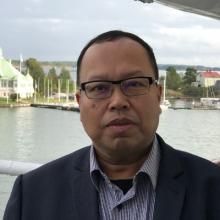
Co-Founding Member and Managing Director of the Association of Advancing Life And Regenerating Motherland (ALARM), a think tank in Myanmar.
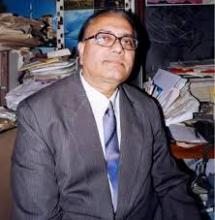
Secretary General and Treasurer of the International Geographical Union (IGU) and Professor of Geography at University of Delhi.
Giants in history

Tetsuya Theodore Fujita (23 October 1920 – 19 November 1998) was a Japanese-American meteorologist who created the Fujita scale that classifies the strength of tornadoes based on damage to structures and vegetation.

Archana Sharma (16 February 1932 - 14 January 2008) conducted research into plant and human genetics that expanded the understanding of both botany and human health. In relation to botany, she uncovered the means by which asexually-reproducing plants evolve into new species.
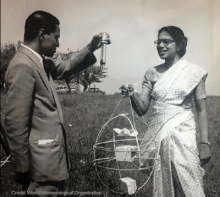
Anna Mani (23 August 1918 – 16 August 2001) was an Indian meteorologist who contributed significantly to the understanding of solar radiation, ozone and wind energy by developing a wide range of measurement tools. One of India’s pioneering female scientists, Mani excelled in the male-dominated area of meteorology and became the Deputy Director-General of the India Meteorological Department.
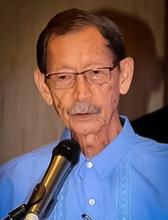
Edgardo Dizon Gomez (7 November 1938 – 1 December 2019) was a Filipino marine biologist who recognized the need to protect marine resources, especially coral reefs, in the Philippines.
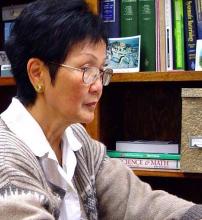
Roseli Ocampo-Friedmann (23 November 1937 – 4 September 2005) was a Filipino-American scientist whose research focused on cyanobacteria and microorganisms that inhabit extreme environments.

Võ Quý (1929 – 2017) was a Vietnamese ornithologist who studied the destruction of tropical forests and agricultural lands in Vietnam by Agent Orange, a herbicide used by the U.S. military during the Vietnam War. In addition to planning forest restoration projects, Quý rediscovered the rare eastern sarus crane, an endangered species that had vanished during the war.
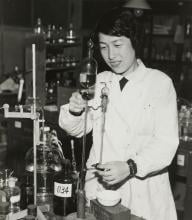
Japanese geochemist Katsuko Saruhashi developed the first method and tools for measuring carbon dioxide in seawater