
Inventions
News
13 Nov 2019
Asia Research News
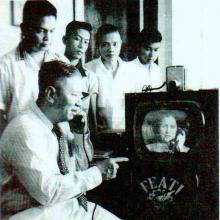
Gregorio Y. Zara (8 March 1902 – 15 October 1978) was a Filipino engineer and physicist best remembered for inventing the first two-way video telephone.
06 Nov 2019
National University of Singapore
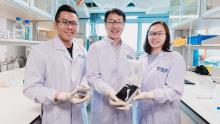
A team of engineers from the National University of Singapore has developed a highly sensitive system that uses a smartphone to rapidly detect the presence of toxin-producing algae in water within 15 minutes. This technological breakthrough could play a big role in preventing the spread of harmful microorganisms in aquatic environments, which could threaten global public health and cause environmental problems.
01 Nov 2019
The Chinese University of Hong Kong (CUHK)
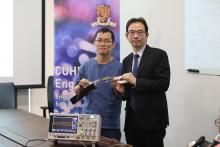
A research team led by Professor Wei-Hsin Liao from the Department of Mechanical and Automation Engineering, The Chinese University of Hong Kong (CUHK) has developed a lightweight smart materials-based energy harvester for scavenging energy from human motion, generating inexhaustible and sustainable power supply just from walking. Specifically, the device can capture biomechanical energy from the motion of the human knee and then convert it to electricity which can be used to power wearable electronics such as pedometers, health monitors, and GPS. This work has been published in Applied Physics Letters and recommended as a featured article by editors.
22 Oct 2019
The Chinese University of Hong Kong (CUHK)
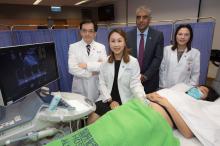
A recent study conducted by the Department of Obstetrics and Gynaecology of the Faculty of Medicine at The Chinese University of Hong Kong (CUHK) has validated the use of the UK Fetal Medicine Foundation (FMF) triple test for the prediction of preterm preeclampsia at 11-13 weeks’ gestation in a large Asian population. The findings have been published in the international journal American Journal of Obstetrics & Gynecology.
16 Sep 2019
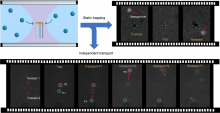
Researchers from the Indian Institute of Science develop a new “tweezer in a tweezer” concept for controlling nanoparticles in fluid with light.
10 Sep 2019
National University of Singapore
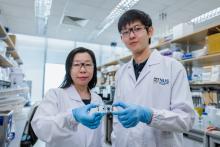
STAMP technology is a million times more sensitive and comprehensive to accurately detect and classify tumours from a small clinical sample
06 Sep 2019
Ulsan National Institute of Science and Technology (UNIST)
A recent study, affiliated with South Korea's Ulsan National Institute of Science and Technology (UNIST) has identified the sleep-promoting effects of dietary threonine, as well as its neurobiological principle.
05 Sep 2019
Ulsan National Institute of Science and Technology (UNIST)
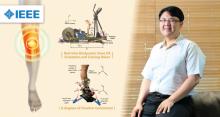
A research team, affiliated with South Korea's Ulsan National Institute of Science and Technology (UNIST) has presented a system that can quantitatively complement the diagnosis of knee arthritis, which was performed only by x-ray and doctor’s judgment.
04 Sep 2019
Ulsan National Institute of Science and Technology (UNIST)
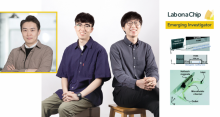
The academic journal Lab on a Chip has selected UNIST Professor Joo Hun Kang as an Emerging Investigator in 2019.
03 Sep 2019
Ulsan National Institute of Science and Technology (UNIST)
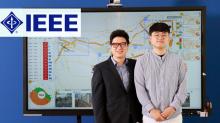
A recent study, affiliated with South Korea's Ulsan National Institute of Science and Technology (UNIST) has presented an artificial intelligence technology that can predict traffic conditions for the next 5 to 15 minutes at an error rate of less than four kilometers an hour.
27 Aug 2019
Ulsan National Institute of Science and Technology (UNIST)
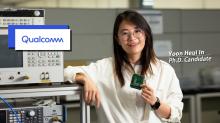
A doctoral candidate within the School of Electrical and Computer Engineering at South Korea's Ulsan National Institute of Science and Technology (UNIST) has been offered to join Qualcomm Inc.
27 Aug 2019
Ulsan National Institute of Science and Technology (UNIST)
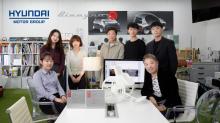
The School of Design and Human Engineering at South Korea's Ulsan National Institute of Science and Technology (UNIST) has been selected to lead the exterior styling of Hyundai Motor’s autonomous vehicles.
27 Aug 2019
Ulsan National Institute of Science and Technology (UNIST)
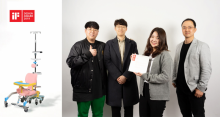
A design team, affiliated with South Korea's Ulsan National Institute of Science and Technology (UNIST) has come up with a brilliant child-friendly design idea to help children have fun during their hospital stays.
27 Aug 2019
Ulsan National Institute of Science and Technology (UNIST)
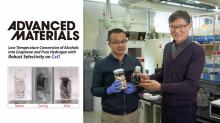
A recent study, affiliated with South Korea's Ulsan National Institute of Science and Technology (UNIST) has unveiled a new way to turn discarded eggshells into hydrogen, an innovative and alternative energy for the future.

26 Aug 2019
Ulsan National Institute of Science and Technology (UNIST)
An international team of researchers, affiliated with UNIST has paved the way for the development of next-generation batteries, targeting high-performance electric vehicles (EVs).
26 Aug 2019
Ulsan National Institute of Science and Technology (UNIST)
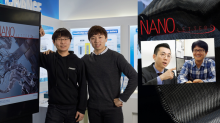
A joint research team, affiliated South Korea's Ulsan National Institute of Science and Technology (UNIST) has developed a high-performance metal electrode (carbon fiber-metal composite) through a process of penetrating liquid metal into fine gaps of carbon fiber.
26 Aug 2019
Ulsan National Institute of Science and Technology (UNIST)
A recent study, affiliated with South Korea's Ulsan National Institute of Science and Technology (UNIST) has laid a solid foundation for further study of dispersive interaction by verifiying a new mechanism for matter-wave diffraction.
26 Aug 2019
Ulsan National Institute of Science and Technology (UNIST)
A recent study, affiliated with South Korea's Ulsan National Institute of Science and Technology (UNIST) has introduced a pressure-free approach for creating synthetic graphite with well-oriented crystallites.
23 May 2019
The Hong Kong Polytechnic University (PolyU)
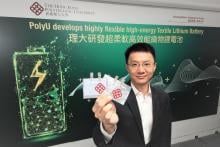
Researchers at The Hong Kong Polytechnic University (PolyU) have developed a highly flexible, high-energy Textile Lithium Battery.
07 May 2019
The Hong Kong Polytechnic University (PolyU)
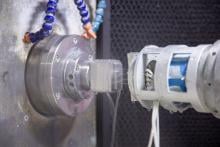
The Hong Kong Polytechnic University (PolyU) (PolyU) developed a novel curvature-adaptive multi-jet polishing (MJP) technology for different kinds of freeform surfaces

07 May 2019
Daegu Gyeongbuk Institute of Science and Technology (DGIST)
DGIST announced that the DGIST-ETH Micro Robot Research Center (DEMRC) entered The 47th International Exhibition of Inventions Geneva with 4 inventions and won 6 awards including 3 golds, 1 silver, Special Award of Geneva State Government, and Special Award from the Taiwan Invention Association.

29 Apr 2019
Springer Nature
The CYBATHLON Wheelchair Series Japan 2019, a competition in which people with physical disabilities compete against each other to complete everyday tasks using the latest technical assistance systems, will take place on May 5, 2019 in Kawasaki, Japan.
21 Apr 2019
Asia Research News
Heidelberg Laureate Forum Foundation awards travel grants to journalists to cover the 7th Heidelberg Laureate Forum - deadline May 20, 2019
15 Apr 2019
Hong Kong Baptist University (HKBU)
A delegation from Hong Kong Baptist University (HKBU) (HKBU) won a Gold Medal with the Congratulations of Jury, a Gold Medal and a Silver Medal at the 47th International Exhibition of Inventions of Geneva held in Switzerland from 10 to 14 April 2019.

15 Apr 2019
The Hong Kong Polytechnic University (PolyU)
The Hong Kong Polytechnic University (PolyU) (PolyU) was among the big winners in the Hong Kong delegation this year at the 47th International Exhibition of Inventions of Geneva (Geneva Inventions Expo), the exhibition regarded as the most important specialist event of its kind in the world.

26 Mar 2019
Ulsan National Institute of Science and Technology (UNIST)
A transparent, flexible smartphone sensor also measures skin temperature and tactile pressure, which could combat fingerprint forgery and make mobile devices even more compact.
25 Mar 2019
The Hong Kong Polytechnic University (PolyU)
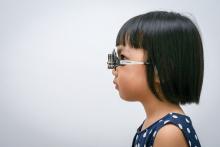
A lens developed by optometrists in Hong Kong can delay the progression of short-sightedness in children.
19 Mar 2019
University of Malaya
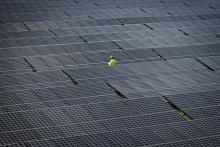
A novel solar panel tracer is faster, less expensive and more accurate than conventional devices.
18 Mar 2019
University of Malaya
A compact sensor noninvasively checks dengue severity and cholesterol at home or in any health care centre.
25 Feb 2019
Daegu Gyeongbuk Institute of Science and Technology (DGIST)
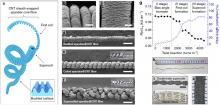
DGIST Senior Researcher Changsoon Choi’s team coiled the existing carbon nano tube/spandex fiber and developed a new fiber of supercoiled structure. Expects to be applied in developing various wearable device platforms with super-coil that stretches up to 16 times
Events
Sorry, no events coming up for this topic.
Researchers
Sorry, no researchers coming up for this topic.
Giants in history
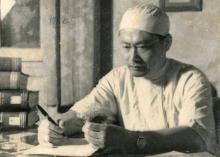
Vietnamese surgeon Tôn Thất Tùng (10 May 1912 – 7 May 1982) developed a pioneering technique that reduced the risks and mortality rate of liver operations.
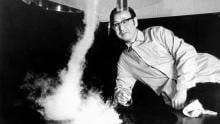
Tetsuya Theodore Fujita (23 October 1920 – 19 November 1998) was a Japanese-American meteorologist who created the Fujita scale that classifies the strength of tornadoes based on damage to structures and vegetation.
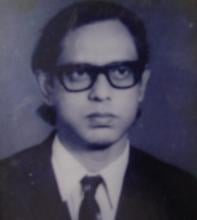
Abdus Suttar Khan (c. 1941 – 31 January 2008) was a Bangladeshi engineer who spent a significant part of his career conducting aerospace research with NASA, United Technology and Alstom.
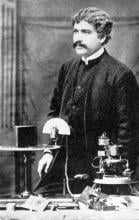
Sir Jagadish Chandra Bose (30 November 1858 – 23 November 1937) was a scientist and inventor who contributed to a wide range of scientific fields such as physics, botany and biology.
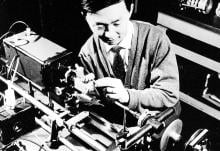
Charles Kuen Kao (Nov. 4, 1933 to Sept. 23, 2018) was an engineer who is regarded as the father of fibre optics. His work in the 1960s on long distance signal transmission using very pure glass fibres revolutionized telecommunications, enabling innovations such as the Internet.
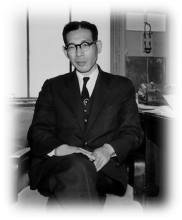
The field of solid-state ionics originated in Europe, but Takehiko Takahashi of Nagoya University in Japan was the first to coin the term ‘solid ionics’ in 1967. ‘Solid-state ionics’ first appeared in 1971 in another of his papers, and was likely a play on ‘solid-state electronics’, another rapidly growing field at the time.
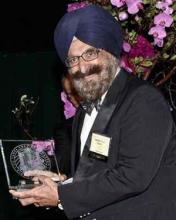
Physicist Narinder Singh Kapany (31 October 1926 – 4 December 2020) pioneered the use of optical fibres to transmit images, and founded several optical technology companies. Born in Punjab, India, he worked at a local optical instruments factory before moving to London for PhD studies at Imperial College. There, he devised a flexible fibrescope to convey images along bundles of glass fibres.

Wu Lien-teh (10 March 1879 – 21 January 1960) was a Malaysian-born doctor who invented a mask that effectively suppressed disease transmission. Winning the prestigious Queen’s Scholarship enabled Wu to become the first Chinese student to study medicine at the University of Cambridge.
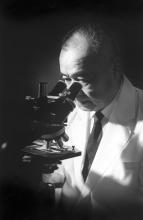
Minoru Shirota (April 23, 1899 – March 10, 1982) was a Japanese microbiologist who invented the popular fermented drink Yakult.
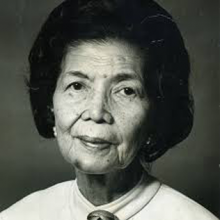
Fe Villanueva del Mundo (27 November 1911 – 6 August 2011) was a Filipina paediatrician who founded the Philippines’ first paediatric hospital.

Chinese biochemist Cao Tianqin (5 December 1920 – 8 January 1995) discovered the myosin light chain, a subunit of myosin, a protein crucial for muscle contraction.
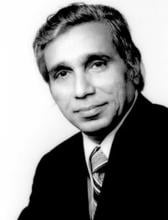
Fazlur Rahman Khan (3 April 1929 – 27 March 1982) was a Bangladeshi-American structural engineer and architect who invented the tube principle, which formed the basis for modern skyscraper design.
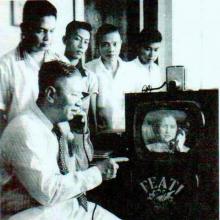
Gregorio Y. Zara (8 March 1902 – 15 October 1978) was a Filipino engineer and physicist best remembered for inventing the first two-way video telephone. Zara’s video telephone invention enabled the caller and recipient to see each other while conversing, laying the foundation for video-conferencing