The University of Osaka
03 Feb 2025
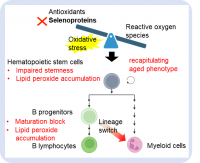
Researchers from Japan find that certain antioxidant enzymes, called selenoproteins, significantly contribute to fighting cell aging. The team used a gene knockout mouse model to help them study the effects of disrupting selenoprotein synthesis. This knockout negatively impacted hematopoietic stem cells and B cell-lineage immune cells, which was driven by the lack of selenoprotein-mediated fighting of lipid peroxides.
Osaka Metropolitan University
03 Feb 2025
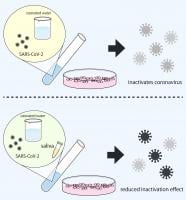
Amylase and mucin decrease the effects of ozonated water
Tohoku University
31 Jan 2025
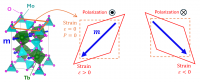
Tohoku University researchers are breaking limits by increasing the temperature multiferroics can operate at, from room temperature up to a blistering 160℃
Hokkaido University
29 Jan 2025
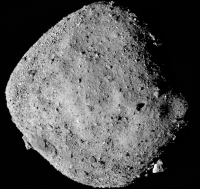
Japanese collaborators detected all five nucleobases — building blocks of DNA and RNA — in samples returned from asteroid Bennu by NASA’s OSIRIS-REx mission.
Tohoku University
29 Jan 2025
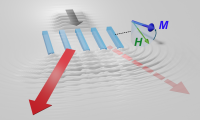
This novel finding regarding the nonreciprocal diffraction of acoustic waves could open doors for next-generation communication devices.
The University of Osaka
29 Jan 2025
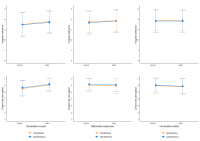
In a study on public psychology with regard to the COVID-19 pandemic, researchers from Osaka University found no significant differences among regions of Japan regarding either risk perception or infection-prevention behaviors during the “state of emergency,” suggesting spillover effects between targeted and non-targeted regions.
Osaka Metropolitan University
28 Jan 2025
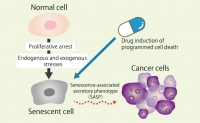
Latest findings on the significance and interaction between cell death and cellular senescence in cancer
Tohoku University
27 Jan 2025
Researchers have discovered that the gemstone spinel is capable of storing quantum information, making it a viable material in the field of quantum technology.
Ehime University
27 Jan 2025
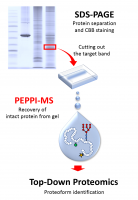
Gel-based sample pre-fractionation leads to detailed proteoform analysis with mass spectrometry
Osaka Metropolitan University
27 Jan 2025
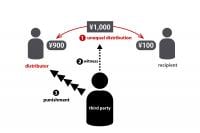
How people decide to confront or avoid unfairness
Lingnan University
27 Jan 2025
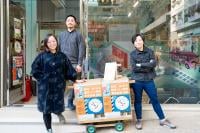
Prof Ruby Lai Yuen-shan, Assistant Professor of the Department of Sociology and Social Policy at Lingnan University in Hong Kong, has partnered with two Hong Kong artists, Ms Miu Law and Mr Victor Sham Chung-tat, for an interdisciplinary collaboration. Together, they have curated the exhibition “Listening to the Stories of 118.4 Square Feet”, which highlights a selection of real-life stories from residents of subdivided units.
Hiroshima University
27 Jan 2025
The team’s findings have potential applications in photonics and memory devices.
National Institute for Materials Science (NIMS)
26 Jan 2025
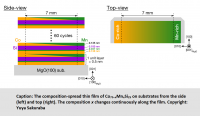
Researchers use high-brilliance synchrotron radiation to identify the half-metal mix with the highest half-metallic nature.
Hokkaido University
24 Jan 2025
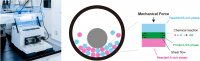
A new theory predicts one of the effects of macroscopic mechanical forces on mechanochemical organic synthesis by a ball mill.
Impart
24 Jan 2025
From an ancient Buddhist symbol representing the wheel of law to an enduring icon of self-reliance and resistance in the early twentieth century, the charkha, a hand-driven spinning wheel, and the chakra, the flat-spoked wheel with which it is often conflated, have lived many lives in South Asia.
Duke-NUS Medical School
24 Jan 2025
At Duke-NUS Medical School scientists are pioneering breakthroughs in precision medicine and regenerative therapies, targeting everything from muscle loss to dramatically extending our years of health.
Hokkaido University
24 Jan 2025
A century-old theory proposed by Nobel laureate Linus Pauling has been proven by scientists in Japan.
National Institute for Materials Science (NIMS)
24 Jan 2025
The algorithm uses data from existing materials to accurately predict the strength and flexibility of new unknown polymers.
Xi'an Jiaotong-Liverpool University
24 Jan 2025
Three researchers at Xi’an Jiaotong-Liverpool University (XJTLU) are pioneering diverse technologies for greener, safer, and more efficient transport.
Daegu Gyeongbuk Institute of Science and Technology (DGIST)
24 Jan 2025
Ultrasound charging for biomedical devices penetrates the body better and researchers have shown that the receiver’s shape improves energy transfer.
24 Jan 2025
Inspired by elephants, researchers grow fungus in elephant-skin patterns to create better insulation for buildings.
National Institute for Materials Science (NIMS)
24 Jan 2025
Nanopapers that swell into larger 3D structures pave the path towards designs of intelligent materials like robotic sensors and tissue engineering.
Hokkaido University
24 Jan 2025
Tsuyoshi Watanabe uses corals to understand the environment of the past and what it can tell us about people living then.
National Institute for Materials Science (NIMS)
24 Jan 2025
Touch sensors for robots and bionic applications can now work from 100 mm away, offering new sensitivity for 3D recognition and wireless data transmission.
National Institute for Materials Science (NIMS)
24 Jan 2025
A new model for light emission from ultrathin materials could ease the development of photonic devices and quantum technology.
International Development Research Centre (IDRC)
24 Jan 2025
An inclusive Myanmar must include all voices. One voice is from the Rohingya, who have faced persecution for many years. IDRC’s Knowledge for Democracy Myanmar supports scholars and research from and about the Rohingya people to generate evidence-based policy advice and empower a new generation of thought leaders.
National Institute for Materials Science (NIMS)
24 Jan 2025
The sticky secret of a gecko’s foot has inspired scientists to develop robots that can pick up and release fragile objects without damage.
National Institute for Materials Science (NIMS)
24 Jan 2025
Electron spin states can now be efficiently explored at much higher resolution, opening new opportunities for faster electronics including quantum computers.
Kavli Institute for the Physics and Mathematics of the Universe (Kavli IPMU)
24 Jan 2025
Astronomer John Silverman works just outside of Tokyo but spends his days with some of the world's biggest telescopes in Hawaii, Chile, and space to study the earliest black holes in the Universe.
National Institute for Materials Science (NIMS)
24 Jan 2025
A newly designed model system simulates how viruses exit cells, offering potential advancements in targeted drug delivery and biotechnology.