The mini air purifier PureAura, designed and developed by Lingnan University's Lingnan Entrepreneurship Initiative (LEI), has received the 2024 Good Design Award Best 100, regarded as the Oscars of Design in the East, and one the most influential design awards in the world alongside the iF Design Award, Red Dot Design Award, and IDEA Design Award.
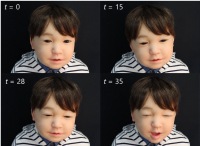
Even highly realistic androids can cause unease when their facial expressions lack emotional consistency. Traditionally, a "patchwork method" has been used for facial movements, but it comes with practical limitations. A team developed a new technology using "waveform movements" to create real-time, complex expressions without unnatural transitions.
Asia Research News monitors the latest research news in Asia. Some highlights that caught our attention this week are a cockroach cyborg, microrobots that assemble and disassemble to perform tasks, and a sponge made of squid bones to clean up pollution.
A research team led by National Taiwan University used geochemical indicators from deep-sea sediments to reconstruct the upper ocean zonal gradients in the tropical Pacific during the last glacial period, providing valuable constraints for future climate projections.
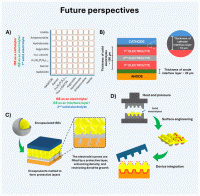
Advances in solid-state battery research are paving the way for safer, longer-lasting energy storage solutions. A recent review by Tohoku University researchers highlights breakthroughs in inorganic solid electrolytes and their role in improving battery performance. The study also addresses key challenges, such as interfacial compatibility, while proposing innovative strategies for next-generation battery technologies.
To discover Hong Kong citizens' awareness and acceptance of gerontechnology, the Lingnan University Institute for Policy Studies’ Jockey Club Gerontechnology and Smart Ageing in Place (GTSA) Project recently held a public opinion survey.
International Science Council Regional Focal Point for Asia and the Pacific
19 Dec 2024
Seed grants have been awarded to six applicants with high quality and well-outlined proposals to organize workshops promoting science advice at an institutional or national level in their respective countries in 2025.
A future where lightweight car parts can be made with a 3D printer is here, thanks to multi-material additive manufacturing research conducted at Tohoku University.
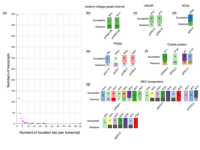
Near-gap-free and near-error-free genomes of a susceptible bed bug strain and a superstrain with around 20,000-fold insecticide resistance offer the broadest look yet at the full scope of mutations driving their resilience.
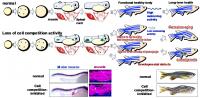
Researchers from Osaka University have revealed some of the precise mechanisms by which erroneous cells are recognized, marked for removal, and eliminated via apoptosis in developing zebrafish. Notably, they found that the protein Foxo3 may be a universal marker of cell competition in zebrafish and mice. These findings have important implications for congenital disorders, cancer, and aging, and may lead to novel treatments.
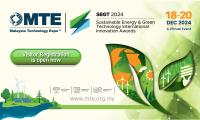
This annual event will bring together innovators, researchers, and industry leaders from around the world to spotlight groundbreaking advancements in sustainable energy and green technology.
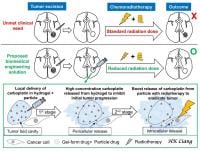
Utilizing pericellular and intracellular controlled-release of carboplatin to precisely synergize with reduced-dose radiotherapy, aiming to eradicate malignant gliomas.
Daegu Gyeongbuk Institute of Science and Technology (DGIST)
16 Dec 2024
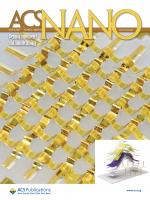
- DGIST Professor Jang Kyung-In’s research team has developed a highly efficient wearable energy harvester that can power electronic devices using only body movements
- The research results are published in ACS Nano, a top-tier journal in the field of nanoscience
Daegu Gyeongbuk Institute of Science and Technology (DGIST)
16 Dec 2024
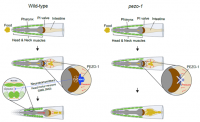
- DGIST Professor Kim Kyuhyung's research team uncovers the role of Piezo channels that sense pressure in the digestive tract and regulate swallowing behavior
- The research opens new opportunities for developing treatments for digestive and eating disorders
Daegu Gyeongbuk Institute of Science and Technology (DGIST)
16 Dec 2024
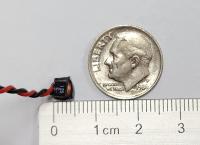
- DGIST Professor Kim So-hee's research team opens the possibility to safely and precisely stimulate specific areas of the brain with an ultra-small 3.5mm coil
- The technology can facilitate convenient and precise brain stimulation treatment at home without visiting a hospital
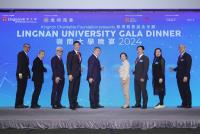
On 12 December, Lingnan University hosted its biennial fundraising event, Kingrich Charitable Foundation presents: Lingnan University Gala Dinner 2024 for around 300 welcome guests. This year the theme was Lingnan’s Transformation into the Digital Era.
Asia Research News monitors the latest research news in Asia. Some highlights that caught our attention this week are an AI model trained on ‘plant-speak’, how greedy groundwater use is making cities sink, and a lidar system that could find a needle in a very large haystack.
Researchers at Nano Life Science Institute (WPI-NanoLSI), Kanazawa University, have discovered how a protein called lamin A helps repair the protective barrier around a cell's DNA. The findings reveal lamin A's unique role and its potential for treating Hutchinson-Gilford Progeria Syndrome, a rare disorder that causes premature aging.
Installers' credibility, product quality, financing options, and long-term benefits hold equal weight in consumers' minds when it comes to solar power.
Tsunamis can cause immense physical damage to ports, but the economic cost does not stop there. The resultant disruptions of shipping lanes result in billions of dollars in losses every day, as was seen in the 2011 tsunami that hit the Tohoku Region. To better assess the ripple effect a tsunami could cause to shipping lanes in the South China Sea, a group of international researchers carried out 104 tsunami simulations.
The distribution of traditional wild food sources in the Republic of Sakha could change significantly, affecting the diets and incomes of Indigenous rural communities who depend on them.