
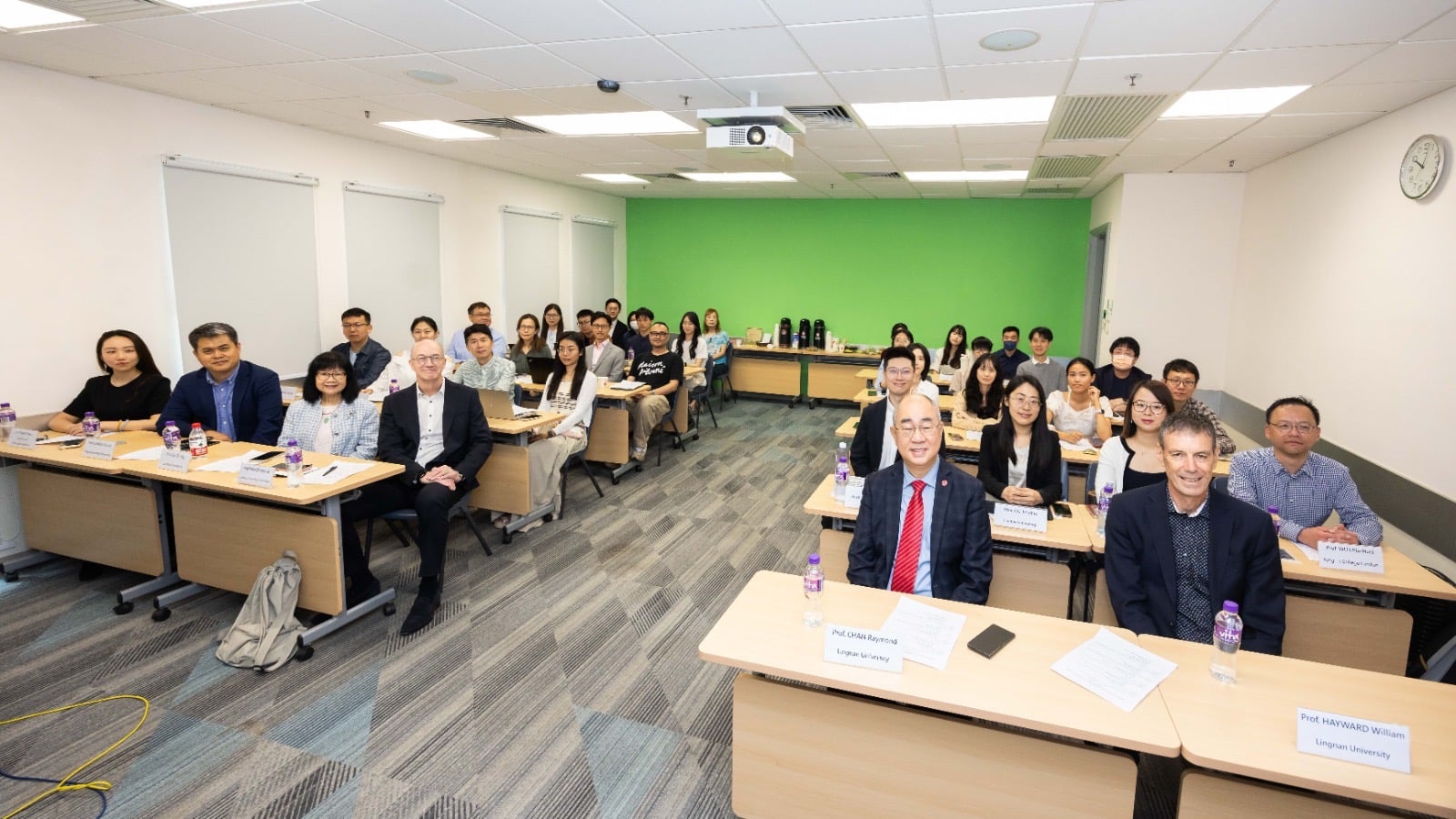
The Department of Psychology, Lingnan University, hosts the "Navigating the Work-Family Interface in the Digital Era: Challenges and Strategies" symposium.
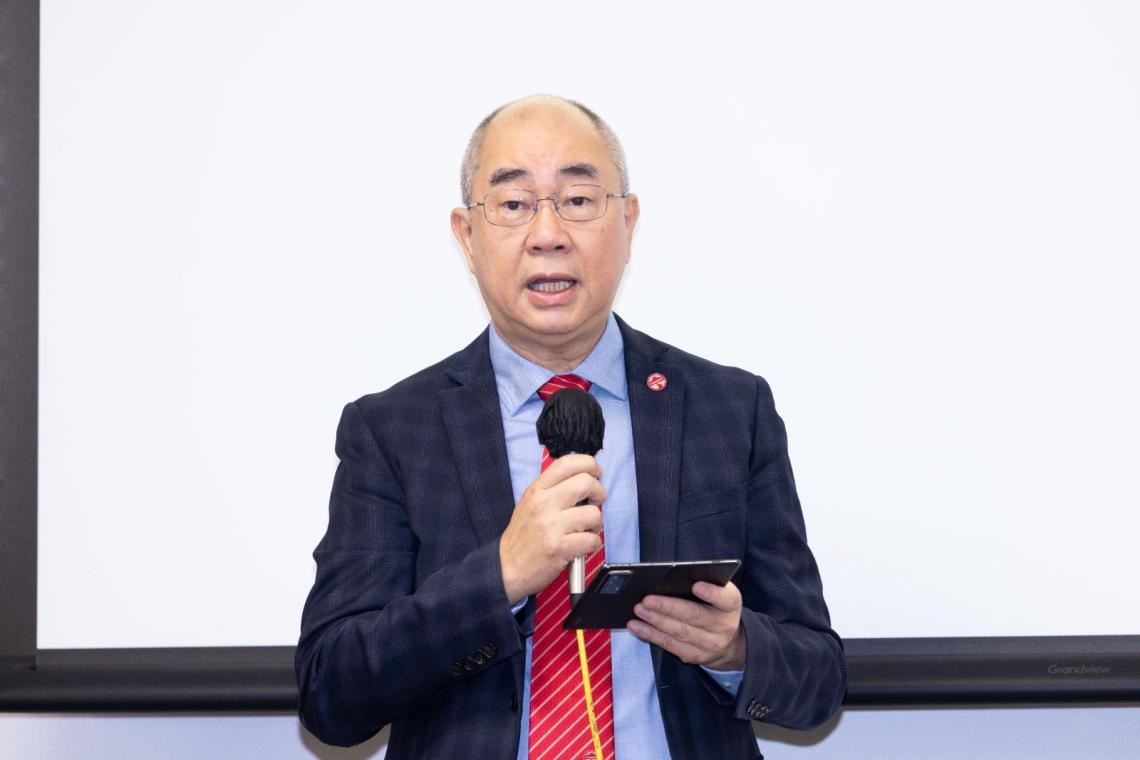
Prof Raymond Chan Hon-fu notes that in the digital era, the boundaries between work and home life are increasingly blurred, heightening psychological stress.
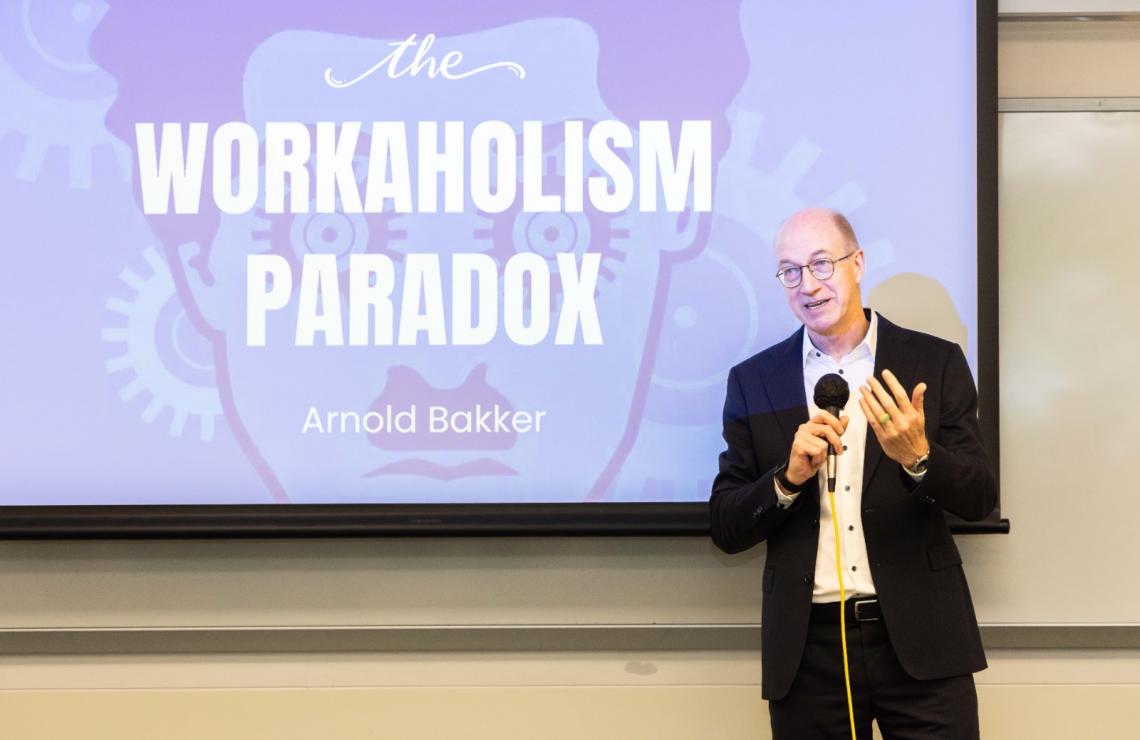
Prof Arnold Bakker from Erasmus University Rotterdam delivers the keynote speech on the workaholism paradox.
Prof Raymond Chan Hon-fu, Vice-President (Academics) cum Provost and Lam Man Tsan Chair Professor of Scientific Computing, delivered the opening remarks, noting that in the digital era, the boundaries between work and home life are increasingly blurred, heightening psychological stress. The symposium sought to offer practical solutions for both organisations and the wider public.
The keynote speech was delivered by renowned organisational psychologist and Lingnan Fellow at the Lingnan University Institute for Advanced Study (LUIAS) Prof Arnold Bakker from Erasmus University Rotterdam. He discussed the workaholism paradox, explaining that an excessive and compulsive workload depletes attention, judgment, and positivity, and also reduces creativity and performance. Using a work-home resources model, he observed that a prolonged overload may increase stress by adding to caregiving and household responsibilities, thus curtailing personal encouragement or straining social resources, and creating a vicious cycle. He suggested that organisations adopt complementary work-family resource approaches to help employees balance demands and develop self-regulation mechanisms to manage both domains.
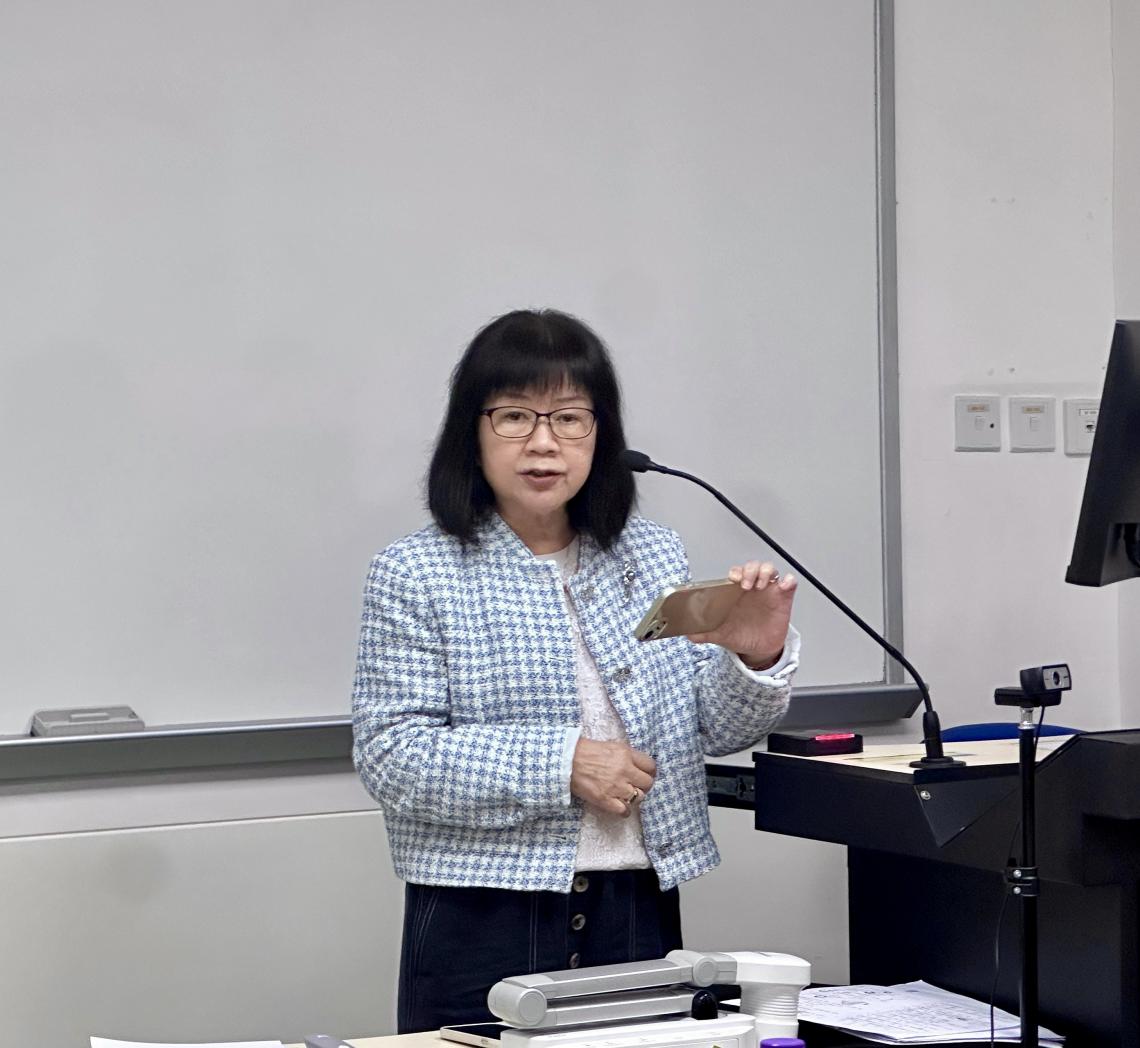
Prof Siu Oi-ling, Head of the Department of Psychology, Lam Woo & Co Ltd Chair Professor of Applied Psychology, and Director of the Wofoo Joseph Lee Consulting and Counselling Psychology Research Centre at Lingnan University.
In her closing remarks, Prof Siu Oi-ling, Head of the Department of Psychology, Lam Woo & Co Ltd Chair Professor of Applied Psychology,and Director of the Wofoo Joseph Lee Consulting and Counselling Psychology Research Centre at Lingnan University, stressed the importance of organisations considering the interplay between employees’ work demands, private life, and well-being, adding "This symposium highlights the urgent necessity for employees to rethink procedures for managing work and family in the digital era. Organisations should also adopt family-friendly policies that take employees’ personal needs into account."
Prof Siu pointed out that the research provides valuable insights for policymakers and organisations, and suggests combining current policies and technological innovations to help employees manage hidden stress in order to achieve a healthier and more sustainable way of life.
Participants of the symposium also included Prof William Hayward, Dean of the Faculty of Social Sciences and Chair Professor of Psychology at Lingnan University; Prof Richard M. Walker, Director of Lingnan University Institute for Advanced Study (LUIAS), Head of the Department of Government and International Affairs and Lee Shau Kee Foundation Chair Professor of Public Administration, and faculty members of the Department of Psychology.