

Nano Letters
About Nano Letters
Nano Letters is a forum for reporting original results on fundamental, applied, and emerging research in all areas of nanoscience and nanotechnology that require rapid dissemination.
- Website: https://pubs.acs.org/journal/nalefd
- Current Issue: https://pubs.acs.org/toc/nalefd/current
News
24 Jul 2026
Osaka Metropolitan University
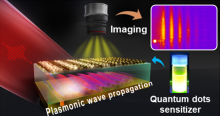
New imaging technique visualizes and measures plasmonic waves in device structures designed for practical uses
10 Jul 2026
Tohoku University
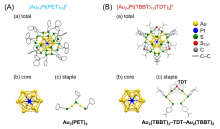
Catalysts are everywhere—from fertilizer production to clean energy—but making them more active without sacrificing stability has remained a major challenge. Researchers have now engineered a gold-platinum nanocluster catalyst that can be activated at lower temperatures while maintaining its precise atomic structure, boosting low-temperature carbon monoxide oxidation performance. Yet a clever ligand design could pave the way for more efficient and durable catalysts.
10 Jun 2026
Kanazawa University
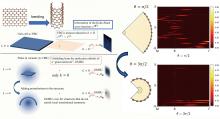
New “GMBU” procedure reveals band structures in finite, curved nanomaterials, linking nano‑ARPES and theory for next‑generation device design.
13 May 2026
Kanazawa University
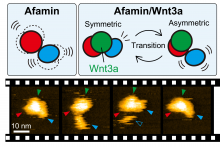
We have succeeded in visualizing the structural dynamics underlying how the serum protein Afamin stabilizes and transports Wnt3a, a lipid-modified signaling molecule.
26 Jan 2026
The University of Osaka
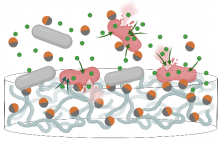
An international research team led by The University of Osaka has demonstrated that two-faced Janus nanoparticles can restore the effectiveness of antibiotics against drug-resistant bacteria. These particles disrupt the protective outer membrane of Gram-negative bacteria, which normally blocks antibiotics. This allows conventional drugs to regain access and kill the once-resistant microbes. This synergistic strategy restores the effectiveness of existing antibiotics, offering a new line of defense against the growing threat of superbugs and extending the utility of our current medical arsenal.
24 Oct 2025
Singapore University of Technology and Design
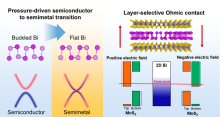
Research led by the Singapore University of Technology and Design (SUTD) has revealed how pressure can transform atomically thin bismuth from a semiconductor into a metal, opening a pathway to reconfigurable, ultra-thin electronics.
28 Sep 2025
Institute for Integrated Cell-Material Sciences (iCeMS) at Kyoto University
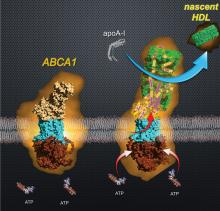
A Kyoto University study has revealed, for the first time, how the body produces the “good cholesterol” that can prevent heart disease

13 Jun 2025
Tohoku University
Researchers developed a safe and simple sublimation method that produces sheets of atomically-thin semiconductor crystals. This could streamline the process for creating faster, more efficient computers.

30 May 2025
Tohoku University
Researchers proposed a novel strategy for using a magnetic field to boost the efficiency of single-atom catalysts – thus speeding up helpful reactions used for ammonia production and wastewater treatment.

19 May 2025
Daegu Gyeongbuk Institute of Science and Technology (DGIST)
- Used a sub-1-nm quantum semiconductor nanocluster as a hydrogen production photocatalyst for the first time in world history
- Achieved structural stability and catalytic activity with self-assembled superstructure and metal ion doping
- Published in Nano Letters, one of the most prestigious journals in nanochemistry

12 Dec 2024
Kanazawa University
In a study recently published in the journal Nano Letters, published by American Chemical Society, researchers from Nano Life Science Institute (WPI-NanoLSI), Kanazawa University, Kanazawa, Japan, used frequency-modulated atomic force microscopy to reveal the submolecular structure of microtubule (MT) inner surface and visualize structural defects in the MT lattice, providing valuable insights into the complex dynamic processes that regulate microtubule function.

18 Nov 2024
Daegu Gyeongbuk Institute of Science and Technology (DGIST)
- DGIST’s Professor Jaedong Lee and UNIST’s Professor Noejung Park Achieve Breakthrough in Quantum Information Technology, Paving the Way for the Era of Quantum Computers
- Research Findings Published in Nano Letters

29 Aug 2024
Kanazawa University
Researchers at Nano Life Science Institute (WPI-NanoLSI), Kanazawa University, implement modifications to their high-speed atomic force microscopy that simultaneously improve resolution and speed, while enabling direct measurements of 3D structures to provide conclusive evidence of a contested hydration layer forming as calcite dissolves.

10 May 2024
Kanazawa University
Researchers at Nano Life Science Institute (WPI-NanoLSI), Kanazawa University report in Nano Letters how the use of high-speed atomic force microscopy helps to understand the crucial role played by certain biomolecules in DNA wrapping dynamics.

11 Mar 2024
The University of Osaka
Researchers from Osaka University used tip-scan high-speed atomic force microscopy combined with an optical microscope to observe light-induced deformation of azo-polymer films. The process could be followed in real time, and the film patterns were found to change with the polarization of the light source. The observations will contribute to the use of azo-polymers in applications such as optical data storage, and the approach is expected to be useful across materials science and physical chemistry.
17 Jan 2024
Kanazawa University
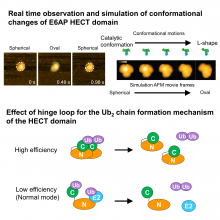
Researchers at Nano Life Science Institute (WPI-NanoLSI), Kanazawa University report in Nano Letters how the flexibility of a protein hinge plays a crucial role in the transfer of proteins in key cell processes.

06 Nov 2023
Institute of Industrial Science, The University of Tokyo (UTokyo-IIS)
Researchers at the Institute of Industrial Science, The University of Tokyo study the quantum mechanical phenomenon known as vacuum fluctuations using a nanoscale hybrid device, which may lead to ultrasensitive quantum sensors or information processors.
26 May 2023
Tohoku University
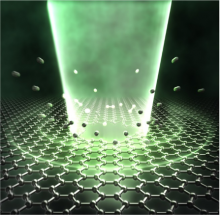
Graphene has revolutionized materials science since its discovery in 2004, with its high electron mobility, mechanical strength, and thermal conductivity. But processing graphene at the micro/nanoscale is a challenging process that often involves large-scale equipment and complex operations. Now, Tohoku University researchers have applied their simple femtosecond laser technique to ultra-thin atomic layers of graphene, resulting in multi-point hole drilling without damaging the graphene film.
15 May 2023
Kanazawa University
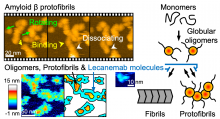
Researchers at Kanazawa University report in Nano Letters how high-speed atomic force microscopy leads to insights into processes relevant to Alzheimer’s disease. Moreover, the technique is shown to be an excellent tool for studying the effect of drugs against the disease.
02 May 2023
Osaka Metropolitan University
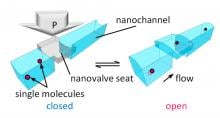
A joint research group at Osaka Metropolitan University has succeeded in regulating the flow of single molecules in solution by opening and closing the nanovalve mounted on the nanofluidic device by applying external pressure. The research group fabricated a device with a ribbon-like, thin, soft glass sheet on the top, and at the bottom a hard glass substrate having nanochannels and nanovalve seats. By applying external pressure to the soft glass sheet to open and close the valve, they succeeded in directly manipulating and controlling the flow of individual molecules in solution. They also observed an effect of fluorescence signal amplification when single fluorescent molecules are confined in the tiny nanospace inside the valve. The effect can be ascribed to the nanoconfinement, which suppresses the random motion of the molecules.
06 Mar 2023
Osaka Metropolitan University
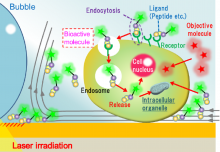
Osaka Metropolitan University researchers have used 100 seconds of laser irradiation to generate convection currents that selectively accelerate biochemical reactions—due to the photothermal effect—by concentrating biofunctional molecules at the cell surface. Using this method, useful molecules can be transported into cells at concentrations a hundred to a thousand times lower than with conventional methods. Furthermore, they also succeeded in selectively introducing small molecules into intracellular organelles usually impossible at low concentrations (hundreds of pmol/L) as well as inducing cell death in targeted cells by concentrating anticancer active peptides into them at concentrations so low that they would not be conventionally effective (several tens of nmol/L).
06 Mar 2023
Kanazawa University
Researchers at Kanazawa University report in Nano Letters the discovery of a biomolecular dynamical process likely relevant to gene expression. The process, revealed by means of high-speed atomic force microscopy, involves DNA and its packaging molecules.
20 Jan 2023
Kanazawa University
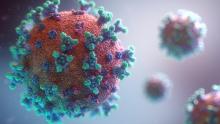
Researchers at Kanazawa University report in Nano Letters how high-speed atomic force microscopy can be used to assess the effectivity of spike-neutralizing antibodies for preventing COVID-19. The use of such antibodies offers a promising alternative to vaccines.

28 Jul 2022
The University of Osaka
Researchers from Osaka University and collaborating partners measured intracellular temperature gradients in human-derived cells at unprecedented spatial, temporal, and readout resolution. Intracellular temperature is a fundamental indicator of health, and corresponding gradients are the subject of medical hypotheses as well as potential drug development directions. The results of this work will advance such research by providing a versatile tool that's compatible with standard technology and procedures.
27 Jul 2022
The University of Osaka
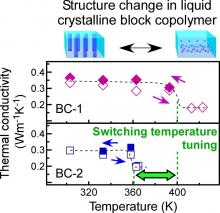
Researchers from Osaka University and collaborating partners used straightforward chemical synthesis to modulate the phase transition of a thermal conductivity-switching block copolymer. Reversible changes in the nanostructured anisotropy in the material corresponded to an approximately two-fold change in the thermal conductivity, over the 27°C to 147°C temperature range. These results will enhance the sustainability of upcoming advanced flexible organic electronics.
06 Jan 2022
Institute of Industrial Science, The University of Tokyo (UTokyo-IIS)
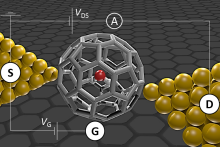
A collaborative team led by researchers from Institute of Industrial Science, The University of Tokyo uses a single water molecule in a C60 cage to probe quantum mechanics
02 Dec 2021
Institute of Industrial Science, The University of Tokyo (UTokyo-IIS)
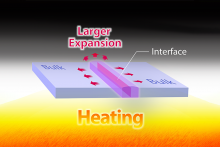
Researchers from the The University of Tokyo Institute of Industrial Science use electron energy loss spectroscopy to understand local thermal behavior at grain boundaries in polycrystals
19 Oct 2021
Osaka Prefecture University
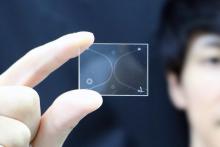
When liquid meets gas, a unique zone forms. Variable by nature, molecules can cross from one state to another, combining in unique ways to either desirable or unwanted ends. From heat escaping a mug of coffee to increasing molecular concentrations in chemical solutions, gas-liquid interfaces are ubiquitous across nature and engineering. But a lack of tools capable of precisely controlling such gas-liquid interfaces limit their applications — until now.

20 Nov 2020
Ulsan National Institute of Science and Technology (UNIST)
A research team, affiliated with South Korea's Ulsan National Institute of Science and Technology (UNIST) has succeeded in analyzing the structure of the sulfide-based solid electrolytes (SEs) at the atomic level.
16 Aug 2020
Kanazawa University
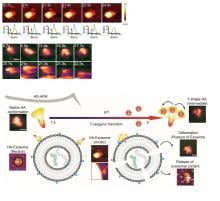
Researchers in Kanazawa University has recently reported their study in Nano Letters regarding a high-speed atomic force microscopy study on a biological event that happens during flu virus enters infects its host cell. The real-time visualization of influenza A hemagglutinin (HA) has enhanced the understanding of fusogenic transition of HA and its interactions with host endosomes.