

Chemical Communications
About Chemical Communications
Urgent communications of outstanding significance from across the chemical sciences.
News
05 Sep 2026
YOKOHAMA National University
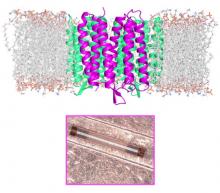
New technique provides high-resolution structures of notoriously difficult proteins

22 May 2026
Tohoku University
What if some of the most important scientific discoveries are already hidden in data collected years ago? Researchers at Tohoku University are exploring how AI and data-driven science can reveal new insights from past experiments and scientific literature. Their review highlights how old data could help accelerate discoveries in chemistry and materials science.
20 Apr 2026
Ehime University
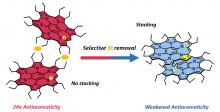
An Ehime University research group has discovered that antiaromatic molecules, typically unstable, can form stable dimers through π-stacking. The homoHPHAC cation, despite its positive charge, adopts a slightly offset stacked structure. This interaction induces electronic reorganization, partially attenuating antiaromaticity. The findings reveal a new mode of molecular assembly for antiaromatic molecules and provide insights for designing functional π-conjugated materials.

02 May 2025
Daegu Gyeongbuk Institute of Science and Technology (DGIST)
- Professor Su-Il In’s team at DGIST successfully develops a betavoltaic cell combining a perovskite absorber layer with a radioactive isotope electrode.
- Expected applications include long-term power solutions for space exploration, medical devices, military equipment, and more.
- Research featured as the cover article in Chemical Communications.

24 Sep 2024
Osaka Metropolitan University
Propylene production harnesses biodiesel waste byproduct

12 Sep 2024
The University of Osaka
Researchers from Osaka University fabricated copolymers with chiral backbones based on indacenodithiophene. Spin-coated films of the copolymers behaved differently toward currents with opposite polarization, resulting in chirality-induced spin selectivity. The magnitude of this selectivity was quantified as a spin polarization of almost 70%, which is among the highest achieved to date for a chiral polymer. These chiral copolymer films are attractive for use as spin filters in spintronics applications.
03 Oct 2022
Osaka Metropolitan University
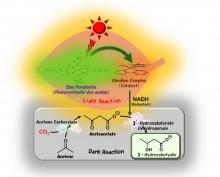
Osaka Metropolitan University scientists have successfully synthesized 3-hydroxybutyrate, a raw material for poly-3-hydroxybutyrate (PHB)—a strong, water-insoluble, biodegradable plastic used for packaging materials—from acetone and CO2. With a visible light-driven catalytic system utilizing sunlight and two biocatalysts, the researchers achieved a high conversion yield of about 80%. Mimicking natural photosynthesis, this study artificially reproduced a light reaction involving sunlight and a dark reaction fixing CO2 to synthesize the raw material for PHB. The finding is expected to contribute to solving the plastic waste problem and to reducing CO2.

22 Sep 2022
Hiroshima University
Researchers found a new way to reduce carbon dioxide (CO2) emissions by wrapping copper nanocubes with an organic layer, solving instability and selectivity problems with copper nanocubes in catalysis, and improving how this electrocatalyst converts CO2 into organic molecules.
20 Sep 2022
Institute of Industrial Science, The University of Tokyo (UTokyo-IIS)
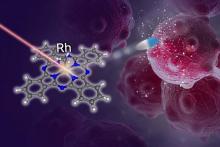
Researchers from The Institute of Industrial Science, The University of Tokyo have developed a streamlined photo-uncaging system for photodynamic cancer therapy, using a pulse of light for tumor-specific activation of a cancer-fighting agent
09 Mar 2022
Ehime University
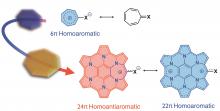
- New HPHAC analogues with an embedded nonbenzenoid aromatic ring have been synthesized.
- The newly synthesized HPHACs exhibit multistep redox properties and their dicationic species showed an aromatic nature based on macrocyclic conjugation.
- Methylation on the nonbenzenoid aromatic ring resulted in the development of "antiaromaticity".
02 Mar 2022
Ehime University
An innovative sample preparation method for cellular proteomics and protein structural analysis
25 Sep 2020
Ehime University
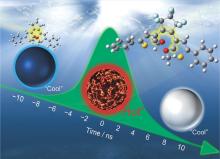
An Ehime University group led by Dr. Ishibashi and Prof. Asahi reported that when a nanosecond laser pulse was irradiated to diarylethene nanoparticles which show the photo-induced isomerization reaction from the colored closed-form to the colorless open-form, the ring-opening reaction was at most 80 times more effective than that in the solution phase. The amplification could be well explained as a ‘photosynergetic effect’ coupled with nanoscale photothermal conversion and a photochemical reaction. There are very few reports of such a nanosecond laser pulse induced amplified photochemical reaction in nanoparticles, indicating a new photoenergy conversion method.

04 Sep 2020
Daegu Gyeongbuk Institute of Science and Technology (DGIST)
Scientists at Daegu Gyeongbuk Institute of Science and Technology (DGIST) in Korea have found a way to improve the efficiency of betavoltaic devices, a type of power source that uses an internal radioactive material. This study opens up a new horizon in the field of nuclear batteries for powering set-and-forget electronic devices.

28 Feb 2020
Institute for Integrated Cell-Material Sciences (iCeMS) at Kyoto University
A new compound with the potential to turn genes on and off could lead to new cancer and hereditary disease treatment strategies.
22 Jan 2020
Hokkaido University
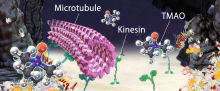
Researchers have discovered a method to control biomolecular machines over a wide temperature range using deep-sea osmolyte trimethylamine N-oxide (TMAO). This finding could open a new dimension in the application of artificial machines fabricated from biomolecular motors and other proteins.
30 Sep 2019
Tohoku University
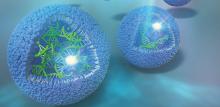
DNA amplification -- a molecular "photocopying" technique where genetic material is replicated -- has many applications in scientific research, forensic science, and medical laboratories. It is useful for detecting and identifying certain forms of cancer and viral diseases, and holds promise for treating these diseases in the future.
20 Sep 2017
Institute of Transformative Bio-Molecules (WPI-ITbM), Nagoya University
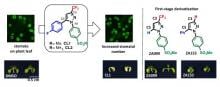
Discovery of small molecules that increases the number of stomata on plant leaves

08 Dec 2016
Ulsan National Institute of Science and Technology (UNIST)
Professor Jang Hyun Choi of Life Sciences and Professor Mi Hee Lim of Natural Science at Ulsan National Institute of Science and Technology (UNIST), South Korea, has been listed in "30 Young Scientists of Korea".
25 Aug 2016
Ulsan National Institute of Science and Technology (UNIST)
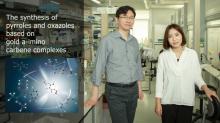
The work by Prof. Cheol-Min Park (School of Natural Science) at Ulsan National Institute of Science and Technology (UNIST) has been selected to appear on the front cover of the prestigious journal, ChemComm.
31 Jul 2015
Korea Advanced Institute of Science and Technology (KAIST)
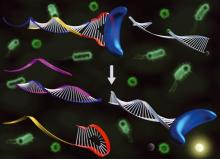
KAIST has developed a technique to analyze various target DNAs using an aptamer, a DNA fragment that can recognize and bind to a specific protein or enzyme.

10 Sep 2014
The Agency for Science, Technology and Research (A*STAR)
A separation method that isolates protein-protected gold clusters enables improved sensing of toxic mercury compounds and pesticides.
30 Jul 2014
The Agency for Science, Technology and Research (A*STAR)
Heat-responsive polymers that do not breakdown in water may lead to new antifouling coatings and enhanced oil recovery.
19 Jun 2013
The Agency for Science, Technology and Research (A*STAR)
A low-cost molecule boosts the stability and amplification characteristics of solution-based polymer semiconductors
21 Nov 2012
The Agency for Science, Technology and Research (A*STAR)
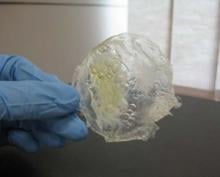
A novel approach produces dual-function molecules that enhance a widely used chemical reaction while reducing harmful by-products
12 Oct 2011
The Agency for Science, Technology and Research (A*STAR)
Multi-compartment globular structures assembled from polymer-based materials may soon serve as cell prototypes
03 Aug 2011
The Hong Kong Polytechnic University (PolyU)
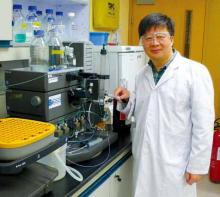
The concerted efforts of researchers from both PolyU and Peking University’s Shenzhen Graduate School have led to the first total synthesis of a natural marine product as a promising anti-cancer agent.
17 Nov 2010
The Hong Kong Polytechnic University (PolyU)
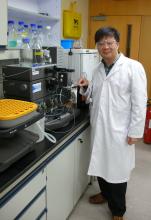
An anti-cancer research jointly conducted by The Hong Kong Polytechnic University (PolyU) and Peking University Shenzhen Graduate School (PKUSZ) has led to the first total synthesis of an anti-cancer marine natural product, grassypeptolide.