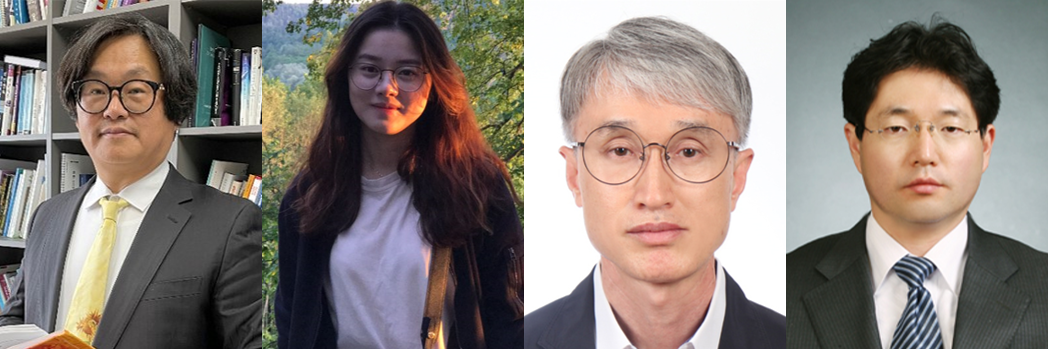
□ A study titled “Individual AI Mechanism Design Based on the Open Innovation Dynamics,” conducted by a research team led by Principal Researcher Jinhyo Joseph Yun (also serving as Principal Professor of the Open Innovation Academy) of the ABB Research Division at DGIST (President Kunwoo Lee), has been published in the internationally renowned journal European Journal of Innovation Management.
□ The study was jointly conducted by Jinhyo Joseph Yun (Principal Researcher, DGIST), Hyobi Cho (Senior Researcher, DGIST), Heungju Ahn (Chair of the Department of Liberal Arts and Sciences, DGIST, co-corresponding author), and Kyungbae Park (Professor at Sangji University), representing the outcome of interdisciplinary collaboration.
□ The research team applied open innovation dynamics to the “2nd knowledge” learning mechanism of artificial intelligence (AI), through which, they successfully developed a new AI model—“Individual AI”—that is differentiated from general AI, using mathematical modeling.
□ General AI, which is currently dominant, has exposed various limitations in pursuing “infinite intelligence,” including the potential emergence of a singularity beyond human control, massive energy consumption and reliance on large-scale data centers, risks of personal privacy infringement, and conflicts with the existing capitalist economic order. The “Individual AI” proposed by the research team is receiving attention as a practical alternative to address these issues.
□ In particular, “Individual AI” presents a new approach to complement human “bounded rationality” by simulating, at the individual level, the learning mechanisms that have traditionally been conducted by firms or organizations in the history of capitalist economies.
□ Specifically, it is expected to address the issues of quality of life faced by individuals in the post-capitalist era, such as expanding intellectual desire, alleviating emotional loneliness, and improving mental health by delaying cognitive aging. Furthermore, it is expected to provide solutions to the structural flaws of existing over-accumulation capitalism by complementing economic systems focused on mass production and promoting the development of capitalism based on individualized production.
□ “This study is significant in that it integrates the dynamics of open innovation into AI to propose a new, individual-centered AI model,” stated Principal Researcher Jinhyo Joseph Yun of DGIST. “Going forward, we will further concretize a human-centered, sustainable direction for AI development through practical implementation and application.”
□ The research team has currently demonstrated the theoretical feasibility of this model through mathematical modeling and is conducting follow-up studies on concrete implementation strategies for application in actual services, as well as mechanisms for singularity suppression. They plan to concentrate their research capabilities on the practical implementation and societal adoption of “Individual AI.”