
The 12th South-South Forum is held for the first time in Shangyou County, Ganzhou City, Jiangxi Province, China.
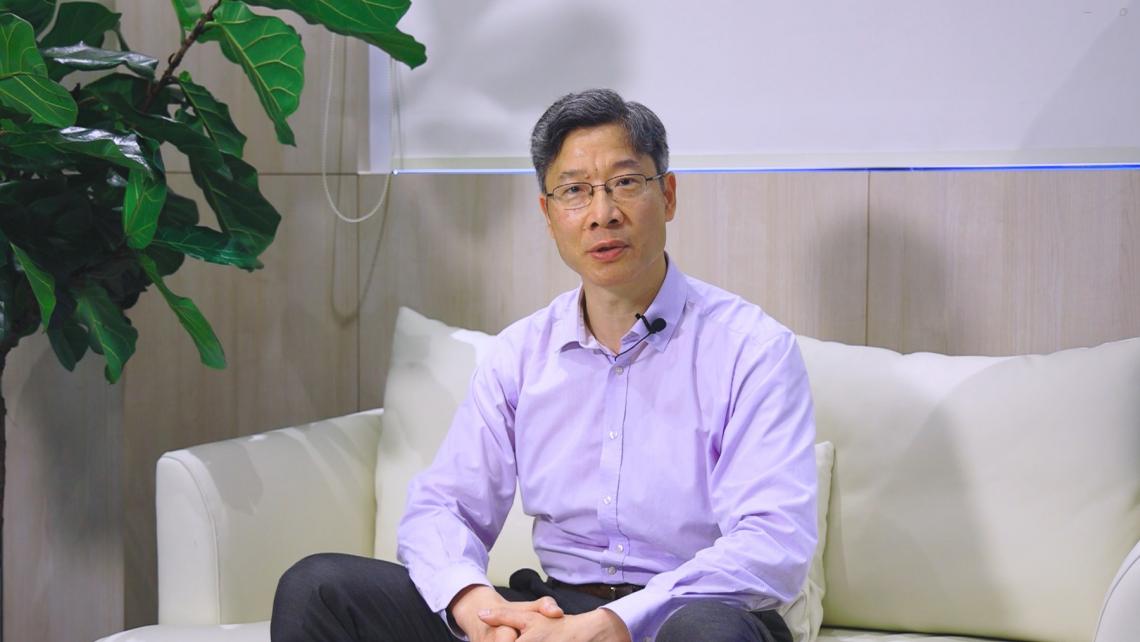
Prof Xin Yao, Vice-President (Research and Innovation) and Tong Tin Sun Chair Professor of Machine Learning of Lingnan University, delivers a welcome speech via video.
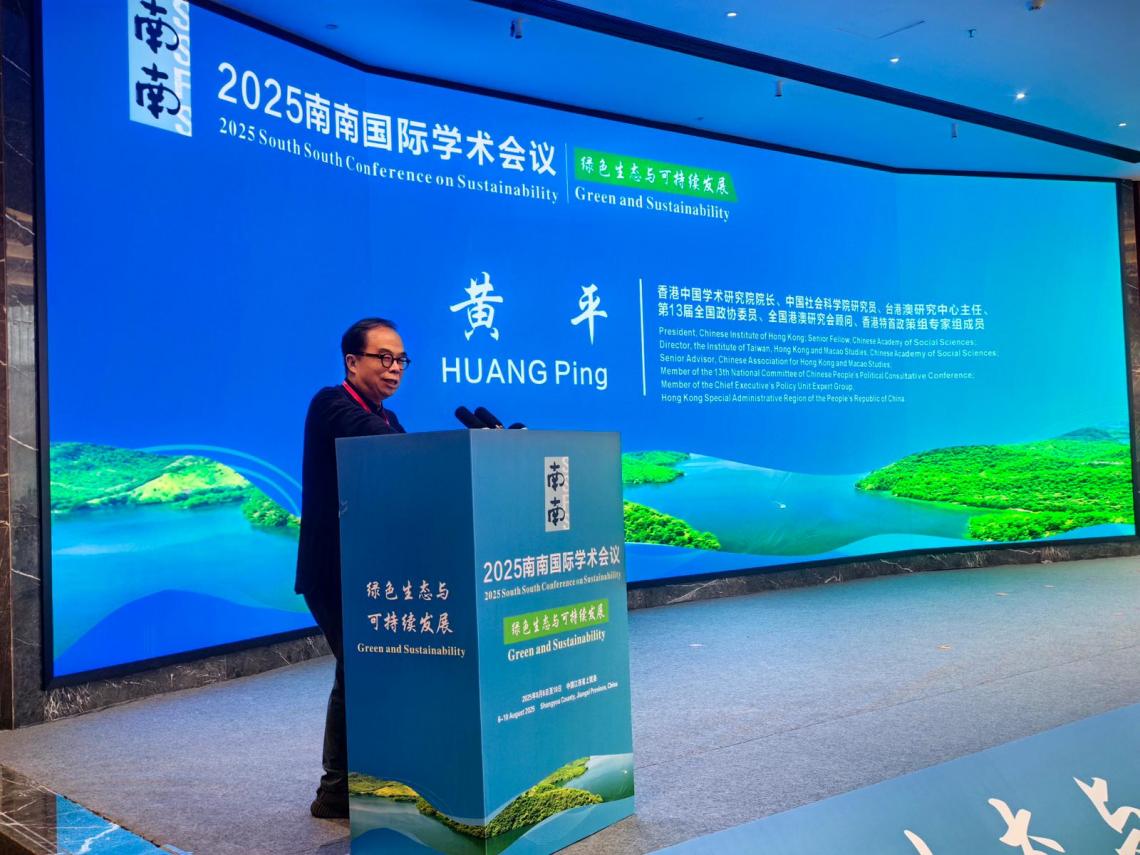
Prof Huang Ping, President of the Chinese Institute of Hong Kong, delivers the opening address at the conference.
The only Hong Kong higher education institution among the organisers, Lingnan University joined experts and scholars from Mainland China and Hong Kong, as well as Australia, Brazil, Colombia, India, Kenya, Mexico, South Korea, The Gambia, the US, Venezuela, and other regions for in-depth discussions on Green and Sustainability. Topics included global climate change, community building, and sustainable education, and the forum attracted both on- and offline participants.
The five-day forum’s opening ceremony took place yesterday (7 August). It was chaired by Mr Chow Man-kong, a member of the Legislative Council of the Hong Kong Special Administrative Region, and guests from Mainland China and Hong Kong included Prof Xiao Hongbo, President of the Jiangxi Academy of Social Sciences; Mr Zhong Xiaowu, Member of the Standing Committee of the CPC Ganzhou Municipal Committee; Prof Huang Ping, President of the Chinese Institute of Hong Kong, Mr Shiu Sin-por, Executive Director of the New Paradigm Foundation and Advisor to the Chinese Association of Hong Kong & Macao Studies; and Mr Tam Yiu-chung, Vice President of the Chinese Association of Hong Kong & Macao Studies and Secretary-General of the Hong Kong Coalition.
In his welcoming speech, Prof Xin Yao, Vice-President (Research and Innovation) and Tong Tin Sun Chair Professor of Machine Learning of Lingnan University, said that the world needs to embark collectively on a path of green development guided by ecological civilisation, and education is key to achieving this transformation.
Prof Yao added “Once-in-a-century extreme weather has become a daily occurrence, including frequent floods, heatwaves, and storms. Meanwhile, water scarcity has led to uncontrollable wildfires, claiming lives in both wealthy and poor countries alike. These phenomena pose threats to socio-economic well-being and human survival, making the timing of this conference highly relevant to current realities. The world must collaborate to adopt green development pathways, rather than perpetuating the profit-driven development models of the past. I believe this conference serves as a crucial platform for sharing experiences, and I expect contributions from all sectors in building a greener and more sustainable future.”
Prof Huang Ping, President of the Chinese Institute of Hong Kong, delivered the opening address at the conference and remarked that it was only in recent history that humanity came to realise we have only one earth, and that growth is not limitless. Development must be sustainable, and we must not trade environmental protection and ecological balance for short-term gratification.
Prof Huang further added, “The physical and mental well-being of individuals, the overall harmony of society, global peace, and mutual learning among civilisations are the values we should pursue and strive for. In the past, certain regions, countries, and populations did achieve development. However, even if we set aside, for the moment, the internal oppression and external plunder that accompanied it, such development came at the cost of relentless exploitation of natural resources and continual destruction of ecosystems. It sacrificed one spring after another for both humanity and the natural world. This path of development is no longer viable for humanity. It must not and cannot continue.” He expressed his hope that participants would exchange experiences, share achievements, pool their wisdom, and collectively envision the future.
Prof Lau Kin-chi, Coordinator of the programme on Cultures of Sustainability of the Centre for Cultural Research and Development of Lingnan University, highlighted the significance of hosting the South-South Forum, saying “The infinite expansion of capitalism has intensified ecological destruction through commodification of every corner of society. With global temperatures already passing the threshold of the Paris Agreement’s 1.5°C target over the past two years, the Global South has borne the brunt of disasters including floods, wildfires and food crises. In the face of this predicament, the South-South Forum demonstrates unique value. The South, with its rich community experiences, explores opportunities for sustainable development, offering alternative visions of the future for humanity confronting climate disasters. This year’s forum emphasises a global community with a shared future for mankind and common prosperity, while opposing individualism and the notion of survival of the fittest.”
“South-South” refers to developing as opposed to developed countries and regions. Themed “Green and Sustainability”, this year’s forum will be divided into five sessions, each focusing on in-depth discussions of community experience cases from the Global South, and sharing experiences of green development, globalisation and China’s ecological civilisational transformation, modernisation and rural revitalisation, as well as analysing the international situation and trends from a green and sustainable perspective.
Keynote speeches were delivered by Prof Chen Zhigang, Vice President and Professor of the Academy of Marxism, on “Why are green mountains and clear waters equivalent to mountains of gold and silver?”; Mr Xie Maosong, Senior Researcher at the National Strategy Research Institute of Tsinghua University, on “The Two Mountains Theory in the context of civilizational history”; Prof Wen Tiejun of the Haikou University of Economics on “Rural revitalisation for the national strategic transition”; and Prof Huang Ping, President of the Chinese Institute of Hong Kong, on “Poverty Alleviation, Ecology, and Sustainable Development in Southwest and Northwest China”.
In addition to attending the keynote speeches, guests were also taken to visit the Sentai Bamboo and Wood Company, Pao Xiaoyan Food Digital Economy Complex, Meishuiyuan Village, Bijiashan Ecological Industrial Park, Yangming International Fishing Base, Nanhu Sports Event Complex, Sake Tourism Base, and Yangming Lake. They also looked at the Chinese Academy of Social Sciences’ achievements in poverty alleviation.
Lingnan University has attained a historic milestone with its world-first ranking for SDG 4: Quality Education in the Times Higher Education (THE) Impact Rankings 2025. This is the first time a Hong Kong higher education institution has reached the top position internationally in any SDG category, and demonstrates the University’s valuable contributions to advancing quality education and advocating the United Nations Sustainable Development Goals (SDGs).
Lingnan University is also committed to promoting students’ ecological literacy and actively advancing the development of a green campus. Among its initiatives, the Lingnan Gardeners project, spearheaded by the Cultures of Sustainability of the Centre for Cultural Research and Development has been running for 11 years now. Focusing on issues such as sustainable development, peace, culture, ecology, and livelihoods, the project involves growing organic vegetables and plants in designated areas on campus.