

Chemistry
News
19 Nov 2020
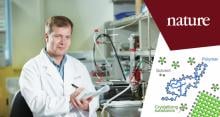
A recent study, affiliated with South Korea's Ulsan National Institute of Science and Technology (UNIST) has demonstrated that in the presence of polymers (preferably, polyionic liquids), crystals of various types grow in common solvents, at constant temperature, much bigger and much faster when stirred, rather than kept still.
19 Nov 2020
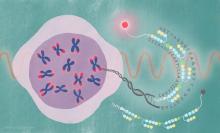
A repetitive DNA sequence that causes health risks when it malfunctions can now be watched inside living cells using a synthetic tool
17 Nov 2020
Scientists explain how selective electrostatic doping can balance the charge in optoelectronic devices with 2D materials

10 Nov 2020
Scientists create a 3D digital “twin” of an all-solid-state battery to visualize its interfacial microstructures in detail
03 Nov 2020
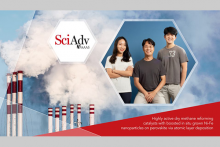
A recent study, affiliated with South Korea's Ulsan National Institute of Science and Technology (UNIST) has developed a new nanocatalyst that recycles major greenhouse gases, such as carbon dioxide (CO2) and methane (CH4), into highly value-added hydrogen (H2) gas.

03 Nov 2020
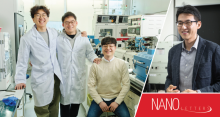
A recent study, affiliated with South Korea's Ulsan National Institute of Science and Technology (UNIST) has developed a tiny micro supercapacitor (MSC), being small as the width of a person's fingerprint.
03 Nov 2020
A recent study, affiliated with South Korea's Ulsan National Institute of Science and Technology (UNIST) has unveiled 2D material-based ultrasensitive surface-enhanced Raman spectroscopy (SERS) sensor by synthesizing uniform large-area ReOxSy thin films.
03 Nov 2020
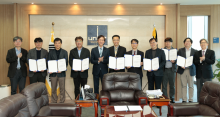
Eight faculty members, affiliated with South Korea's Ulsan National Institute of Science and Technology (UNIST) have been honored with the 2019 Outstanding Faculty Award.

29 Oct 2020
Scientists at The University of Tokyo use a two-state model based on the formation of tetrahedral structures to explain water’s anomalous properties and the surprising liquid–liquid transition of water.
28 Oct 2020
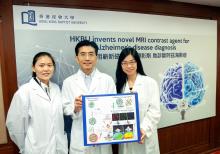
Hong Kong Baptist University (HKBU) scientists have invented a novel contrast agent for magnetic resonance imaging (MRI), which enables real-time visualisation and detection of the size and number of amyloid-beta in the brain, a main hallmark of Alzheimer’s disease (AD). The invention offers hope for early detection and large-scale routine screening of AD. It can also help to assess the efficacy of drugs used to treat it.
13 Oct 2020
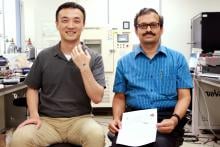
The trick to extremely thin supercapacitors with improved performance is spraying graphene ink at an angle.
01 Oct 2020
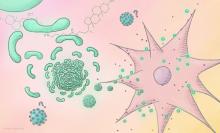
Scientists have found an ingredient that makes a vaccine more effective through an approach more often seen in materials science – testing molecules that self-assemble into larger structures.

01 Oct 2020
A Hokkaido University research group has successfully demonstrated that carbon-carbon (C-C) covalent bonds expand and contract flexibly in response to light and heat. This unexpected flexibility of C-C bonds could confer new properties to organic compounds.
29 Sep 2020
China’s success in improving air quality by cutting polluting emissions may have a negative knock-on effect on climate change overall, a new study has found.
29 Sep 2020
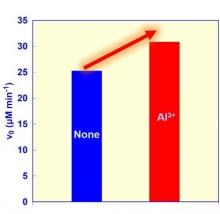
Researchers at Osaka City University produce malic acid, which contains 4 carbon atoms, through artificial photosynthesis by simply adding metal ions like aluminum and iron. This solves a problem with current artificial photosynthesis technology of only producing molecules with 1 carbon atom and paves the way to exploring the use of CO2 as a raw material.
25 Sep 2020
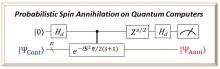
Researchers at Osaka City University create a quantum algorithm that removes spin contaminants while making chemical calculations on quantum computers. This allows for predictions of electronic and molecular behavior with degrees of precision not achievable with classical computers and paves the way for practical quantum computers to become a reality.
25 Sep 2020
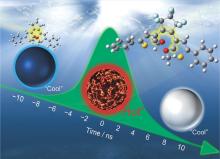
An Ehime University group led by Dr. Ishibashi and Prof. Asahi reported that when a nanosecond laser pulse was irradiated to diarylethene nanoparticles which show the photo-induced isomerization reaction from the colored closed-form to the colorless open-form, the ring-opening reaction was at most 80 times more effective than that in the solution phase. The amplification could be well explained as a ‘photosynergetic effect’ coupled with nanoscale photothermal conversion and a photochemical reaction. There are very few reports of such a nanosecond laser pulse induced amplified photochemical reaction in nanoparticles, indicating a new photoenergy conversion method.
14 Sep 2020
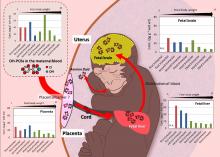
This study selected the Japanese macaque (Macaca fuscata) as a model animal for the fetal transfer of OH-PCBs in humans, and revealed OH-PCB concentrations and their relationships in the maternal and fetal brains. The key finding from this study is that OH-PCBs can reach the developing brain of the fetus as early as the first trimester of pregnancy. These OH-PCBs may exceed the levels that induce adverse effects on neurodevelopment.
11 Sep 2020
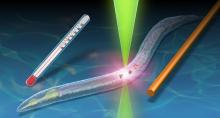
Measuring the temperature of objects at a nanometer-scale has been a long challenge, especially in living biological samples, because of the lack of precise and reliable nanothermometers. An international team of researchers has realized a quantum technology to probe temperature on a nanometer-scale, and have observed a ‘fever’ in tiny nematode worms under pharmacological treatment. This strengthens the connection between quantum sensing and biology and ushers in novel thermal imaging technologies in biomedical research.
09 Sep 2020
Scientists at Daegu Gyeongbuk Institute of Science and Technology, Korea, develop a novel “heterostructured” photocatalyst using titanium and copper, two abundant and relatively inexpensive metals. Their cost-effective synthesis procedure, coupled with the high stability of the photocatalyst, provides an economically feasible way to convert waste carbon dioxide and water into useful hydrocarbon fuels using endless sunlight.
04 Sep 2020
Scientists at Daegu Gyeongbuk Institute of Science and Technology (DGIST) in Korea have found a way to improve the efficiency of betavoltaic devices, a type of power source that uses an internal radioactive material. This study opens up a new horizon in the field of nuclear batteries for powering set-and-forget electronic devices.

21 Aug 2020
A team at Tohoku University has succeeded in growing large single crystals of tin monosulfide, a material used in next generation solar cells.
20 Aug 2020
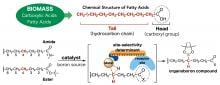
A new catalyst design enables unprecedented control over the modification of fatty acid derivatives that opens the door to creating useful substances in a green and efficient manner.
14 Aug 2020
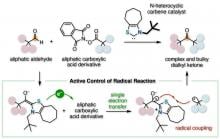
In catalytic reactions with organocatalysts, it is difficult to control radical reactions. We designed a thiazolium-type N-heterocyclic carbene catalyst having an N-neopentyl group. This catalyst was found to actively control radical reactions and enabled production of more than 35 species of bulky dialkyl ketones from an aliphatic aldehyde and an aliphatic carboxylic acid derivative through a radical relay mechanism. This catalyst is expected to open the way for acceleration of drug discovery research.
10 Aug 2020
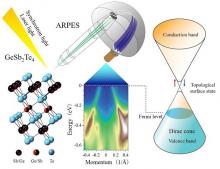
Researchers have found electrons that behave as if they have no mass, called Dirac electrons, in a compound used in rewritable discs, such as CDs and DVDs. The discovery of “massless” electrons in this phase-change material could lead to faster electronic devices.
04 Aug 2020
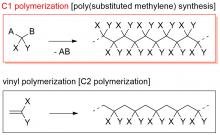
The research team directed by H. Shimomoto and E. Ihara in Ehime University synthesized pH-responsive dendronized polymers by C1 polymerization of dendron-containing diazoacetates, and demonstrated a unique pH-responsive behavior of the resulting polymers. These achievements will contribute to progress in the field of polymer chemistry and will allow us to develop new types of smart soft materials.
03 Aug 2020
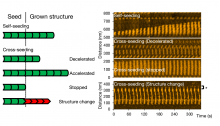
Researchers at Kanazawa University report in ACS Nano a high-speed atomic-force microscopy study of the formation of protein fibrils (amyloids) associated with pathologies in collaborated research with Showa University. Mixing different variants of a single protein and changing the acidity of its environment is shown to result in significant variations in amyloid structure and elongation rates.
27 Jul 2020
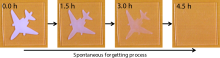
Hokkaido University researchers have found a soft and wet material that can memorize, retrieve, and forget information, much like the human brain. They report their findings in the journal Proceedings of the National Academy of Sciences (PNAS).
13 Jul 2020
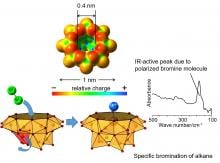
A hemispherical vanadium oxide cluster has a cavity that can accommodate a bromine molecule. It was found that a bromine molecule trapped in the cavity was polarized and that an alkane molecule like pentane, butane and propane could be brominated with the bromine molecule in the cavity with a selectivity differing from ordinary bromination. The present findings are expected to be useful for polarization of small molecules and design of highly functional catalysts.
06 Jul 2020
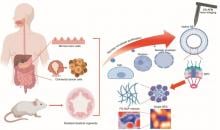
Researchers at Kanazawa University report in Biomaterials a high-speed atomic-force microscopy study of protein filaments in the nuclear pore complex. The visualization in real-time of the filaments’ dynamics is an important step in our understanding of molecular transport mechanisms between a cell nucleus and its surrounding medium.
Events
Sorry, nothing coming up for this discipline
Researchers
Sorry, nothing coming up for this discipline
Giants in history
Sorry, nothing coming up for this discipline