

Internal medicine Neurology
News
26 May 2026
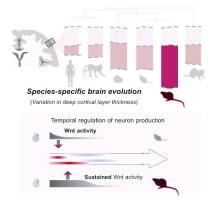
Researchers from The University of Osaka have found that the rat brain differs from other mammals in the proportion of upper and deep layer neurons in the cortex. This change likely arises from differences in the timing of signaling pathways during early brain development. Importantly, this identified mechanism may have future applications in regenerative medicine for developmental and neurological disorders.
04 Mar 2026
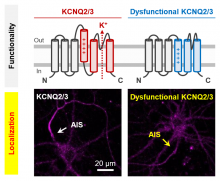
Researchers from The University of Osaka have found that potassium KCNQ2/3 channels in the brain, which are important for suppressing cell excitability, need to be fully functional to be trafficked to the appropriate part within the nerve cell and work properly. This link between channel functionality and localization may have important consequences for the development of therapies against KCNQ2/3-related epilepsy.
05 Feb 2026
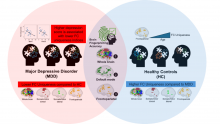
Study highlights the uniqueness of individual brain functional connectomes as a promising approach to identify biomarkers for major depressive disorder.
29 Jan 2026
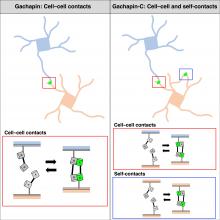
Researchers from The University of Osaka report the development of two fluorescent indicators, Gachapin and Gachapin-C, that can be used to monitor cell–cell contacts and contacts between different processes of the same neuronal cell. Unlike split GFP indicators, the reversible and instant fluorescence from the Gachapin/Gachapin-C chromophore upon contact enables real-time imaging of dynamic contact events.
16 Jan 2026
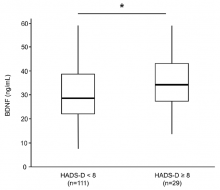
Symptoms of depression are common among people with asthma, but growing evidence suggests they may arise from biological mechanisms different from those underlying major depressive disorder.
09 Jan 2026
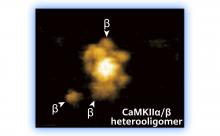
Scientists at the Nano Life Science Institute (WPI-NanoLSI), Kanazawa University, have captured real-time images showing how a key brain enzyme organizes itself to help memory formation. Their study, published in Nature Communications, reveals that the enzyme CaMKII forms mixed α/β subunit structures whose interactions stabilize learning-related signals in neurons.

29 Dec 2025
Findings connect Fusobacterium nucleatum with multiple sclerosis disease severity
22 Sep 2025
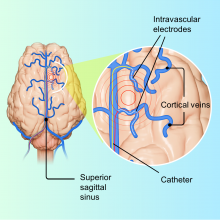
This innovative technique allows for precise measurement of brain activity without the need for open-brain surgery by using blood vessels as conduits for electrodes. This holds immense potential for improving neurological care, advancing our understanding of the brain, and unlocking new possibilities for brain-computer interfaces.
18 Aug 2025
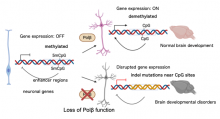
A research group led by The University of Osaka has discovered that the DNA repair enzyme Polβ plays a crucial role in protecting the developing brain from harmful mutations. The study found that a lack of Polβ leads to a significant increase in small insertions and deletions of DNA, known as indels near CpG sites, which are important regulatory regions in genes. This accumulation of mutations could contribute to neurodevelopmental disorders.

14 Jul 2025
As the days grow shorter, many animals prepare for the approaching winter by suspending reproduction. Insects, for example, accumulate energy stores while halting ovarian development through a process known as reproductive diapause. In a recent study published in The Journal of Experimental Biology, researchers at The University of Osaka uncovered a key neuroendocrine pathway underlying this seasonal shift in the bean bug Riptortus pedestris, identifying the neuropeptide corazonin as a molecular signal that suppresses reproduction in response to changes in day length.

12 Jun 2025
A new study reveals striking international differences in how doctors approach the sensitive issue of tracheostomy invasive ventilation (TIV) for patients with amyotrophic lateral sclerosis (ALS). Cultural norms and healthcare systems appear to significantly influence physician attitudes and, consequently, patient choices regarding this life-sustaining treatment.

20 May 2025
A research team at The University of Osaka has identified a crucial brain region involved in motor learning during reaching movements. The parvocellular division of the red nucleus, a small but specialized structure in the midbrain, was found to generate and transmit “error signals” necessary for adapting hand movements. This discovery clarifies a long-standing question in neuroscience about how the brain detects and corrects motion inaccuracies, with potential applications in developing new rehabilitation methods.
12 Sep 2023
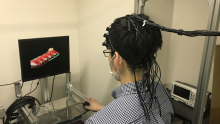
Patients with a specific form of chronic indigestion react differently to images of food, compared to healthy control subjects or patients with irritable bowel syndrome.
15 May 2023
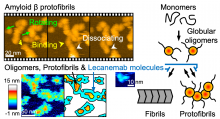
Researchers at Kanazawa University report in Nano Letters how high-speed atomic force microscopy leads to insights into processes relevant to Alzheimer’s disease. Moreover, the technique is shown to be an excellent tool for studying the effect of drugs against the disease.
11 May 2023
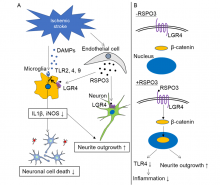
Researchers from Osaka University identified a new protein, R-spondin 3 (RSPO3), that has beneficial effects after ischemic stroke in mice. Specifically, RSPO3 activates the protein LGR4 to trigger a cascade of cellular reactions that decreases inflammation and stimulates the growth of neuronal extensions. Moreover, administrating RSPO3 to mice one day after stroke improved recovery of sensory and motor functions. These findings provide a new target for developing treatments to improve recovery after ischemic stroke.
21 Jun 2022
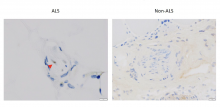
Researchers in Japan outline preliminary research that could pave the way for a future test to diagnose ALS, a progressive disease of the nervous system.

01 Oct 2021
Paris, 29 September — UNESCO and the L'Oréal Foundation are unveiling the winners of this year’s International Prize for Women in Science, which honours five eminent women scientists with exceptional careers from the five regions of the world, as it has done annually since 1998.
03 Aug 2020
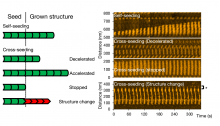
Researchers at Kanazawa University report in ACS Nano a high-speed atomic-force microscopy study of the formation of protein fibrils (amyloids) associated with pathologies in collaborated research with Showa University. Mixing different variants of a single protein and changing the acidity of its environment is shown to result in significant variations in amyloid structure and elongation rates.
26 Mar 2020
In a recent study published in Autophagy, researchers at Kanazawa University show how abnormalities in a gene called TPR can lead to pediatric brain cancer
Events
Sorry, nothing coming up for this discipline
Researchers
Sorry, nothing coming up for this discipline
Giants in history
Sorry, nothing coming up for this discipline