


This innovative technique allows for precise measurement of brain activity without the need for open-brain surgery by using blood vessels as conduits for electrodes. This holds immense potential for improving neurological care, advancing our understanding of the brain, and unlocking new possibilities for brain-computer interfaces.
Fig. 1
Catheterization of a superficial cortical vein with a wire-shaped microelectrode for intravascular EEG recording.
CC BY, Takamitsu Iwata et al., 2025, Microendovascular Neural Recording from Cortical and Deep Vessels with High Precision and Minimal Invasiveness, Advanced Intelligent Systems
New technique uses blood vessels to access brain activity with unprecedented precision
Osaka, Japan – Researchers at The University of Osaka have developed a groundbreaking, minimally invasive method for recording brain activity through blood vessels. This technique could potentially transform the diagnosis and treatment of neurological conditions like epilepsy and paving the way for advanced brain-computer interfaces. It eliminates the need for invasive open-brain surgery, offering a safer and more accessible way to monitor and stimulate brain function.
Current methods for directly measuring brain activity require invasive procedures, either removing part of the skull to place electrodes on the brain surface or inserting electrodes directly into brain tissue. While non-invasive methods like EEG exist, they lack the precision needed for detailed analysis. This new method bridges the gap, offering high-fidelity recordings without the risks associated with traditional invasive approaches.
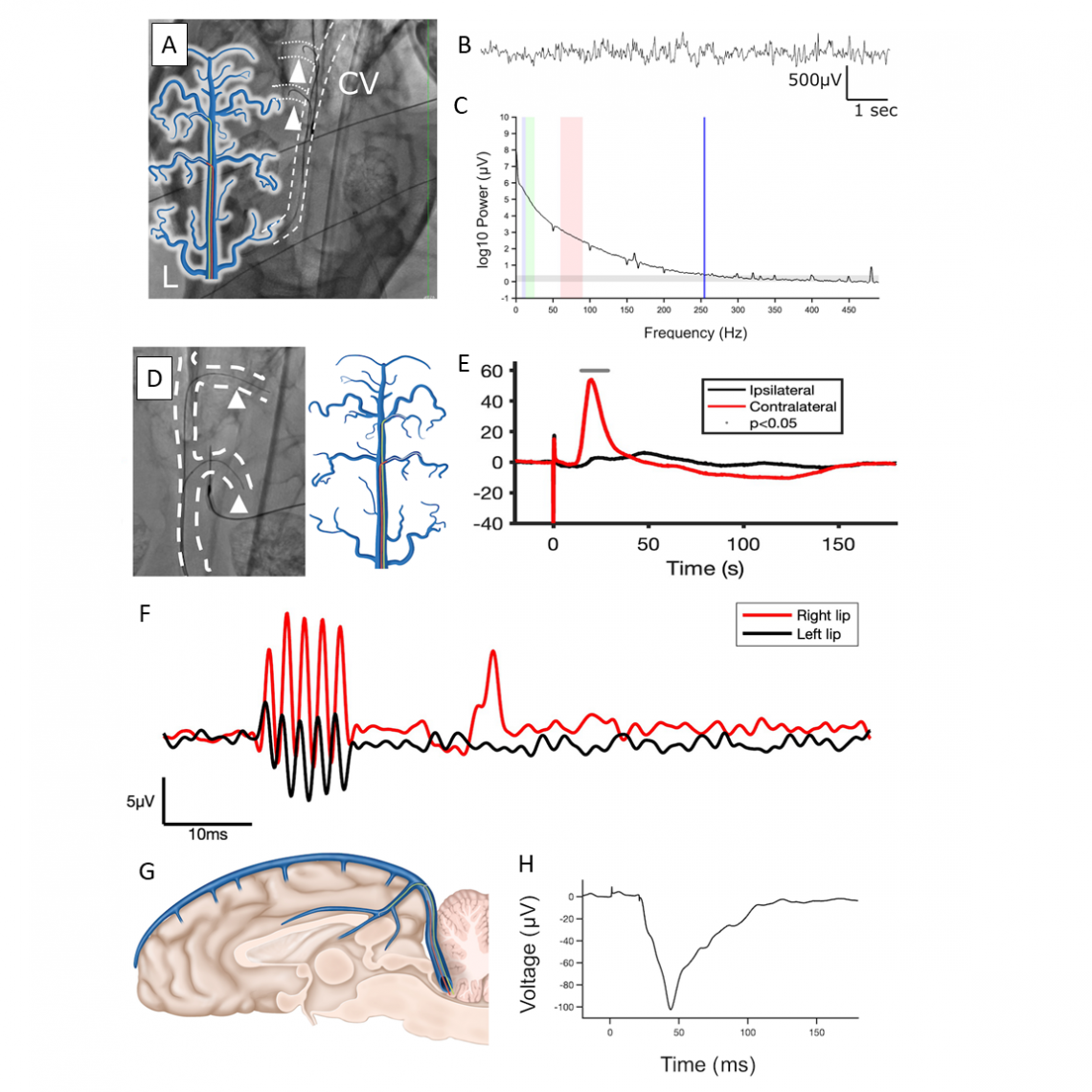
The research team, led by Professor Takufumi Yanagisawa used a catheter to insert ultra-thin wire electrodes into the cortical and deep veins of pig brains. They successfully recorded brainwaves from these vessels with accuracy comparable to traditional methods. Notably, they were able to capture activity from deep brain regions previously difficult to access non-invasively. Stimulating electrodes in the motor cortex also successfully evoked muscle responses in the face and shoulders.
Dr. Takamitsu Iwata, lead researcher, mentions, “This less invasive approach promises improved diagnoses and treatments for epilepsy and other neurological disorders. It also unlocks new possibilities for understanding deep brain functions and developing next-generation brain-computer interfaces, potentially allowing individuals with severe paralysis to communicate and control devices.”
###
The article, “Microendovascular Neural Recording from Cortical and Deep Vessels with High Precision and Minimal Invasiveness,” will be published in Advanced Intelligent Systems at DOI: https://doi.org/10.1002/aisy.202500487
Fig. 2
Endovascular EEG and evoked responses from superficial and deep cerebral veins.
(A) A microcatheter is navigated into a small superficial cortical vein, and EEG is recorded using a wire-shaped intravascular microelectrode. (B) Resting-state EEG recorded intravascularly at the cortical surface. (C) Power spectral density of the resting-state EEG. (D) Somatosensory evoked potentials (SEPs) recorded with the intravascular electrode placed in a cortical vein. (E) SEPs to left and right median-nerve stimulation; responses are larger when stimulating the median nerve contralateral to the electrode-implanted hemisphere. (F) Electrical stimulation of the cortical surface via the intravascular electrode elicited facial electromyographic responses; stimulation of the left motor cortex evoked EMG responses in the right face. (G) Intravascular electrode positioned in a deep cerebral vein. (H) Visual evoked potentials (VEPs) recorded with the intravascular electrode placed in a deep vein.
CC BY, Takamitsu Iwata et al., 2025, Microendovascular Neural Recording from Cortical and Deep Vessels with High Precision and Minimal Invasiveness, Advanced Intelligent Systems
About The University of Osaka
The University of Osaka was founded in 1931 as one of the seven imperial universities of Japan and is now one of Japan's leading comprehensive universities with a broad disciplinary spectrum. This strength is coupled with a singular drive for innovation that extends throughout the scientific process, from fundamental research to the creation of applied technology with positive economic impacts. Its commitment to innovation has been recognized in Japan and around the world. Now, The University of Osaka is leveraging its role as a Designated National University Corporation selected by the Ministry of Education, Culture, Sports, Science and Technology to contribute to innovation for human welfare, sustainable development of society, and social transformation.
Website: https://resou.osaka-u.ac.jp/en
Advertisement