

ACS Nano
About ACS Nano
ACS Nano reports breakthrough studies on nanostructure synthesis, assembly and characterization, nanoscience theory, tools and methods, nanobiotechnology and nanofabrication.
- Website: https://pubs.acs.org/journal/ancac3
- Current Issue: https://pubs.acs.org/toc/ancac3/current
News

04 Jul 2024
Institute of Industrial Science, The University of Tokyo (UTokyo-IIS)
Researchers at the Institute of Industrial Science, The University of Tokyo implement a genetic algorithm to automatically design phononic crystals with desired vibrational properties, which may help with future computer and communication devices

17 Jun 2024
Daegu Gyeongbuk Institute of Science and Technology (DGIST)
- Professor Kyung-In Jang’s team from DGIST, in collaboration with Professor Taeho Park’s team from POSTECH, has developed a stretchable electronic device based on hybrid polymers.
- The device maintains high mechanical stability even when it is severely bent or impacted, making it applicable in various industries such as displays, healthcare, and wearables.
- Research results published in ACS Nano, the prestigious nanoscience journal.

30 May 2024
The University of Osaka
Researchers from Osaka University probed the transit of cations across a nanopore membrane for the generation of osmotic energy. The team controlled the passage of cations across the membrane using a voltage applied to a gate electrode. This control allowed the cation-selective transport to be tuned from essentially zero to complete cation selectivity. The findings are expected to support the application of blue energy solutions for sustainable energy alternatives worldwide.

20 May 2024
Daegu Gyeongbuk Institute of Science and Technology (DGIST)
DGIST-Yonsei University-Korea University Collaborative research team has developed a suture-type electronic component that can wirelessly monitor vital signs in the body
This new technology is expected to be easily applicable in orthopedic/medical rehabilitation, including personalized rehabilitation
08 Dec 2023
Daegu Gyeongbuk Institute of Science and Technology (DGIST)
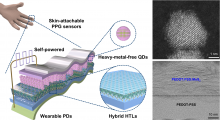
- A joint research team of members from DGIST, UNIST, and Seoul National University have successfully developed an ultra-thin, high-performance photosensor based on eco-friendly quantum dots.
- They have successfully implemented a wearable pulse sensor that works stably on the skin.
- Results have been published in ACS Nano, one of the most
08 Dec 2023
Daegu Gyeongbuk Institute of Science and Technology (DGIST)
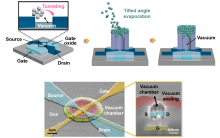
- Doctor Heo Su-jin and Professor Jang Jae-eun’s research team from DGIST developed an ultra-small nano vacuum tube transistor that stably operates in atmospheric pressure without being affected by extreme environments.
26 Sep 2023
Tohoku University
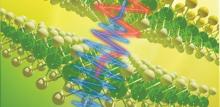
An international group of researchers have proposed a new mechanism to enhance short-wavelength light (100-300 nm) by second harmonic generation (SHG) in a two-dimensional, thin material composed entirely of commonplace elements.
14 Sep 2023
Daegu Gyeongbuk Institute of Science and Technology (DGIST)
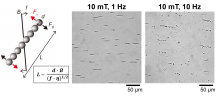
- Team led by Professor Choi Hong-Soo at DGIST enhances the effects of magnetic hyperthermia and particle penetration into cancer cells through the chain disassembly mechanism of magnetic nanoparticles induced by magnetic fields and magnetic propulsion.
- Expected to play a major role in targeted drug delivery for cancer treatment through research related to magnetic carriers.
- The research findings have been published in ACS Nano, a top-tier journal in the field of materials science.
09 Aug 2023
Daegu Gyeongbuk Institute of Science and Technology (DGIST)
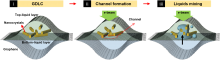
- Led by DGIST's Jiwoong Yang and Seoul National University's Jungwon Park, the team has determined the moisture-induced degradation mechanism of semiconductor nanocrystal quantum dots using in-situ liquid-phase transmission electron microscopy (TEM).
- The research findings have been published in the online edition of the prestigious nanoscience journal "ACS Nano."
12 Jun 2023
Kanazawa University
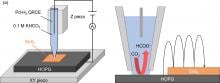
Researchers at Kanazawa University report in ACS Nano how ultrathin layers of tin disulfide can be used to accelerate the chemical reduction of carbon dioxide — a finding that is highly relevant for our quest towards a carbon-neutral society.
14 Mar 2023
Kanazawa University
In a study recently published in the journal ACS Nano, published by American Chemical Society, researchers from Kanazawa University, Kanazawa, Japan, collaborating with University of Washington, Seattle, USA, used frequency modulated atomic force microscopy to reveal the molecular architecture of a genetically designed peptide and its self-organization that forms single-molecule thick crystals on atomically flat graphite surfaces, that offer a potential platform for hybrid technologies such as bioelectronics, biosensors, and protein arrays.
14 Mar 2023
Kanazawa University
Researchers at Kanazawa University report in ACS Nano how high-speed atomic force microscopy can be used to study the biomolecular mechanisms underlying gene editing.
15 Dec 2022
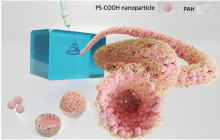
A research team led by the University of Hong Kong (HKU) and Lawrence Berkeley National Laboratory has invented an all-water robotic system that resolves the constraints of bio-inspired robots through revolutionary scientific advances.

25 Oct 2022
The University of Osaka
Researchers from The Institute of Scientific and Industrial Research (SANKEN) at Osaka University and collaborating partners prepared hierarchical hydrogels and moldings that consisted of anisotropic, ecofriendly cellulose nanofibers. By simply tailoring the applied voltage during fabrication, complex architectures—such as microneedles and multilayer hydrogels—were easy to prepare. The results of this work will reduce the need for petroleum-based plastics, and in so doing minimize a long-standing source of environmentally persistent waste.
10 Aug 2022
Kanazawa University
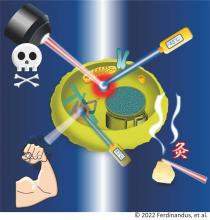
Researchers at Kanazawa University report in ACS Nano the development of a nanoparticle that acts as a heater and a thermometer. Inserting the nanoparticle in living cells results in a heat spot that, by switching it on and off, enables the controlled modulation of local cellular activities.

05 Oct 2021
Daegu Gyeongbuk Institute of Science and Technology (DGIST)
Researchers from DGIST explain how DNA is compacted to a million-times its full length in sperm cell nuclei
03 Feb 2021
Nagoya University
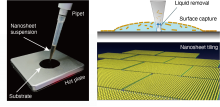
A surprisingly simple method improves ‘drop casting’ fabrication of tiled nanosheets that could be used in next-generation electronic devices. All you need is a pipette and a hotplate.
19 Nov 2020
Daegu Gyeongbuk Institute of Science and Technology (DGIST)
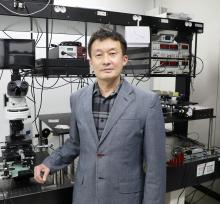
Scientists devise a 2D-material–based stacked structure with applications in reducing computing power consumption

11 Sep 2020
City University of Hong Kong (CityUHK)
Face masks have become an important tool in fighting against the COVID-19 pandemic. However, improper use or disposal of masks may lead to "secondary transmission". A research team from City University of Hong Kong (CityU) has successfully produced graphene masks with an anti-bacterial efficiency of 80%, which can be enhanced to almost 100% with exposure to sunlight for around 10 minutes. Initial tests also showed very promising results in the deactivation of two species of coronaviruses. The graphene masks are easily produced at low cost, and can help to resolve the problems of sourcing raw materials and disposing of non-biodegradable masks.
10 Aug 2020
Hiroshima University
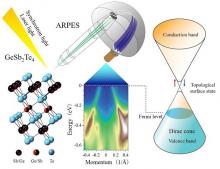
Researchers have found electrons that behave as if they have no mass, called Dirac electrons, in a compound used in rewritable discs, such as CDs and DVDs. The discovery of “massless” electrons in this phase-change material could lead to faster electronic devices.
03 Aug 2020
Kanazawa University
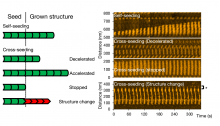
Researchers at Kanazawa University report in ACS Nano a high-speed atomic-force microscopy study of the formation of protein fibrils (amyloids) associated with pathologies in collaborated research with Showa University. Mixing different variants of a single protein and changing the acidity of its environment is shown to result in significant variations in amyloid structure and elongation rates.
20 Feb 2020
Ulsan National Institute of Science and Technology (UNIST)
A recent study, affiliated with South Korea's Ulsan National Institute of Science and Technology (UNIST) has presented a dynamic transport control mechanism for colloidal particles by developing a micro-/nanofluidic DP platform (MNDP).

26 Aug 2019
Ulsan National Institute of Science and Technology (UNIST)
An international team of researchers, affiliated with UNIST has paved the way for the development of next-generation batteries, targeting high-performance electric vehicles (EVs).
28 Feb 2019
Daegu Gyeongbuk Institute of Science and Technology (DGIST)
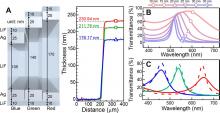
A technology that has maximized space intensity by eliminating color filter from an image sensor has been developed. The National Research Foundation of Korea (Chairman Jung Hye Rho) announced that DGIST Professor Dae Sung Chung’s research team developed a color filter-free full-color image sensor using an interferometer electrode.
13 Jun 2018
The Agency for Science, Technology and Research (A*STAR)
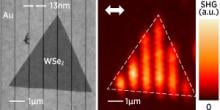
Light focused into nano-grooves in a gold film bonded to an atomically thin crystal flake produces a remarkable frequency doubling effect.

20 Feb 2018
Tohoku University
Adding oxygen atoms to a perovskite-like crystal material splits it into layers, giving it unique electrical properties.
25 Oct 2017
Ulsan National Institute of Science and Technology (UNIST)
South Korea's Ulsan Nationl Institute of Science and Technology (UNIST) has presented novel catalyst to accelerate the commercialization of metal-air batteries.
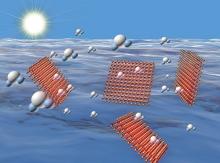
19 Jun 2017
King Abdullah University of Science and Technology (KAUST)
A floating membrane that uses sunlight to evaporate water shows potential for water purification.

02 May 2017
Korea Advanced Institute of Science and Technology (KAIST)
Researchers in Korea have developed a novel diagnostic strip for gout patients using a single teardrop.
08 Mar 2017
Ulsan National Institute of Science and Technology (UNIST)
A new study, affiliated with South Korea's Ulsan National Institute of Science and Technology, has introduced a new technique that validates urine-based biomarkers for early detection of cancer.