

Angewandte Chemie International Edition
About Angewandte Chemie International Edition
Angewandte Chemie International Edition is a journal of the German Chemical Society (GDCh). It is one of the prime chemistry journals in the world. It is the only journal in the field delivering a stimulating mixture of Review-type articles, Highlights, Communications, and Research Articles. New articles appear online almost every day.
News

23 Sep 2015
The Hong Kong Polytechnic University (PolyU)
Researchers in Hong Kong have developed a simple approach to synthesize novel environmentally-friendly manganese dioxide (MnO2) ink by using glucose. The MnO2 ink could be used for the production of light, thin, flexible and high performance energy storage devices via ordinary printing or even home-used printers.
31 Aug 2015
National Institute for Materials Science (NIMS)
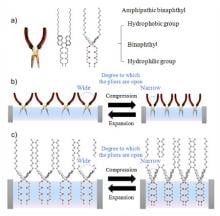
Researchers in Japan found that molecular machines can be easily manipulated using very small mechanical energy, taking advantage of the property that they aggregate on the surface of water.

25 Aug 2015
Institute for Integrated Cell-Material Sciences (iCeMS) at Kyoto University
Scientists have developed a technique that could lead to therapies for pain relief in people with intractable pain, potentially including cancer-related pain.

09 Jun 2015
Institute of Transformative Bio-Molecules (WPI-ITbM), Nagoya University
Scientists at ITbM have come together to discover for the first time, a rhythm-changing molecule with period-shortening activities that targets the clock protein, which open doors to molecule-based solutions for circadian-related diseases and improving food production in animals.
19 Mar 2015
National Institute for Materials Science (NIMS)
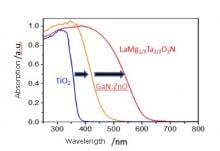
A research group led by Chengsi Pan and Tsuyoshi Takata at NIMS Global Research Center for Environment and Energy Based on Nanomaterials Science (GREEN), and Kazunari Domen at The University of Tokyo newly developed a water-splitting photocatalyst that is operable over a wider range of the visible light spectrum than before.
10 Dec 2014
National Institute for Materials Science (NIMS)
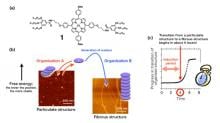
Development of new material capable of autonomous molecular organization in accordance with preprogramming
05 Dec 2014
Korea Advanced Institute of Science and Technology (KAIST)
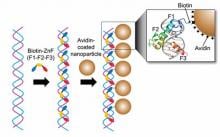
Scientists in South Korea used the Zinc Finger protein to develop a new manufacturing technique for size-controllable magnetic Nanoparticle Clusters.
03 Dec 2014
The Agency for Science, Technology and Research (A*STAR)
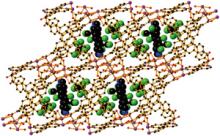
Flexible metal–organic frameworks with a range of pore sizes are made by threading through molecular ligands

08 Oct 2014
The Agency for Science, Technology and Research (A*STAR)
Targeted nanoparticles that combine imaging with two different therapies could attack cancer and other conditions
15 Apr 2014
National Institute for Materials Science (NIMS)
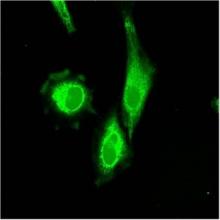
Japanese researchers have successfully developed the world's first imaging method for visualising the behaviour of nicotine-adenine dinucleotide derivative (NAD(P)H), a key coenzyme, inside cells. This feat could ultimately facilitate the diagnosis of cancer and liver dysfunction and help to elucidate the mechanisms of neurological disorders.
04 Mar 2014
Institute of Transformative Bio-Molecules (WPI-ITbM), Nagoya University
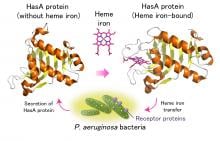
Using an artificial protein that contains metal, researchers at Nagoya University were able to inhibit the growth of a pathogenic bacterium prevalent in hospitals which cause diseases to humans and has a high resistance to antibiotics.
18 Dec 2013
Ulsan National Institute of Science and Technology (UNIST)
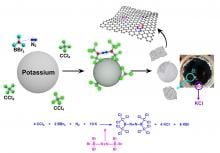
(Ulsan, South Korea 18 Dec. 2013): UNIST announced a method for the mass production of boron/nitrogen co-doped graphene nanoplatelets, which led to the fabrication of a graphene-based field-effect transistor (FET) with semiconducting nature. This opens up opportunities for practical use in electronic devices.
19 Aug 2013
The Agency for Science, Technology and Research (A*STAR)
The 15 Asian Chemical Congress makes its way back to Singapore after nearly three decades. The prestigious biennial event has been hosted across Asia since its inauguration in 1985 and has been instrumental in bridging the links between major chemistry societies in the East and West.
03 Jul 2013
The Agency for Science, Technology and Research (A*STAR)
An approach that directly inserts proteins into polymer-based cell membranes improves drug-screening platforms
30 Jan 2013
Tokyo Institute of Technology
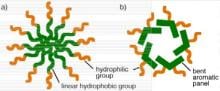
(Tokyo, 30 January 2013) Researchers at Tokyo Institute of Technology have produced a new form of photoactive micelles with potential applications in photofunctional dyes and sensors. The research was published in Angewandte Chemie recently.

28 Aug 2012
National Institute for Materials Science (NIMS)
A research group including the NIMS Superconducting Properties Unit and others, in joint work with the University of Fukui, discovered a new material, NaCr2O4, which was developed by ultra-high pressure synthesis and displays a novel type of colossal magnetoresistance effect.
09 May 2012
The Agency for Science, Technology and Research (A*STAR)
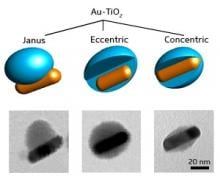
Hybrid 'Janus' nanoparticles made from gold and titania have high catalytic activity and extraordinary durability
23 Mar 2012
RIKEN
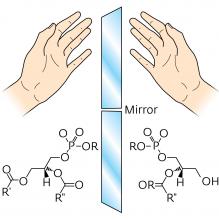
Spectroscopic evidence for the unusual handedness of a mammalian lipid may advance our understanding of evolution
13 Jan 2012
RIKEN
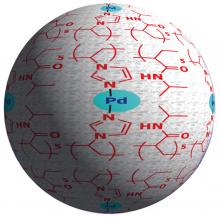
Wrapping palladium nanoparticles inside a self-assembled polymer matrix makes catalysts easier to retain and recycle
04 Jan 2012
National Institute for Materials Science (NIMS)
The National Institute for Materials Science succeeded in fabricating mesoporous Prussian blue, in which an extremely large number of nanosized pores (mesoporous) are formed in the crystal structure of the material.
18 Nov 2011
RIKEN
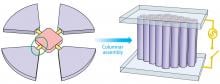
Molecular ‘handles’ that allow on-demand growth of thick columnar films make enhanced liquid crystal devices viable.

02 Sep 2011
RIKEN
The first chemical complex consisting of rare earth metals and boron atoms produces unexpected results heralding new synthetic chemistry techniques
10 Jun 2011
RIKEN
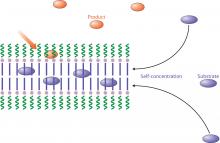
Tiny membrane pockets that gain catalytic activity upon self-assembly in water shed light on biological enzymatic processes
15 Apr 2011
RIKEN
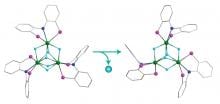
‘Pincer’ molecules trap reactive rare earth elements into previously unseen hydrogen-infused structures
15 Mar 2011
RIKEN
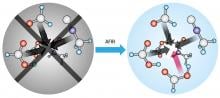
Computational search algorithms take the guesswork out of understanding complex, multi-molecule transformations
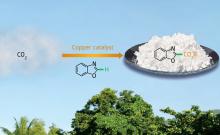
03 Dec 2010
RIKEN
‘Green’ catalysts transform carbon dioxide gas into valuable building blocks for organic synthesis

26 Nov 2010
RIKEN
Large tree-like sugar clusters provide potential in vivo probes for cancer cells
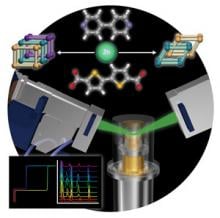
17 Sep 2010
RIKEN
The degree of interconnectivity of molecular frameworks in microporous materials influences their structural flexibility and gas sorption
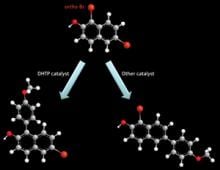
26 Feb 2010
RIKEN
Palladium catalysts containing unique molecular ligands couple aromatic rings together in surprising ways
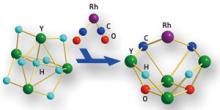
11 Dec 2009
RIKEN
Combining rare-earth clusters with traditional metal catalysts reveals secrets of chemical transformation