

Angewandte Chemie International Edition
About Angewandte Chemie International Edition
Angewandte Chemie International Edition is a journal of the German Chemical Society (GDCh). It is one of the prime chemistry journals in the world. It is the only journal in the field delivering a stimulating mixture of Review-type articles, Highlights, Communications, and Research Articles. New articles appear online almost every day.
News
11 Mar 2024
Tohoku University
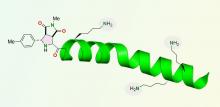
Peptides are short strands of amino acids that are increasingly used therapeutically, as biomaterials and as chemical and biological probes. The capacity to isolate, manipulate and label peptides and larger proteins is limited, however, by the ability to reliably attach functional molecules, such as fluorescent compounds, to peptides in locations that won’t affect the three-dimensional structure and function of the short amino acid strand. Researchers have developed a unique chemical reaction to attach two distinct functional molecules to the N-terminus of a peptide in an efficient, robust reaction under mild conditions.
08 Mar 2024
Tohoku University
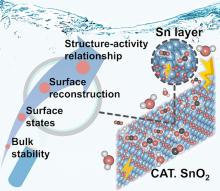
In a new step towards combating climate change and transitioning to sustainable solutions, a group of researchers has developed a research paradigm that makes it easier to decipher the relationship between catalyst structures and their reactions.
09 Jan 2024
Hokkaido University
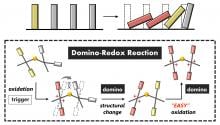
Transmitting an effect known as a domino reaction using redox chemistry has been achieved for the first time.

12 Oct 2023
Institute of Industrial Science, The University of Tokyo (UTokyo-IIS)
Researchers from the Institute of Industrial Science, The University of Tokyo, synthesize a two-center zinc complex that absorbs visible light as a solid and in solution.
29 Sep 2023
Hokkaido University
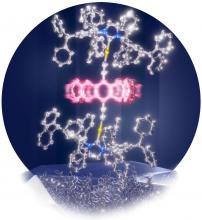
Concave, umbrella-like metal complexes provide space to enable the largest molecular rotor operational in the solid-state.
02 Aug 2023
Hokkaido University
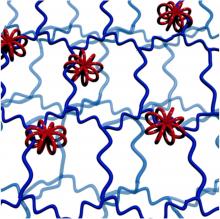
Molecules that act as connected wheels can hold long molecular chains together to modify the properties of soft polymers.
11 Jul 2023
Hokkaido University
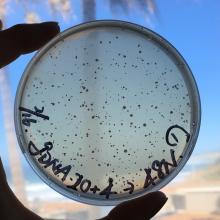
The entire biosynthetic pathway of actinopyridazone has been unveiled, revealing that an unprecedented carrier protein-mediated ring-forming step is key to its synthesis.
13 Jun 2023
Osaka Metropolitan University
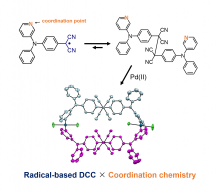
Osaka Metropolitan University scientists synthesized a novel molecule by combining dynamic covalent reactions based on organic radicals and coordination reactions. They found that the two types of reactions do not inhibit each other. Their results suggest the possibility of synthesizing materials by combining different types of reactions, which is expected to lead to the construction of structures that have never existed before.
10 May 2023
Osaka Metropolitan University
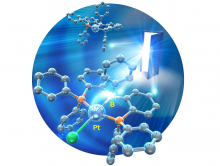
Osaka Metropolitan University scientists elucidated the molecular structure of anionic Pt(0) complexes for the first time in collaboration with co-researchers at Paul Sabatier University - Toulouse III. The key to success is the stabilization of anionic Pt(0) complexes (which are usually unstable owing to their electron-donating nature) by the electron-accepting properties of boron compounds. The results of this research allow us to elucidate the properties and functions of highly active chemical species and provide new guidelines for their creation. The research is expected to lead to the development of innovative catalytic reactions mediated by these chemical species.

24 Feb 2023
Kanazawa University
Researchers at Kanazawa University report in Angewandte Chemie International Edition how the formation and deformation speed of interlocked molecular structures called rotaxanes can be tuned — a discovery that may lead to an enhanced functionality of rotaxanes as building blocks for molecular machines.
03 Feb 2023
Hokkaido University
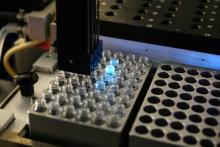
Researchers used a chemical synthesis robot and computationally cost effective A.I. model to successfully predict and validate highly selective catalysts.
13 Dec 2022
Osaka Metropolitan University
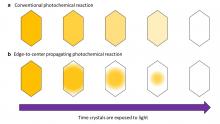
A research group at Osaka Metropolitan University has discovered that 2,5-distyrylpyrazine (DSP) crystals undergo a unique photoreaction. Normally, photoreactive color changes proceed uniformly throughout photomechanical molecular crystals, so that all parts of each crystal change color at the same time. However, when light shines evenly on a DSP crystal, the photoreaction propagates from edge to center, deviating from conventional photochemistry models. The group found that this phenomenon was caused by a surface effect and a cooperative effect, which make reactivity extremely high for molecules at the crystal’s edge and those adjacent to molecules that have already changed color.

16 May 2022
Osaka Metropolitan University
Researchers from the Osaka Metropolitan University Graduate School of Engineering have successfully developed a new technique allowing them to observe gas molecules packing into metal-organic frameworks (MOF) using infrared spectroscopy. Their innovation was to measure polarized light absorption of guest molecules in a MOF film to deduce molecule alignment using this common piece of lab equipment. This method is the first to show guest alignment and does so in real-time, while using an accessible and easily adoptable experimental setup. A short video (4 min) recreating their spectrometer modifications can be found in the Reference section.
28 Feb 2022
Osaka City University
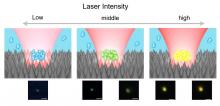
Scientists demonstrate an optical trapping technique using nanotextured black silicon that can efficiently trap polymer chains. By adjusting the laser intensity, these “optical tweezers” can control the florescence color emitted through a local concentration of a perylene-modified polymer solution. From a low intensity blue to high intensity orange, this reversible and fully remote technology can almost reach the entire RGB spectrum.
27 Jul 2021
Hokkaido University
Adding lead and calcium to an industrial catalyst dramatically improves its ability to support propylene production at very high temperatures, making it stable and active for a month.
11 Jun 2021
Tohoku University
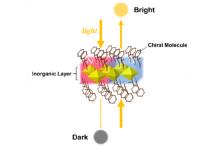
A multi-institutional Japanese team has developed new magnetic design that has magic mirror-like properties. Based on organic-inorganic hybrid perovskite type compounds, the brightness of transmitted light changes depending on whether the material is viewed from the front or the back.
11 Jun 2021
Hokkaido University
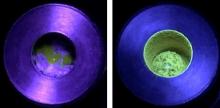
Hokkaido University researchers have developed a simple method that converts existing generic polymers into luminescent polymers using mechanical force.
18 Mar 2021
Institute for Integrated Cell-Material Sciences (iCeMS) at Kyoto University
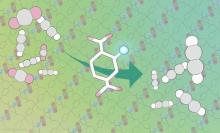
A design concept changes how materials separate gaseous mixtures.

03 Feb 2021
City University of Hong Kong (CityUHK)
Carbon dioxide (CO2) is one of the major greenhouse gases causing global warming. If the carbon dioxide could be converted into energy, it would be killing two birds with one stone in addressing the environmental issues. A joint research team led by City University of Hong Kong (CityU) has developed a new photocatalyst which can produce methane fuel (CH4) selectively and effectively from carbon dioxide using sunlight. According to their research, the quantity of methane produced was almost doubled in the first 8 hours of the reaction process.

20 Nov 2020
Ulsan National Institute of Science and Technology (UNIST)
A research team, affiliated with South Korea's Ulsan National Institute of Science and Technology (UNIST) has unveiled a new eco-friendly and low-cost method to synthesize indolopyran, one type of nitrogen ring compound, contained in about 60% of drugs that are recently approved by FDA.

20 Nov 2020
Ulsan National Institute of Science and Technology (UNIST)
A research team, affiliated with South Korea's Ulsan National Institute of Science and Technology (UNIST) has proposed a new experimental approach for estimating the H‐bond free energy of local biological water.
01 Oct 2020
Institute for Integrated Cell-Material Sciences (iCeMS) at Kyoto University
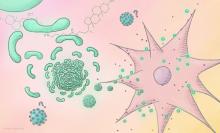
Scientists have found an ingredient that makes a vaccine more effective through an approach more often seen in materials science – testing molecules that self-assemble into larger structures.

01 Oct 2020
Hokkaido University
A Hokkaido University research group has successfully demonstrated that carbon-carbon (C-C) covalent bonds expand and contract flexibly in response to light and heat. This unexpected flexibility of C-C bonds could confer new properties to organic compounds.
13 Jul 2020
Kanazawa University
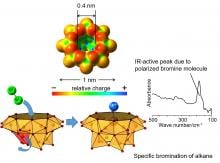
A hemispherical vanadium oxide cluster has a cavity that can accommodate a bromine molecule. It was found that a bromine molecule trapped in the cavity was polarized and that an alkane molecule like pentane, butane and propane could be brominated with the bromine molecule in the cavity with a selectivity differing from ordinary bromination. The present findings are expected to be useful for polarization of small molecules and design of highly functional catalysts.
10 Jun 2020
Daegu Gyeongbuk Institute of Science and Technology (DGIST)
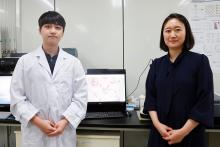
Metal-organic frameworks (MOFs) are sponge-like organic-inorganic hybrid materials and have a variety of uses due to their ultra-high “porosity,” or the ratio of pores or air pockets to the solid material. Through a technique called “post-synthetic modification,” Professor Jinhee Park and her research team were able to enhance and modify the function of these materials for specific purposes.
28 Feb 2020
Institute for Integrated Cell-Material Sciences (iCeMS) at Kyoto University
Converting crystalline metal-organic frameworks into glass or liquid could give them unique properties and lead to the design of new materials.
11 Sep 2019
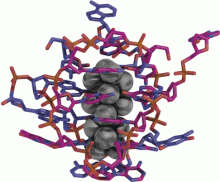
Determination of the crystal structure of a DNA-stabilized silver nanocluster
29 Jul 2019
Daegu Gyeongbuk Institute of Science and Technology (DGIST)
Joint research team of Professors Jaeheung Cho and Daeha Seo in the Department of Emerging Materials Science developed a technology to control the generation of nitric oxide in cells. Proposed the possibility of additional research related to cell signal transfer.
02 May 2019
Duke-NUS Medical School
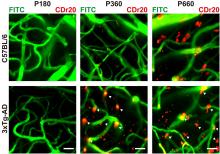
Researchers in South Korea and Singapore have, for the first time, developed a chemical probe that enables live-imaging of a type of immune cells in the brain, known as microglia, in a live animal brain.