

Journal of the American Chemical Society
About Journal of the American Chemical Society
The flagship journal of the American Chemical Society, JACS publishes significant, highly cited articles with broad interest across all chemical science.
- Website: https://pubs.acs.org/journal/jacsat?
- Current Issue: https://pubs.acs.org/toc/jacsat/current
News

30 Aug 2016
King Abdullah University of Science and Technology (KAUST)
Tweaking the structure of metal-organic frameworks could transform the capacity to use methane as a fuel.
30 Aug 2016
Institute of Transformative Bio-Molecules (WPI-ITbM), Nagoya University
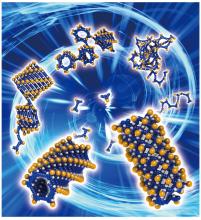
Organic nanotubes (ONTs) are tubular nanostructures
composed of organic molecules that have unique properties and have found various applications, such as electro-conductive materials. A group of scientists at Nagoya University have developed a simple and effective method for the formation of robust covalent ONTs from simple molecules.
25 Aug 2016
National Institute for Materials Science (NIMS)
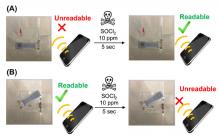
Researchers in Japan and US jointly developed a chemical sensing material whose electrical conductivity dramatically increases when exposed to toxic gases.
05 Aug 2016
Hokkaido University
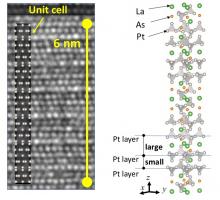
Hokkaido University researchers have synthesised a uniquely structured platinum-based superconducting material.
04 Aug 2016
Tohoku University
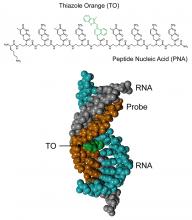
Ribonucleic acid (RNA) binding fluorescent probes have been powerful and important analytical tools for the study of RNA structures and functions.
13 Jul 2016
Hokkaido University
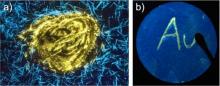
Scientists at Hokkaido University have developed a series of luminescent compounds that change emission colours upon mechanical stimuli.
20 Nov 2015
Korea Advanced Institute of Science and Technology (KAIST)
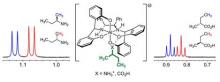
Researchers in Korea have developed a technique that can easily analyze the optical activity of charged compounds by using nuclear magnetic resonance spectroscopy.

02 Nov 2015
The Agency for Science, Technology and Research (A*STAR)
A synthetic process that combines multiple components through quick, consecutive reactions is promising for drug manufacture.
14 Apr 2015
Institute of Transformative Bio-Molecules (WPI-ITbM), Nagoya University
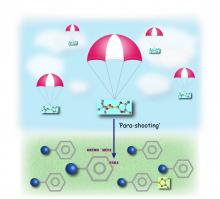
Tuning the para position of benzene rings is significant for creating biologically active compounds and optoelectronic materials. Chemists at ITbM, Nagoya University have developed a novel iridium catalyst that enables highly para-selective borylation on benzene, leading to the rapid synthesis of drug derivatives for treating Parkinson’s disease.
26 Jan 2015
Institute of Transformative Bio-Molecules (WPI-ITbM), Nagoya University
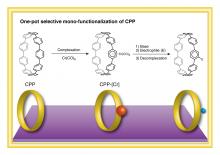
A team of chemists at Nagoya University has synthesized novel transition metal-complexed cycloparaphenylenes (CPPs) that enable selective monofunctionalization of CPPs for the first time, opening doors to the construction of unprecedented nanocarbons.
20 Jan 2015
Korea Advanced Institute of Science and Technology (KAIST)
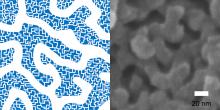
Researchers at Korea Advanced Institute of Science and Technology (KAIST) has developed a method to form micropores of less than 2 nanometers within porous polymers.
07 Jan 2015
Institute of Transformative Bio-Molecules (WPI-ITbM), Nagoya University
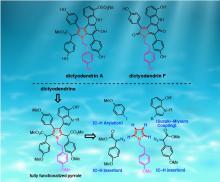
Through an extensive international collaboration, scientists at the Center for Selective C–H Functionalization (CCHF), Emory University and the Institute of Transformative Bio-Molecules (ITbM), Nagoya University have synthesized marine alkaloids with anti-cancer and therapeutic properties through a sequential C-H functionalization strategy.
23 Oct 2014
The Agency for Science, Technology and Research (A*STAR)
Miniature two-color barcodes have the potential to combat forgery and track cancerous cells
14 Oct 2014
Asia Research News
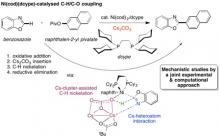
An international team of chemists has discovered a new piece to the puzzle of how a powerful base used in organic synthesis, cesium carbonate, plays a pivotal role during a catalytic reaction.
26 Aug 2014
Tokyo Institute of Technology
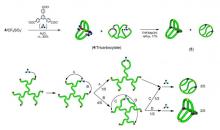
(Tokyo, 26 August 2014) Tokyo Tech scientists synthesize multicyclic type of polymers for the first time offering insights for tailoring polymer properties as well as the mathematics of complex geometries.
30 Jul 2014
The Agency for Science, Technology and Research (A*STAR)
A new dye-sensitized solar cell absorbs a broad range of visible and infrared wavelengths.
30 Jul 2014
The Agency for Science, Technology and Research (A*STAR)
A modified anticancer drug can simultaneously target tumour sites and show whether or not it is working.

19 Jun 2014
National Institute for Materials Science (NIMS)
A Japanese research team has successfully demonstrated a new approach toward a non-precious metal oxygen reduction catalyst for fuel cells.
09 Apr 2014
The Agency for Science, Technology and Research (A*STAR)
A clever chemical transformation yields surface-bound microstructures that efficiently drive away oil- and water-based contaminants
13 Feb 2014
The Agency for Science, Technology and Research (A*STAR)
Nanoparticles with a core–shell structure can minimize the overheating of cells during bioimaging experiments
13 Nov 2013
National Institute for Materials Science (NIMS)
NIMS researchers elucidated the relationship between the photocurrent and the peculiar changes in the absorption structure occurring in the vicinity of the molecular-electrode interface in dye-sensitized solar cells
17 Jun 2013
Ulsan National Institute of Science and Technology (UNIST)
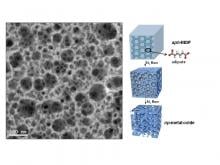
Ulsan, S. Korea, June 17, 2013 - Researchers from Ulsan National Institute of Science and Technology (UNIST), S. Korea, developed a novel, simple method to synthesize hierarchically nanoporous frameworks of nanocrystalline metal oxides such as magnesia and ceria by the thermal conversion of well-designed metal-organic frameworks (MOFs).
24 Apr 2013
The Agency for Science, Technology and Research (A*STAR)
Trapping free electrons with polycyclic aromatic molecules creates materials with enhanced optical, electronic and magnetic properties
27 Mar 2013
The Agency for Science, Technology and Research (A*STAR)
Defects in metal–organic frameworks induce low-temperature ferromagnetism and could yield novel materials for industry
13 Feb 2013
Ulsan National Institute of Science and Technology (UNIST)
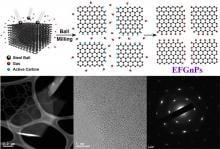
Researchers from the Ulsan National Institute of Science and Technology (UNIST), South Korea have pioneered a simple, but efficient and eco-friendly way to produce Edge-selectively functionalized graphene nanoplatelets (EFGnPs) by dry ball milling graphite in the presence of various gases.
28 Aug 2012
National Institute for Materials Science (NIMS)
Japanese scientists have succeeded in fabricating a crystalline thin film with a film thickness of nanometer order, in which molecules of a 3-dimensionally strong porous coordination polymer (PCP) are oriented in a designated direction, and demonstrated that this thin film has a reversible gas adsorption/desorption reaction function.
16 Mar 2012
RIKEN
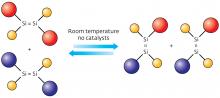
The dynamic equilibrium between two reactive silicon compounds provides chemists with improved tools for synthesizing optically and electronically active molecules
10 Feb 2012
RIKEN
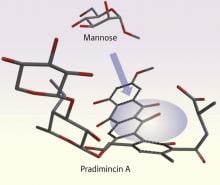
Revelation of how certain compounds adhere so strongly to HIV’s coat points to a fresh therapeutic approach