
Journal of the American Chemical Society
About Journal of the American Chemical Society
The flagship journal of the American Chemical Society, JACS publishes significant, highly cited articles with broad interest across all chemical science.
- Website: https://pubs.acs.org/journal/jacsat?
- Current Issue: https://pubs.acs.org/toc/jacsat/current
News

20 Nov 2017
The Agency for Science, Technology and Research (A*STAR)
Sealed sulfur particles show promise for renewable energy storage technology.
17 Nov 2017
Hokkaido University
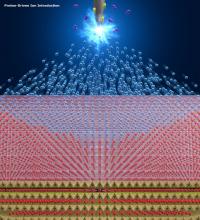
A team of Hokkaido University researchers has developed a novel material synthesis method called proton-driven ion introduction (PDII) which utilizes a phenomenon similar to “ion billiards.” The new method could pave the way for creating numerous new materials, thus drastically advancing materials sciences.
30 Oct 2017
Ulsan National Institute of Science and Technology (UNIST)
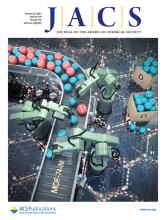
An international team of researchers, affiliated with South Korea's Ulsan National Institute of Science and Technology (UNIST), has presented a novel hydrogen isotope separation system based on a porous metal organic framework (MOF). Their work has been selected to appear on the cover of the October 2017 issue of JACS.
28 Sep 2017
Daegu Gyeongbuk Institute of Science and Technology (DGIST)
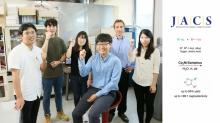
Korean researchers have succeeded to synthesize biomimetic material reacting with Nitrile. It is expected to help the development of prodrugs that inhibit specific enzymes in cancer cells.
25 Sep 2017
Ulsan National Institute of Science and Technology (UNIST)
South Korea's Ulsan National Institute of Science and Technology (UNIST) has presented a new way to advance the click chemistry.

24 Aug 2017
Ulsan National Institute of Science and Technology (UNIST)
South Korea's Ulsan National Institute of Science and Technology (UNIST) has made a surprising discovery: Making better batteries via real-time TEM obervation.
17 Aug 2017
Institute of Transformative Bio-Molecules (WPI-ITbM), Nagoya University
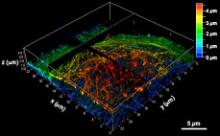
~ A powerful tool for 3D and multicolor STED imaging of cellular ultrastructure ~
25 Jul 2017
Hokkaido University
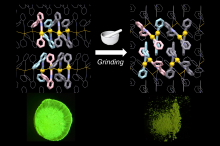
Crystals made from gold complexes change color as they change structure from “chiral” to “achiral” when ground.
11 Jul 2017
Institute for Integrated Cell-Material Sciences (iCeMS) at Kyoto University
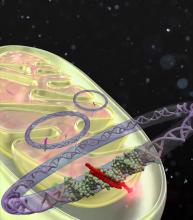
A new molecule that reads mitochondrial DNA could pave the way to treat some genetic nerve and muscle diseases.
07 Jul 2017
Hokkaido University
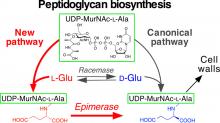
Scientists have discovered a unique biosynthetic pathway for D-Glutamate, an important cell wall component in pathogenic bacteria, which could lead to the development of medicines and agricultural chemicals.
31 May 2017
Hokkaido University
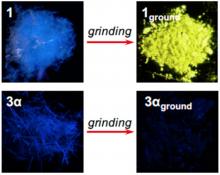
A gold compound shifts from a visible fluorescence to emitting infrared when ground - a big shift with potential applications in bioimaging and security inks.
25 May 2017
King Abdullah University of Science and Technology (KAUST)
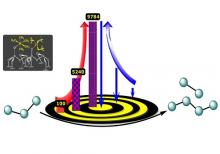
Tungsten and titanium compounds join forces to turn a common alkane into other hydrocarbons.
25 Apr 2017
Ulsan National Institute of Science and Technology (UNIST)
A new study, affiliated with South Korea's Ulsan National Institute of Science and Technology (UNIST), developed a new technique to understand the correct architectures of IMM proteins, using special chemical tools.

28 Feb 2017
Ulsan National Institute of Science and Technology (UNIST)
Researchers at Ulsan National Institute of Science and Technology (UNIST) in South Korea have introduced a new approach to treat Alzheimer's Disease.
27 Feb 2017
The Agency for Science, Technology and Research (A*STAR)
A simple etching technique offers a means for creating left-handed and right-handed nanostructures.

19 Jan 2017
King Abdullah University of Science and Technology (KAUST)
Hybrid organic-inorganic materials can self-assemble into tiny doughnut-like structures.
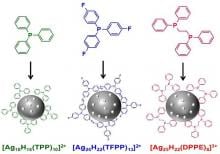
20 Dec 2016
King Abdullah University of Science and Technology (KAUST)
Surrounding silver nanoclusters with hydrogen-rich shells offers new opportunities in catalysis and opto-electronics.
12 Dec 2016
King Abdullah University of Science and Technology (KAUST)
Research at King Abdullah University of Science and Technology (KAUST), Saudi Arabia, finds that silver atoms can be crafted into a box-shaped nanocluster by careful selection of ligand molecules.

18 Nov 2016
The World Academy of Sciences (TWAS)
The Chinese scientist developed innovative nano-sized materials that could be used to clean water, deliver medicine and improve batteries.
18 Nov 2016
Ulsan National Institute of Science and Technology (UNIST)
A recent research from South Korea has developed 'Silica-Protective-Layer' strategy for high performance hydrogen fuel cell catalyst.
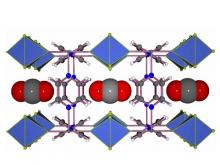
26 Oct 2016
King Abdullah University of Science and Technology (KAUST)
New heights reached for solids that capture carbon dioxide at low concentrations in gas mixtures.
19 Oct 2016
King Abdullah University of Science and Technology (KAUST)
A clean, green, metal-free approach to making high-performance polycarbonates.

29 Sep 2016
National Institute for Materials Science (NIMS)
A research group in Japan successfully developed room temperature multiferroic materials by a layer-by-layer assembly of nanosheet building blocks. Multiferroic materials are expected to play a vital role in the development of next-generation multifunctional electronic devices.

26 Sep 2016
Ulsan National Institute of Science and Technology (UNIST)
The work by Prof. Tae-Hyuk Kwon (School of Natural Science) at Ulsan National Institute of Science and Technology (UNIST), South Korea has presented a new cancer treatment that uses red lights to target and kill cancer cells alternatively without surgery.
19 Sep 2016
Ulsan National Institute of Science and Technology (UNIST)
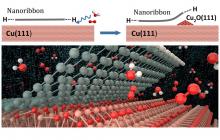
A recent quantum mechanical study of graphene by a research team at Ulsan National Institute of Science and Technology (UNIST), South Korea, has elucidated the intercalation mechanism and pathways for graphene decoupling from the copper substrate.
13 Sep 2016
The Agency for Science, Technology and Research (A*STAR)
Modeling the growth of tiny flakes of a two-dimensional form of phosphorus could help researchers one day produce better electronics.
12 Sep 2016
Institute of Transformative Bio-Molecules (WPI-ITbM), Nagoya University
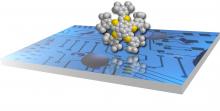
Scientists at Nagoya University have developed a short route to form various thiophene-fused polycyclic aromatic hydrocarbons (PAHs) by simply heating mono-functionalized PAHs with sulfur.