

Journal of the American Chemical Society
About Journal of the American Chemical Society
The flagship journal of the American Chemical Society, JACS publishes significant, highly cited articles with broad interest across all chemical science.
- Website: https://pubs.acs.org/journal/jacsat?
- Current Issue: https://pubs.acs.org/toc/jacsat/current
News
01 Dec 2022
Hokkaido University
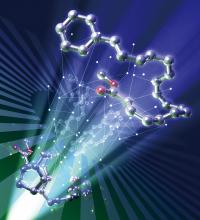
Automated reaction path search method predicts accurate stereochemistry of pericyclic reactions using only target molecule structure.
25 Oct 2022
Hokkaido University
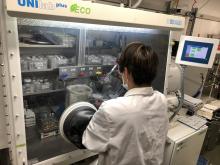
Making complex polymers with precisely controlled structures becomes much simpler thanks to a new ‘one-pot-and-one-step’ synthesis procedure.
22 Jul 2022
Hokkaido University
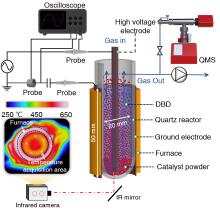
Nonthermal plasma (NTP) is used to activate CO2 molecules for hydrogenation into alternative fuels at low temperatures, also enabling the conversion of renewable electricity to chemical energy. Researchers from Tokyo Tech combined experimental and computational methods to investigate the hydrogenation pathway of NTP-promoted CO2 on the surface of Pd2Ga/SiO2 catalysts. The mechanistic insights from their study can help improve the efficiency of catalytic hydrogenation of CO2 and allows the engineers to design new concept catalysts.
22 Feb 2022
Hokkaido University
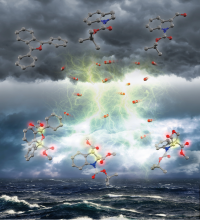
Using electricity, a new method offers the possibility of recycling CO2 while also performing a notoriously difficult reaction, producing compounds potentially useful for drug development.

25 Jan 2022
Tohoku University
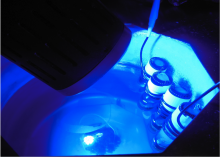
Tohoku University researchers have observed a rare change in the structure of a mineral-like crystal that, if controlled, could lead to the development of new functional materials.
18 Jan 2022
Hokkaido University
A new method for creating a highly useful chemical subunit eliminates the need for precious metals, potentially leading to the sustainable production of pharmaceuticals and electronics.
13 Dec 2021
Tohoku University
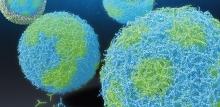
Biophysicists in Japan have found ways to make and manipulate capsule-like DNA structures that could be used in the development of artificial molecular systems. Such systems could function, for example, inside the human body.
22 Nov 2021
Tohoku University
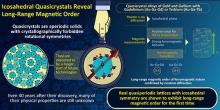
Since the discovery of quasicrystals, solids that mimic crystals in their long-range order but lack periodicity, scientists have sought physical properties related to their peculiar structure. Now, an international group of researchers has reported a long-range magnetic order in QCs with icosahedral symmetry that turns ferromagnetism below certain temperatures.
05 Oct 2021
Institute for Integrated Cell-Material Sciences (iCeMS) at Kyoto University
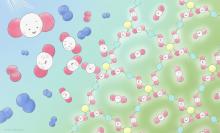
Researchers in Japan have found an energy-efficient way to convert the chief greenhouse gas carbon dioxide (CO2) into useful chemicals. Using the method, CO2 is transformed into structures called metal-organic frameworks (MOFs), suggesting a new and simpler route to dispose of the greenhouse gas to help tackle global warming.

16 Sep 2021
Hokkaido University
A new approach leads to the long-awaited formation of rings made of three pyrroles, which could be used to produce compounds with a host of interesting properties, and explains why they have not been observed before.

09 Jun 2021
Hiroshima University
Chemical rings of carbon and hydrogen atoms curve to form relatively stable structures capable of conducting electricity and more — but how do these curved systems change when new components are introduced? Researchers based in Japan found that, with just a few sub-atomic additions, the properties can pivot to vary system states and behaviors, as demonstrated through a new synthesized chemical compound.

02 Jun 2021
Tohoku University
A new nanometer-scale proximity labeling system can target histidine residues quicker than conventional methods thanks to the inorganic chemical singlet oxygen. The discovery generates a new chemical tool in protein chemical modification.
18 May 2021
Hokkaido University
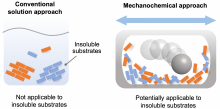
Scientists from Hokkaido University have developed a rapid, efficient protocol for cross-coupling reactions, vastly expanding the pool of chemicals that can be used for the synthesis of useful organic compounds.

20 Nov 2020
Ulsan National Institute of Science and Technology (UNIST)
A research team, affiliated with South Korea's Ulsan National Institute of Science and Technology (UNIST) has introduced a novel responsive system, capable of molecular recognition of physicochemically similar mixtures, such as isotopes.

19 Nov 2020
Institute for Integrated Cell-Material Sciences (iCeMS) at Kyoto University
A repetitive DNA sequence that causes health risks when it malfunctions can now be watched inside living cells using a synthetic tool

29 Jun 2020
The Chinese University of Hong Kong (CUHK)
A research team from the School of Life Sciences at The Chinese University of Hong Kong (CUHK) has developed a novel method for extracting enzymes from bacteria, which lowers the production cost yet improves the enzyme’s stability. It also opens up a new avenue for the enzymatic production of biodiesel, an eco-friendly and effective substitute for fossil fuels. The research findings were recently published in the Journal of the American Chemical Society.
28 May 2020
Kanazawa University
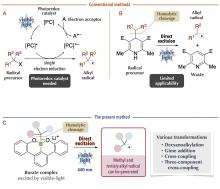
The generation of alkyl radicals was achieved by direct visible-light excitation of the organoborate complex, which was designed and synthesized from “boracene,” which has a boron atom in the tetracene-like skeleton. The alkyl radicals thus obtained could be used as a carbon source for chemical reactions, enabling the synthesis of complicated/bulky organic compounds. The present study offers a new protocol for organic synthesis, which is expected to accelerate e.g. drug discovery.

09 Dec 2019
Nagoya University
A chemical cage suppresses the activity of a biological clock regulator in the dark and releases it with light, showing potential for future treatments of circadian-clock-related diseases.
18 Oct 2019
Ehime University
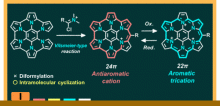
Nitrogen-embedded polycyclic compounds with strong antiaromaticity and stability were synthesized and isolated for the first time using pyrrole as a key unit. An expedited approach toward stable antiaromatic polycyclic compounds enables not only the revealing of its fundamental properties, but also its application to organic electronic materials.
27 Aug 2019
Ulsan National Institute of Science and Technology (UNIST)
A recent study, affiliated with South Korea's Ulsan National Institute of Science and Technology (UNIST) has demonstrated new solvent-free, single lithium-ion conducting COF.
29 Jul 2019
Daegu Gyeongbuk Institute of Science and Technology (DGIST)
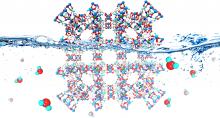
A molecule-trapping material that normally degrades in water remains stable after two years of humidity exposure when treated with a common skin bleach.
12 Jun 2019
Institute for Integrated Cell-Material Sciences (iCeMS) at Kyoto University
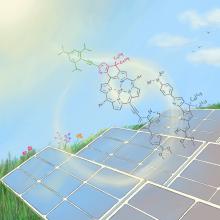
Japanese researchers are poised to reboot the field of aromatic-fused porphyrin sensitizers for dye-sensitized solar cells, the most efficient solar technology available at present.

08 Feb 2019
Hokkaido University
Stable, color-changing compound shows potential for electronics, sensors and gas storage.

31 Jan 2019
Daegu Gyeongbuk Institute of Science and Technology (DGIST)
Korean researchers have discovered new active intermediates in high-efficient oxidation using biomimetic manganese enzyme and artificial oxidants.

24 Oct 2018
Scientists at Tokyo Institute of Technology, RIKEN and Tohoku University have developed a silicone polymer chain that can self-assemble into a 3D periodic structure. They achieved this by using their recently reported self-assembling triptycene molecules to modify the ends of the polymer chains.
03 Jul 2018
Tohoku University
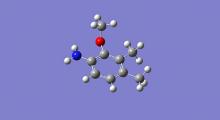
A new class of aniline derivatives has been produced by researchers at Tohoku University in Japan.
24 May 2018
Institute for Integrated Cell-Material Sciences (iCeMS) at Kyoto University
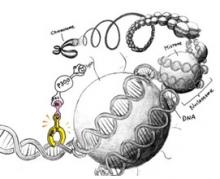
Scientists developed a biomimetic epigenetic code that can activate genes on demand to treat disease.

24 May 2018
Ulsan National Institute of Science and Technology (UNIST)
A team of researchers, affiliated with South Korea's Ulsan National Institute of Science and Technology (UNIST) has succeeded in developing a new catalyst for hydrogen production.

26 Dec 2017
Ulsan National Institute of Science and Technology (UNIST)
An international team of researchers, affiliated with South Korea's Ulsan National Institute of Science and Technology (UNIST) has succeeded in developing a novel deuterium separation method, using a special class of metal organic frameworks (MOFs) whose pore dimensions change upon gas adsorption.