

Nature Materials
About Nature Materials
Nature Materials is a monthly multi-disciplinary journal aimed at bringing together cutting-edge research across the entire spectrum of materials science and engineering.
- Website: https://www.nature.com/nmat/
- Current Issue: https://www.nature.com/nmat/current-issue
News

24 Mar 2026
Tohoku University
Researchers have discovered a new way to control magnetic “spin” using electric current, enabling states that were previously considered unstable. This breakthrough could move computing beyond simple binary systems by harnessing continuously fluctuating signals. The findings may lead to more powerful and efficient technologies for AI and next-generation devices.

16 Dec 2025
Hiroshima University
First visible ‘time crystal’ developed by WPI-SKCM² members, advancing the institute’s goal to engineer novel forms of matter

26 Feb 2025
Hokkaido University
New double network hydrogel technology features automated self-strengthening that rapidly activates upon deformation of its polymer network.

09 Jan 2025
Institute of Industrial Science, The University of Tokyo (UTokyo-IIS)
Moving in Sync, Slowly, in Glassy Liquids

24 Oct 2023
City University of Hong Kong (CityUHK)
It is estimated that over 80% of engineering failures are due to material fatigue, so the fight against metal fatigue failures continues, as this is a key parameter for lightweight structures for all mechanical systems, such as aircraft, automobile and energy-production systems. Recently, joint research by City University of Hong Kong (CityU) and Shanghai Jiao Tong University achieved a breakthrough by creating an aluminium alloy with unprecedented fatigue resistance using advanced 3D printing techniques. The new fatigue-resistance strategy can be applied in other 3D-printed alloys to help develop lightweight components with increased load efficiency for various industries.
05 Oct 2023
City University of Hong Kong (CityUHK)
A research team co-led by scholars from City University of Hong Kong (CityU) has successfully morphed all-inorganic perovskites at room temperature without compromising their functional properties. Their findings demonstrate the potential of this class of semiconductors for manufacturing next-generation deformable electronics and energy systems in the future.
07 Aug 2023
Tohoku University
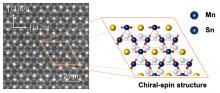
Researchers at Tohoku University and Massachusetts Institute of Technology (MIT) have unveiled new information about the anomalous dynamics at play when an electric current is applied to a new class of magnetic materials called non-collinear antiferromagnets.
10 Mar 2023
Tohoku University
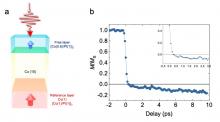
Researchers from the Université de Lorraine and Tohoku University have demonstrated sub-picosecond magnetization reversal in rare-earth-free spin valves. To date, ultra-fast magnetization control without using magnetic fields was only seen in material systems using rare-earth materials. But the recent breakthrough is expected to open up new pathways for developing ultra-fast and energy efficient applications.
30 Nov 2021
Tohoku University
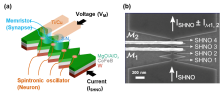
Despite significant advancements in computing technologies, they pale in comparison to the energy efficiency of human brains. Now, researchers from Tohoku University and the University of Gothenburg have developed a new spintronic technology for brain-inspired computing.
13 May 2021
Institute of Industrial Science, The University of Tokyo (UTokyo-IIS)
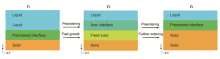
Researchers from the Institute of Industrial Science, The University of Tokyo have shown how glasses that apparently look frozen can crystallize, which could contribute to the improvement of the stability of glassy materials
14 May 2020
The Chinese University of Hong Kong (CUHK)
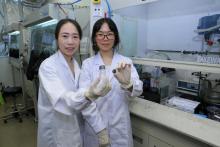
A research team led by Prof. Yi-Chun LU from the Faculty of Engineering at The Chinese University of Hong Kong (CUHK) has taken a critical step forward in improving high-energy batteries by introducing a novel electrolyte to the aqueous lithium-ion (Li-ion) battery. This electrolyte is commonly used in skin cream. It is inexpensive, inflammable, less toxic and is eco-friendly, yet can create stable voltage for common usage. The breakthrough was recently published in the world-leading scientific journal, Nature Materials, a sister journal of Nature.
26 Nov 2019
National University of Singapore
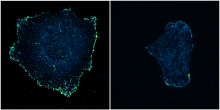
Researchers from the Mechanobiology Institute at the National University of Singapore have shown that cells can attach to the fibrous protein meshwork that surrounds them only if the fibres are spaced close enough. The team’s findings can explain the abnormal motility patterns displayed by cancer cells.