

Technology
News

18 Sep 2018
Asia Research News
Innovative water treatment solutions will be presented at TechInnovation 2018, Halls A & B, booth A6 at Marina Bay Sands Expo and Convention Centre, Singapore 18-19 September 2018.
18 Sep 2018
Asia Research News
IPI inks Memorandums of Understanding with RB and Innovate UK to drive business growth through technology partnerships and open innovation
18 Sep 2018
Asia Research News
Launch of Singapore’s first certified Blockchain Developer Programme and investments into deep tech startups announced

17 Sep 2018
King Abdullah University of Science and Technology (KAUST)
Nanoparticles with a shell structure improve the performance of zinc-oxide photodetectors.
14 Sep 2018
Asia Research News
Green Economy & Industry 4.0: Achieving Sustainable Development Goals
14 Sep 2018
Asia Research News
Uncover, unravel and understand what's happening on the ground in China's tech scene
14 Sep 2018
Asia Research News
Now Accepting Applications from Mainland China, Japan, Korea, Hong Kong, Taiwan, Indonesia, Thailand, Singapore, India, and Malaysia.

11 Sep 2018
The Hong Kong Polytechnic University (PolyU)
The Hong Kong Polytechnic University (PolyU) has received a generous donation of HK$100 million from Ir Dr Otto Poon Lok-to, Founder and Chairman of ATAL Engineering Group, in the name of Otto Poon Charitable Foundation.
11 Sep 2018
Asia Research News
Join our panel of experts in exploring how Big Data, AI and technology are reshaping the future economy. Registrations are already open; register now and save 45%
10 Sep 2018
Hokkaido University
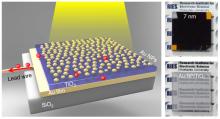
Scientists have developed a photoelectrode that can harvest 85 percent of visible light in a 30 nanometers-thin semiconductor layer between gold layers, converting light energy 11 times more efficiently than previous methods.

05 Sep 2018
King Abdullah University of Science and Technology (KAUST)
Simultaneously modeling of air pollutants and weather under extreme conditions highlights the potential for serious health risks.
05 Sep 2018
Hokkaido University
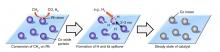
An improvement to the catalyst that converts methane to syngas could lead to a more economical process.
04 Sep 2018
The Agency for Science, Technology and Research (A*STAR)
Better understanding of the wetting characteristics of phosphorene could pave the way for new applications in biological engineering.

04 Sep 2018
The Agency for Science, Technology and Research (A*STAR)
Using deep-learning techniques to locate potential human activities in videos.
04 Sep 2018
Asia Research News
Only 3 days left to submit your nominations for MIT Technology Review’s list of 10 Innovators Under 35 from Southeast Asia, Taiwan, Australia, New Zealand and Hong Kong SAR. Deadline: Friday, 7th September.
03 Sep 2018
Asia Research News
The technology-brokerage event will be held at Marina Bay Sands from 18 to 19 of September, with the food innovation track returning this year.
03 Sep 2018
Asia Research News
Four-Day Event to Convene Sustainability Businesses, Leaders and Experts
03 Sep 2018
Asia Research News
Don’t miss this unique opportunity to connect with top notch data and AI experts. Save 45% (Super Early Bird Offer) – Only 100 all-access conference passes available at the Super Early Bird rate. Offer Valid till September 30th only.
30 Aug 2018
Asia Research News
ASEAN and China’s partnership in the areas of innovation and technology is set to deepen when the Singapore Week of Innovation & Technology (SWITCH) returns for its third edition this year.
30 Aug 2018
Electronics and Telecommunications Research Institute(ETRI)
Korea’s Electronic and Telecommunications Research Institute (ETRI) will present some of their innovative advancements this week at Internationale Funkausstellung (IFA), the world’s largest consumer electronics trade show.

30 Aug 2018
Ulsan National Institute of Science and Technology (UNIST)
An team of researchers, affiliated with South Korea's Ulsan National Institute of Science and Technology (UNIST) has introduced a novel method that can solve issues associated with the thickness of the photoactive layers in OSCs.
30 Aug 2018
A team of researchers have discovered that terahertz (THz) wave irradiation activates the filamentation of actin protein.
30 Aug 2018
Asia Research News
Japan's largest B-to-B trade show specialised in pharmaceutical R&D and manufacturing concluded with huge success.

29 Aug 2018
IOP Publishing
Multifunctional Materials, a journal serving an emerging field at the convergence of materials science, physics, chemistry, bioscience, and engineering, publishes its first issue this week.

28 Aug 2018
The Hong Kong Polytechnic University (PolyU)
A sprayable sensing network for real-time monitoring of structure integrity is lighter, more flexible and less expensive than conventional sensors.
21 Aug 2018
Asia Research News
Seventh edition to rally enterprises to Discover, Connect and Collaborate with the global innovation community

16 Aug 2018
Asia Research News
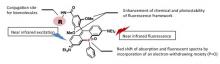
Modulating photo- and electroluminescence in a stimuli-responsive molecular dye.
16 Aug 2018
Institute of Transformative Bio-Molecules (WPI-ITbM), Nagoya University
Promising photostable tool for single molecule tracking and multicolor imaging.
Giants in history

Turkish astrophysicist Dilhan Eryurt (29 November 1926 – 13 September 2012) conducted research on how the sun affects environmental conditions on the moon.
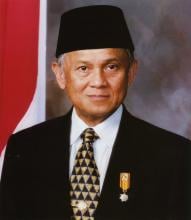
Bacharuddin Jusuf Habibie (25 June 1936 – 11 September 2019) was an Indonesian engineer who was President of Indonesia from 1998 to 1999.

Physicist Narinder Singh Kapany (31 October 1926 – 4 December 2020) pioneered the use of optical fibres to transmit images, and founded several optical technology companies. Born in Punjab, India, he worked at a local optical instruments factory before moving to London for PhD studies at Imperial College. There, he devised a flexible fibrescope to convey images along bundles of glass fibres.
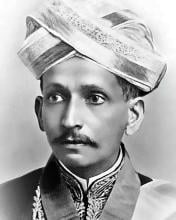
Sir Mokshagundam Srinivasa Shastry Vishveshwarayya (15 September 1860 – 14 April 1962) is widely regarded as India’s most outstanding engineer. In a career that spanned almost his entire life, Vishveshwarayya played a pivotal role in several engineering projects, including designing the Krishnarajasagara dam that is still the source of irrigation and drinking water for parts of Karnataka today.
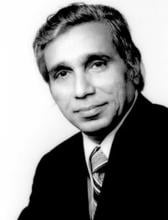
Fazlur Rahman Khan (3 April 1929 – 27 March 1982) was a Bangladeshi-American structural engineer and architect who invented the tube principle, which formed the basis for modern skyscraper design.
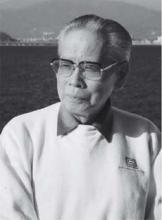
A Japanese surgeon, Tetsuzo Akutsu (20 August 1922 – 9 August 2007) built the first artificial heart capable of keeping an animal alive.

Lin Lanying (7 February 1918 – 4 March 2003) was a Chinese material engineer remembered for her contributions to the field of semiconductor and aerospace materials. Lanying was born into a family who did not believe in educating girls and she was not allowed to go to school.

Gregorio Y. Zara (8 March 1902 – 15 October 1978) was a Filipino engineer and physicist best remembered for inventing the first two-way video telephone. Zara’s video telephone invention enabled the caller and recipient to see each other while conversing, laying the foundation for video-conferencing