

Technology
News
03 Nov 2020
Ulsan National Institute of Science and Technology (UNIST)
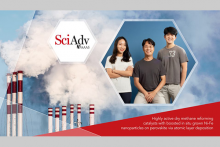
A recent study, affiliated with South Korea's Ulsan National Institute of Science and Technology (UNIST) has developed a new nanocatalyst that recycles major greenhouse gases, such as carbon dioxide (CO2) and methane (CH4), into highly value-added hydrogen (H2) gas.
03 Nov 2020
Ulsan National Institute of Science and Technology (UNIST)
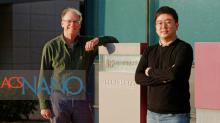
A recent study, affiliated with South Korea's Ulsan National Institute of Science and Technology (UNIST) has synthesized a film composed of densely packed diamond-like carbon nanofibers. l Image Credit: Kyoungchae Kim
03 Nov 2020
Ulsan National Institute of Science and Technology (UNIST)
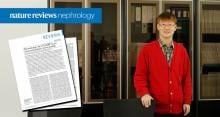
Professor Hyug Moo Kwon, affiliated with South Korea's Ulsan National Institute of Science and Technology (UNIST) has published a review paper at 'Nature Review Nephrology'.

03 Nov 2020
Ulsan National Institute of Science and Technology (UNIST)
A recent study, affiliated with South Korea's Ulsan National Institute of Science and Technology (UNIST) has developed a tiny micro supercapacitor (MSC), being small as the width of a person's fingerprint.
03 Nov 2020
Ulsan National Institute of Science and Technology (UNIST)
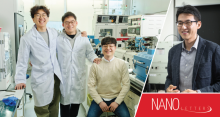
A recent study, affiliated with South Korea's Ulsan National Institute of Science and Technology (UNIST) has unveiled 2D material-based ultrasensitive surface-enhanced Raman spectroscopy (SERS) sensor by synthesizing uniform large-area ReOxSy thin films.

03 Nov 2020
Ulsan National Institute of Science and Technology (UNIST)
South Korea's Ulsan National Institute of Science and Technology (UNIST), in partnership with Class 101, expands quality online lectures.

03 Nov 2020
Ulsan National Institute of Science and Technology (UNIST)
A design team, affiliated with South Korea's Ulsan National Institute of Science and Technology (UNIST) honored with 2020 iF Design Awards in the communication design category.
03 Nov 2020
Ulsan National Institute of Science and Technology (UNIST)
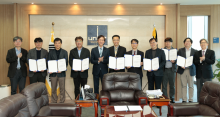
Eight faculty members, affiliated with South Korea's Ulsan National Institute of Science and Technology (UNIST) have been honored with the 2019 Outstanding Faculty Award.
03 Nov 2020
Ulsan National Institute of Science and Technology (UNIST)
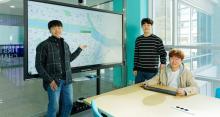
A group of students, affiliated with South Korea's Ulsan National Institute of Science and Technology (UNIST) has created a map to help track the spread of the COVID-19 in Ulsan region.
02 Nov 2020
Asia Research News
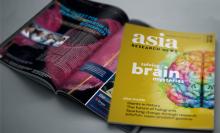
Asia Research News magazine highlights your recent results or ongoing project with a fascinating article for lay audiences, produced by our team of professional writers, editors and designers. Don't miss your chance to be a part of the 2021 edition. Submit by Nov. 30, 2020.
30 Oct 2020
Tohoku University
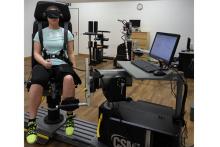
Regular training enhances your strength, but recovery is equally important. Elastic bandages and compression garments are widely used in sports to facilitate recovery and prevent injuries. Now, a research team from Tohoku University has determined that compression garments also reduce strength loss after strenuous exercise.
29 Oct 2020
Tohoku University
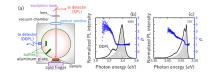
Tohoku University researchers have revealed more details about omnidirectional photoluminescence (ODPL) spectroscopy - a method for probing semiconducting crystals with light to detect defects and impurities.
16 Oct 2020
Tohoku University
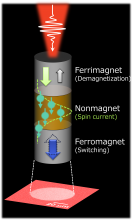
Using a single laser pulse that did not switch the ferrimagnetic layer, researchers demonstrated a much faster and less energy consuming switching of the ferromagnet.

07 Oct 2020
Asia Research News Partnerships
An anticipated 100+ expert speakers from around the world will convene to discuss next-generation identity solutions and their capability to both transform society and counter identity-based fraud.
06 Oct 2020
Tohoku University
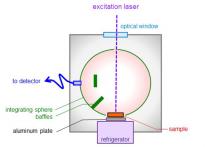
Tohoku University researchers have improved a method for probing semiconducting crystals with light to detect defects and impurities. The details of their 'omnidirectional photoluminescence (ODPL) spectroscopy' set-up were published in the journal Applied Physics Express, and could help improve the fabrication of materials for electric cars and solar cells.
22 Sep 2020
Lingnan University
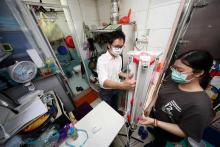
The COVID-19 outbreak is causing widespread disruption to daily life. Hong Kong people living in cramped subdivided flats with poor hygiene conditions have been particularly hard hit. In light of this alarming situation, Lingnan University (LU) jointly launched “Project Ultra Violite” with NGOs to provide a free, efficient UV disinfection service for 1,000 subdivided flats. It is the territory’s first community-wide programme using UV disinfection technology.
22 Sep 2020
Lingnan University
In a recent survey conducted by the School of Graduate Studies of Lingnan University (LU) in Hong Kong on international/non-local higher education students’ physical and psychological wellbeing during the COVID-19 pandemic, nearly 90 per cent of respondents said the outbreak had caused “moderate to extreme” disruption to learning activities. Over 70 per cent expressed concern about the outbreak, while 45 per cent said they were feeling lonely. The research team advises higher education institutions to find creative and effective ways of supporting international students during this challenging time.

16 Sep 2020
Ulsan National Institute of Science and Technology (UNIST)
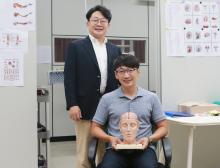
Professor Hyeon K. Park, affiliated with South Korea's Ulsan National Institute of Science and Technology (UNIST) has been selected, as the 7th Laureate of S. Chandrasekhar Prize of Plasma Physics.
14 Sep 2020
Daegu Gyeongbuk Institute of Science and Technology (DGIST)
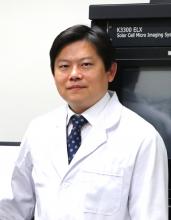
Scientists at Daegu Gyeongbuk Institute of Science and Technology, Korea, show that it is possible to distinguish between left-handed and right-handed people by noninvasively monitoring just their brain activity during passive tactile stimulation. These results are key in haptic research (the study of sensory systems) and have various important implications for brain–computer interfaces, augmented reality, and even artificial intelligence.
09 Sep 2020
Daegu Gyeongbuk Institute of Science and Technology (DGIST)
Scientists at Daegu Gyeongbuk Institute of Science and Technology, Korea, develop a novel “heterostructured” photocatalyst using titanium and copper, two abundant and relatively inexpensive metals. Their cost-effective synthesis procedure, coupled with the high stability of the photocatalyst, provides an economically feasible way to convert waste carbon dioxide and water into useful hydrocarbon fuels using endless sunlight.

08 Sep 2020
Tohoku University
Tohoku University Professor Taiichi Otsuji has led a team of international researchers in successfully demonstrating a room-temperature coherent amplification of terahertz (THz) radiation in graphene, electrically driven by a dry cell battery.
25 Aug 2020
Daegu Gyeongbuk Institute of Science and Technology (DGIST)
A research team led by Prof Jeongho Kwak from Daegu Gyeongbuk Institute of Science and Technology (DGIST) has designed a novel system architecture where collaboration between cloud service providers and mobile network operators plays a central role. Such a collaborative architecture would allow for optimizing the use of network, computing, and storage resources, thereby unlocking the potential of various novel services and applications.
20 Aug 2020
Hokkaido University
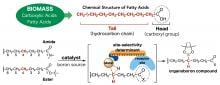
A new catalyst design enables unprecedented control over the modification of fatty acid derivatives that opens the door to creating useful substances in a green and efficient manner.

20 Aug 2020
Daegu Gyeongbuk Institute of Science and Technology (DGIST)
The ever-increasing workload of data centers calls for new ways to store and access data. Researchers from the Daegu Gyeongbuk Institute of Science and Technology, Korea, have developed a new approach to manage databases in solid state drives, providing marked performance improvements in read/write delays and offloading database computation tasks from CPUs to increase efficiency and reduce power consumption.
20 Aug 2020
Tohoku University
Researchers from Tohoku University’s Graduate School of Engineering have discovered a novel iron-based superelastic alloy capable of withstanding extreme temperatures—both high and low.
18 Aug 2020
Tohoku University
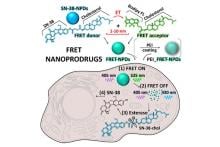
Nanoprodrugs have immense potential for cancer treatment, more so than conventional drug delivery systems. Researchers have, for the first time, developed a comprehensive study on the dynamics of the SN-38 nanoprodrug.
17 Aug 2020
Tohoku University
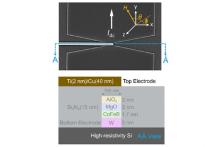
The human brain efficiently executes highly sophisticated tasks, such as image and speech recognition, with an exceptionally lower energy budget than today's computers can. The development of energy-efficient and tunable artificial neurons capable of emulating brain-inspired processes has, therefore, been a major research goal for decades.
12 Aug 2020
Hokkaido University
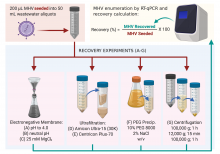
A group of researchers have demonstrated that, from seven methods commonly used to test for viruses in untreated wastewater, an adsorption-extraction technique can most efficiently detect SARS-CoV-2. This gives us another tool to detect the presence and spread of the COVID-19 pandemic

12 Aug 2020
Asia Research News Partnerships
Forty-five of the world’s most influential leaders and innovators participated in EmTech Asia. They discussed how emerging technologies will influence industries related to artificial intelligence, robotics, sustainability, healthcare, immersive media, and more.
Events
13 Nov 2006
The workshop, supported by AIT, IDRC, and Rockefeller Foundation, will examine existing policies on bio-innovations in the region, identify existing research gaps and recommend a strategy for information sharing, learning and partnering.

07 Nov 2006
MINT Waste Management Center (WMC) is responsible for managing radioactive waste within Malaysia. For an effective radioactive waste management, the importance of waste inventory is of prime concern; whether it is waste generator, waste management agency or regulatory authority.
11 Dec 2006
The Arab Science and Technology Foundation (ASTF) and Ministry of Higher Education , Syria is organising the conference Scientific Research Outlook & Technology Development in the Arab World from December 11- 14 in Damascus, Syria.
04 Dec 2006
Highlighting the role of sustainable energy and sustainable technology in meeting modern energy demands
09 Dec 2006
Oriental COCOSDA workshop in Malaysia will help in boosting the research and development in the field of Speech Technology and will help in enthusing the interest towards Speech Technology in Southeast Asia.
24 Oct 2006
The objective is for the protein researchers to keep abreast with this rapidly growing area, and to promote exchange of knowledge and expertise among the protein researchers in Thailand.
02 Oct 2006
The field of bioinformatics has been a major part of drug discovery, with a key role in validating drug targets. This objective of this course is to introduce the participants to the current genomic information of insect vectors and to promote applications of bioinformatics and post-genomic tools in molecular entomology research.
22 Aug 2006
UK-SINGAPORE Aquaculture Workshop 2006. The workshop will bring together researchers from industry, universities, as well as research institutes in Southeast Asia to present and discuss the what aquaculture can and will become. Sponsorships are available for researchers from South East Asia and UK businesses.
08 Aug 2006
The 2006 International Conference on Business IT (BIZIT 2006) aims to bring together academicians, researchers, and developers interested in exchanging ideas, innovations, and experiences in the areas of Business Technology.

20 Jun 2006
The aim of MICRA 2006 is to further the advancement of knowledge in all aspects of construction and to keep members in touch with the latest information on construction management.
09 May 2006
The main objective of this conference is to provide a forum for engineers, academicians, scientists and researchers to present the result of their research activities in the field of Computer and Communication Engineering.
07 Jul 2006
Internal Conference organised by Institute Of Research, Development and Commercialisation (IRDC), UiTM Shah Alam for all research conducted in 2005
18 Jun 2006
The ISNEPP 2006 audience comprises researchers from R&D organizations and academia, government policy makers, and industry and industry bodies.

19 Apr 2006
Developing rural communities through ICT requires the networking of expertise in a variety of fields, and working together towards a common goal.
10 Mar 2006
Theme: "Seismic Hazards and Damage Mitigation in the Asian Region". ACEE 2006 will be an excellent forum for researchers, professionals, engineers, scientists and academicians to exchange ideas and experiences in the fields of seismology, earthquake engineering, seismic risk and disaster mitigation.
02 Mar 2006
The Philippines' potential to lead in information and communications technology (ICT) and Game Development is very promising. Currently, we are the preferred IT outsourcing candidate, second only to India.
08 Mar 2006
Ethical considerations underpin many of the major global issues facing the international community today – climate change, avian influenza and intellectual property rights, to name a few. Technological innovations have progressed at such a rapid pace that public debate on ethical issues has had trouble keeping up.
17 Feb 2006
This 2-day forum highlights recent NLP researches of the College of Computer Studies, DLSU, and provides seminar/workshops on the English and Filipino languages, translation and discourse analysis. The focus of the symposium is on "Building Language Tools and Resources."
23 Mar 2006
The meeting is organized within the theme of low cost technology for water treatment, and also preserving the environment by improving water management policies and reducing water pollution through adequate water treatment technologies.
14 Mar 2006
Incoroprating Seminar on 'Transgenic Plants: A Challenge to Natural Farming and Nature Survival' on March 14, 2006.
14 Jan 2006
Site characterisation traditionally relies on closely spaced boreholes, which is relatively expensive when compared to the use of subsurface geophysics used in conjunction with a few boreholes.

02 Dec 2005
Theme: Advanced technologies for building sustainable society

25 Feb 2006
Human and Nature – Working Together for Sustainable Development of Dry Lands
28 Nov 2005
Among the sub-themes include: sustainable development and water management, public awareness, water education, socio-economic and legal issues, the environment, engineering, modelling and traditional water management
15 Dec 2005
The 3rd International Symposium on Biotechnology will create and disseminate the fast growing knowledge for better learning in Enzyme technology, Biochemical Engineering, Fermentation technology, Tissue Culture, Genetics and Bioinformatics.
14 Jul 2005
The annual activity of the Department of Science and Technology showcasing the results of researches conducted and services being offered by the Councils and its attached agencies.
03 Jul 2005
3rd International Conference on Materials for Advanced Technologies (ICMAT2005) and the International Union of Materials Research Societies' 9th International Conference on Advanced Materials (ICAM2005)
16 Nov 2005
Both MICC and ICON will provide a forum to discuss the innovations and recent advances in communication and computer metworks.
23 Oct 2005
International Union of Radio Science, universally referred to as URSI (Union Radio-Scientifique Internationale), is one of 25 Scientific Unions, which adhere to International Council for Science (ICSU).
13 Dec 2005
The objective of this workshop is to bring together researchers to promote interactions and discussions on selected aspects of the physics and technology of semiconductor devices.
Giants in history

Turkish astrophysicist Dilhan Eryurt (29 November 1926 – 13 September 2012) conducted research on how the sun affects environmental conditions on the moon.
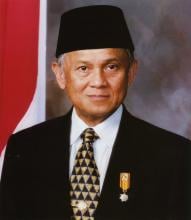
Bacharuddin Jusuf Habibie (25 June 1936 – 11 September 2019) was an Indonesian engineer who was President of Indonesia from 1998 to 1999.
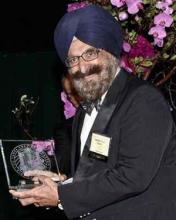
Physicist Narinder Singh Kapany (31 October 1926 – 4 December 2020) pioneered the use of optical fibres to transmit images, and founded several optical technology companies. Born in Punjab, India, he worked at a local optical instruments factory before moving to London for PhD studies at Imperial College. There, he devised a flexible fibrescope to convey images along bundles of glass fibres.

Sir Mokshagundam Srinivasa Shastry Vishveshwarayya (15 September 1860 – 14 April 1962) is widely regarded as India’s most outstanding engineer. In a career that spanned almost his entire life, Vishveshwarayya played a pivotal role in several engineering projects, including designing the Krishnarajasagara dam that is still the source of irrigation and drinking water for parts of Karnataka today.
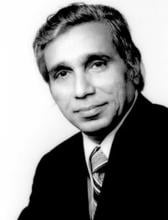
Fazlur Rahman Khan (3 April 1929 – 27 March 1982) was a Bangladeshi-American structural engineer and architect who invented the tube principle, which formed the basis for modern skyscraper design.
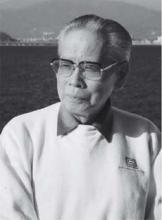
A Japanese surgeon, Tetsuzo Akutsu (20 August 1922 – 9 August 2007) built the first artificial heart capable of keeping an animal alive.

Lin Lanying (7 February 1918 – 4 March 2003) was a Chinese material engineer remembered for her contributions to the field of semiconductor and aerospace materials. Lanying was born into a family who did not believe in educating girls and she was not allowed to go to school.

Gregorio Y. Zara (8 March 1902 – 15 October 1978) was a Filipino engineer and physicist best remembered for inventing the first two-way video telephone. Zara’s video telephone invention enabled the caller and recipient to see each other while conversing, laying the foundation for video-conferencing